

By the time the IRS’s Where’s My Refund tool finally moved off the word Processing, Samantha Reeves had already paid her March daycare bill using a credit card she’d promised herself she would never touch again. It was day 54. She had filed on February 3rd.
I first reached Samantha through a community Facebook group for Denver-area nurses, where she had posted a frustrated but measured question: “Anyone else’s refund still stuck? I filed weeks ago and I can’t get a human on the phone.” Dozens of replies poured in within hours. When I reached her by phone in late March 2026, she had just finished a twelve-hour overnight shift and was eating breakfast at 7 a.m. while her four-year-old daughter watched cartoons in the next room.
A Budget With No Margin for Error
Samantha Reeves earns roughly $72,000 a year as a registered nurse at a community hospital in Denver — a salary that sounds solid until you lay it against the city’s actual cost of living. Her rent is $1,650 a month. Daycare for her daughter runs $1,400 a month. Her federal student loan balance from nursing school sits at approximately $38,000, with monthly payments she’d paused on an income-driven plan but couldn’t ignore forever.
Her ex-partner left two years ago and has not contributed financially since. She picks up overtime shifts when she can, but she told me she’s already watching herself for burnout. “I do the math every single month,” she said. “There is no cushion. Every bill is exactly covered and nothing else.”
Her 2025 federal tax return, prepared through a commercial filing software, showed a refund of $3,218. That figure was built primarily from the Child Tax Credit and a small Earned Income Tax Credit — both credits that exist specifically to help low-to-moderate income working parents. The refund was, as she put it, “the one time a year I actually get ahead.”
Why the PATH Act Made Her Wait — Even After Filing Early
Samantha filed electronically on February 3, 2026, specifically to get ahead of the rush. What she didn’t fully account for was a federal law called the Protecting Americans from Tax Hikes Act — the PATH Act — which prohibits the IRS from issuing refunds on returns that include the Earned Income Tax Credit or the Additional Child Tax Credit before February 15th of each tax year. The rule is designed to give the IRS time to verify identity and reduce fraud, but it means early filers who claim these credits cannot receive their money before that date regardless of when they submit.
Samantha learned about the PATH Act the hard way — not from her filing software’s confirmation screen, but from a Reddit thread she found while searching for answers on day 16. “Nobody told me that when I filed,” she said. “The software just said ‘your refund is on its way.’ I was checking the tracker every day thinking something was wrong with my return.”
After February 15th passed without movement, she started to genuinely worry. The Where’s My Refund tool showed one status: Your tax return is still being processed. That message, which the IRS uses for both routine delays and returns flagged for review, offered no distinction between the two.
Trying to Reach the IRS — and What Happened
On day 28, Samantha called the IRS taxpayer assistance line at 1-800-829-1040. She told me she waited on hold for two hours and nineteen minutes before the call disconnected. She tried again the following morning before her shift. That call dropped at the one-hour mark.
The IRS received approximately 19 million calls during the first six weeks of the 2026 filing season, according to estimates cited by tax practitioner organizations — a volume that has consistently outpaced staffing capacity in recent years. The agency’s operational status updates note ongoing processing backlogs affecting a subset of individual returns, particularly those routed for identity verification.
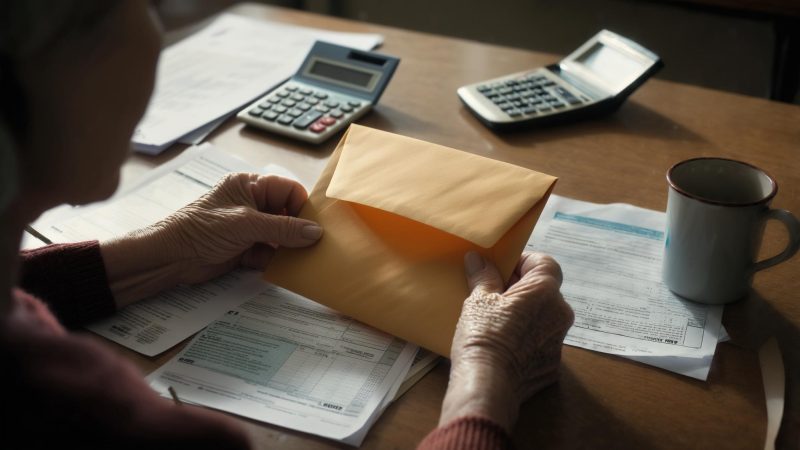
Samantha eventually discovered she could request a transcript of her account online through the IRS’s ID.me-verified portal. When she finally accessed it, the transcript showed a code — Transaction Code 570, indicating a hold on her refund pending additional review. A companion code, 971, appeared two days later, indicating a notice had been mailed.
The Notice, the Response, and the Wait That Finally Ended
The letter that arrived was an IRS Letter 5071C — an identity verification request. The notice asked Samantha to verify her identity online at idverify.irs.gov or by calling a dedicated number within 30 days. She completed the online verification the same afternoon the letter arrived. “It took about fifteen minutes,” she told me. “Fifteen minutes. I had been waiting weeks for a fifteen-minute fix.”
Nine days after verifying her identity online, Transaction Code 846 appeared on her transcript. Her refund of $3,218 hit her direct deposit account on March 28, 2026 — fifty-four days after she filed.
The outcome was financially stable — she got the money, she didn’t carry the credit card balance long enough to accrue interest, and she added to her savings. But as Samantha made clear when I asked how she felt about the experience overall, stability and ease are not the same thing.
What Samantha Wishes She Had Known Before Filing
When I asked Samantha what she would do differently, she didn’t mention changing her withholding or adjusting her credits — she went straight to process. “I would have set up my IRS online account before I filed,” she said. “Knowing your transcript codes, knowing what TC 570 means — that would have saved me weeks of anxiety. I had no idea that tool even existed.”
She also expressed frustration that the identity verification letter took nearly two weeks to arrive by mail when, in her view, a secure email notification or an alert through the IRS online portal could have cut that waiting time significantly. “They have my email. They have my direct deposit account. They can tell me my refund is coming, but they can’t tell me they need to verify me?”
The IRS processed more than 100 million individual returns in the 2025 tax year, and the vast majority of e-filed refunds did arrive within the stated 21-day window. But for filers who receive a hold — whether for identity verification, income discrepancies, or credit review — the system’s lack of real-time communication creates a particular burden for people like Samantha, whose monthly cash flow has no room to absorb a two-month gap.
When I ended the call, Samantha had about twenty minutes before she needed to pick up her daughter from daycare. She sounded less angry than she did resigned. The refund came. The bill got paid. She’ll do it again next February, and she’ll be watching her transcript from day one. That’s not a victory lap — it’s just the math of surviving as a sole provider in an expensive city, with one annual windfall and a system that doesn’t always run on schedule.
Related: She’s a Nurse Making $68K a Year in Denver — and She Still Qualified for SNAP



Leave a Reply