
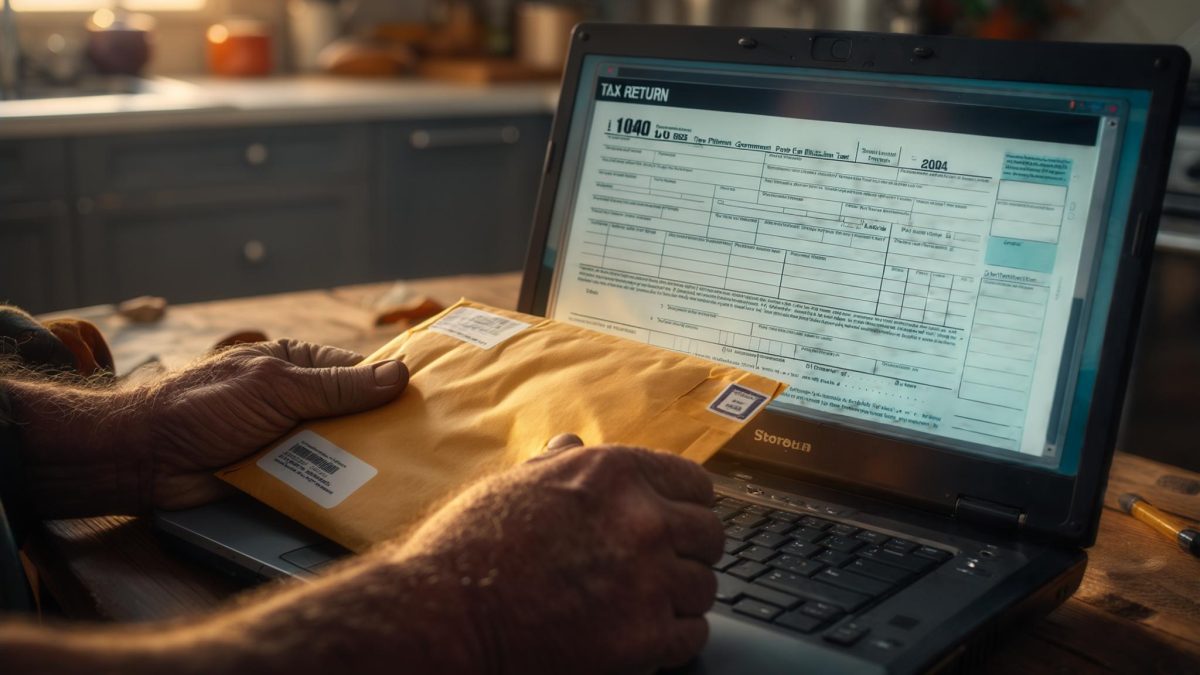
The IRS Identity Protection PIN program enrollment deadline for the 2025 tax year passed on December 31 — but for people like Bonnie Matsuda, that deadline came one year too late. When I sat down with Bonnie at a diner on Poplar Avenue in Memphis last month, she had just received her final IRS correspondence after an eleven-month ordeal that began with a rejection notice and ended with a refund that was barely half of what she was owed.
A financial counselor named Darlene Fitch — who works with mid-income clients navigating IRS disputes in the Memphis metro area — had recommended I speak with Bonnie. “Her situation is more common than people think,” Darlene told me over the phone. “And she’s willing to talk about it, which matters.” Bonnie, 47, is a licensed plumber who runs her own small operation out of Shelby County. She earns well — roughly $92,000 in gross income for tax year 2024 — and she has been filing her own taxes using online software for the better part of a decade without incident. Until last year.
The Rejection That Started Everything
Bonnie filed her 2024 federal return on March 4, 2025, expecting a refund of approximately $3,800. She had overpaid through quarterly estimated payments — a habit she picked up after a surprise tax bill years earlier — and the math was straightforward. What came back instead was an e-file rejection code IND-516, which indicates the IRS already has a return on file for that Social Security number for the same tax year.
“I thought it was a software glitch at first,” Bonnie told me, turning her coffee cup in her hands. “I resubmitted and got the same rejection. That’s when I knew something was wrong.” She called the IRS helpline on March 7, 2025, and spent two hours and forty minutes on hold before speaking with an agent who confirmed what she feared: a return had already been processed under her SSN, filed in early February 2025, claiming a refund of $6,100.
The agent directed Bonnie to submit IRS Form 14039, the Identity Theft Affidavit, along with a paper copy of her actual return and two forms of identification. She mailed the packet certified on March 12, 2025. The IRS confirmed receipt on March 28. And then, for nearly four months, nothing.
The Wait — and What It Cost Her
Bonnie is not someone who lives paycheck to paycheck. As a licensed plumber with her own client base, she described her finances as “solid, mostly” — but that $3,800 refund had a purpose. She had planned to use it to pay down a business credit card carrying a 22.4% APR, a balance she had run up purchasing new pipe-threading equipment the previous fall.
“Every month I’m waiting, that card is eating me,” she said. “I’m paying maybe $70 in interest a month on a balance I should’ve been able to wipe out in March. That’s not nothing.” Over the eleven-month wait, Bonnie estimates she paid roughly $630 in additional interest she had not planned for — money she describes, with characteristic directness, as “a tax on being victimized.”
She filed a Form 911 — a request for Taxpayer Advocate Service assistance — on June 30, 2025, after a second IRS letter in June indicated the investigation was ongoing with no estimated completion date. The Taxpayer Advocate Service, which operates independently within the IRS, assigned her a case advocate within two weeks. According to Bonnie, that contact made a measurable difference in the pace of communication, though not necessarily in the pace of resolution.
The Second Blow: A Treasury Offset She Didn’t Expect
The part of Bonnie’s story that stopped me cold came about forty minutes into our conversation, when she mentioned the letter she received in October 2025. It wasn’t from the IRS. It was from the Bureau of the Fiscal Service — the agency that administers the Treasury Offset Program, which intercepts federal payments to collect certain delinquent debts.
Several years earlier, Bonnie had cosigned a $18,500 auto loan for her younger brother, Marcus. He had needed a vehicle for a new job and couldn’t qualify on his own. “I knew it was a risk,” Bonnie said quietly. “But he’s my brother. He needed to work.” Marcus made payments for about fourteen months before losing the job and eventually defaulting. The lender pursued collection, a deficiency judgment was entered, and the debt — $11,200 at that point — was referred to a state collection agency that had agreements with the federal offset program.
The October 2025 offset notice informed Bonnie that when her refund was eventually released, $1,860 would be intercepted to satisfy a portion of the outstanding obligation. There was a process to contest the offset — she had 65 days to request a review — but Bonnie told me she ultimately decided not to fight it. “The debt is real,” she said. “I signed for it. I can’t pretend I didn’t.”
What $1,940 Looks Like After $3,800 Was Promised
On February 6, 2026 — nearly eleven months after her original filing date — a direct deposit of $1,940 arrived in Bonnie’s checking account. The IRS had confirmed her identity theft case, voided the fraudulent return, processed her legitimate return, and applied the $1,860 offset. What landed in her account was just over half of what she had originally expected.
“I stared at it for a while,” she told me. “I wasn’t angry. I was just — tired. It’s over, and that’s the main thing.” The business credit card balance, which had grown during the wait, was paid down by $1,940 that same afternoon.
For the 2025 tax year — the return she’ll file in the coming weeks — Bonnie enrolled in the IRS Identity Protection PIN program, which assigns a unique six-digit code that must accompany any return filed under her SSN. According to the IRS IP PIN page, the program is now open to all taxpayers, not just confirmed identity theft victims. Bonnie wishes she had enrolled years ago.
What Bonnie Would Tell Someone in Her Situation Right Now
Bonnie was careful during our conversation not to frame her experience as a warning about any particular institution. She expressed no bitterness toward the IRS — “they were dealing with millions of cases,” she said — and, notably, no bitterness toward her brother. What she expressed, repeatedly, was a kind of clear-eyed regret about the things she didn’t know.
She also said she would have called the Taxpayer Advocate Service sooner. Bonnie waited nearly four months before filing Form 911, and she believes — though she can’t know for certain — that earlier TAS involvement might have shortened the process. The service is free, and per the Taxpayer Advocate Service, it exists specifically for situations where standard IRS channels have stalled and a taxpayer is experiencing financial difficulty as a result.
As I left the diner, Bonnie was already thinking about next year — about filing early in January before any fraudster could beat her to it, about keeping her IP PIN in a secure place, about what it will feel like to get a refund that actually arrives in February instead of the following February. “I just want boring,” she said, laughing for the first time all morning. “I want the most boring tax season of my life.”
Given everything Bonnie Matsuda has navigated in the past twelve months, boring sounds exactly right.
Vivienne Marlowe Reyes is a Senior Tax & Stimulus Writer at Check Day America. This article is reported journalism and does not constitute financial, tax, or legal advice.
Related: She Cosigned Her Brother’s Loan Out of Guilt. Two Years Later, Her Wages Are Being Garnished




Leave a Reply