

The waiting room at Nashville’s downtown Social Security Administration office on a Tuesday morning is exactly as you’d imagine it: fluorescent lights, numbered tickets, the low hum of anxiety. I was there in early March 2026 reporting on a separate piece about benefit payment timelines when I noticed the woman two seats down muttering at her phone, toggling between the IRS Where’s My Refund tool and a credit card app. Her name was Dolores Trujillo, and she agreed to talk while we both waited for our numbers to be called.
Dolores is 54, owns a small auto repair shop on the east side of Nashville, and has the calloused hands and direct eye contact of someone who has spent three decades fixing things other people can’t be bothered to figure out. She was at the SSA office to ask about a separate income-related question for her partner, who is still in school. But the thing consuming her attention that morning — the thing she couldn’t put her phone down about — was a tax refund that had been sitting in IRS processing limbo for going on seven weeks.
The Filing: A Valentine’s Day Gamble
Dolores filed her 2025 federal return on February 14, 2026. She remembers the date because she made a joke about it to her fiancé — “my Valentine’s gift to myself,” she called it. Her expected refund, according to her tax software, was $2,847. For most people, that number might feel like a bonus. For Dolores, it was a lifeline she had been mentally spending since December.
The previous October, she had gone to the emergency room with what turned out to be a kidney stone. The bill came to $6,800. Without employer-sponsored health insurance — she runs the shop herself, with one part-time employee — she paid $2,600 out of pocket at the time and put the remaining $4,200 on a credit card at 24.99% APR. By February, with minimum payments and accruing interest, that balance had crept to $4,390.
“I had it all mapped out,” she told me, shaking her head with the specific exhaustion of someone who has run the same mental math too many times. “The refund hits, I knock out a big chunk of the card, the interest stops bleeding me. That was the plan.” She paused. “The IRS had a different plan.”
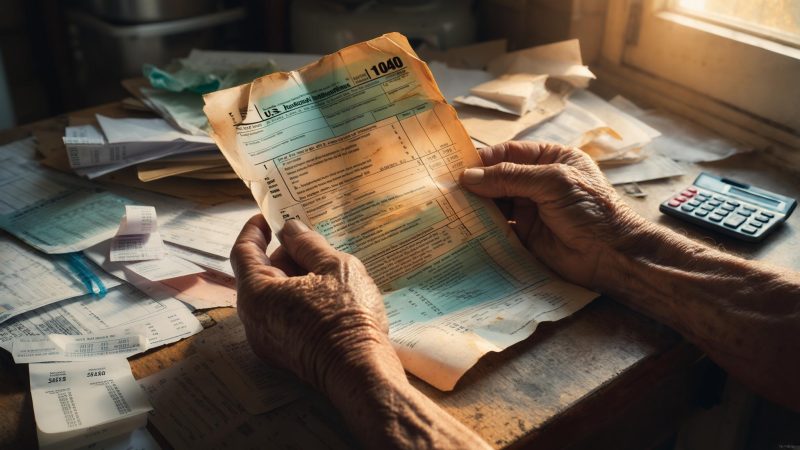
As a self-employed Schedule C filer, Dolores is in a category the IRS scrutinizes more carefully. According to IRS.gov, most e-filed returns with direct deposit are processed within 21 days — but returns claiming self-employment income, the Earned Income Tax Credit, or certain deductions can trigger additional review, pushing that window out significantly.
The Notice That Changed Everything
Three weeks after filing, Dolores checked Where’s My Refund and saw a status she didn’t recognize: her return was “still being processed.” She refreshed the page. Same message. She called the IRS helpline and waited on hold for 47 minutes before reaching an agent who told her only that the return was “under review” and she should expect a letter.
The letter — a CP05 Notice — arrived on March 9. It informed her that the IRS was reviewing her income and withholding information and needed up to 60 additional days. No specific reason was given. No action was required from her. Just: wait.
For Dolores, the 60-day window felt like a verdict. “I’m sitting here watching the interest tick up every single day,” she said. “And there’s nothing I can do. I can’t call them and make it faster. I just have to sit.” That particular brand of helplessness — action-oriented person, zero levers to pull — visibly still bothered her weeks later when we spoke.
The Irregular Income Problem
What made Dolores’s situation more complicated was the nature of her income itself. As a small shop owner, her monthly revenue swings dramatically. She described January 2025 as a $3,100 month and the following March as a $9,400 month. Some of that variance comes from seasonal demand, some from whether a big job — a transmission rebuild, a fleet contract — happened to fall in that billing cycle.
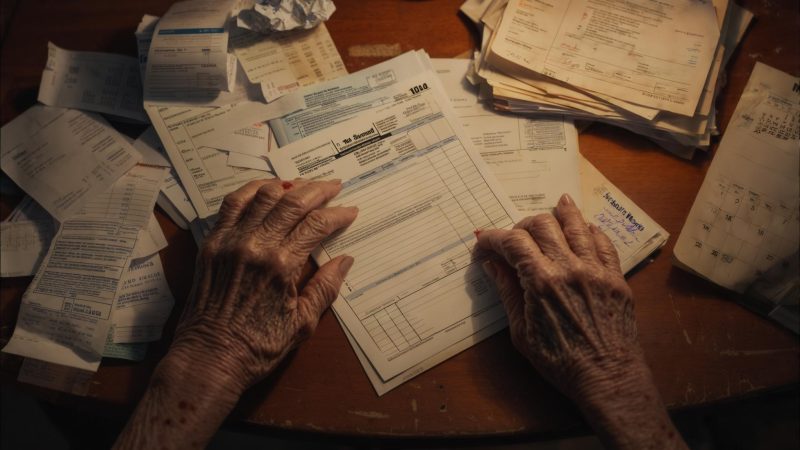
Because she doesn’t have taxes withheld from a paycheck, she is technically required to make quarterly estimated tax payments to the IRS throughout the year. She made two of the four payments in 2025 — one in April for $600, one in September for $800. She missed the June and January deadlines. That inconsistency, she believes, is part of what flagged her return.
“I know I should have paid all four,” she said, without defensiveness. “But when you’re having a bad month and rent for the shop is $2,200 and your parts supplier wants to be paid, the IRS estimated payment is the one that slides.” That is a common reality for low-income self-employed workers, and one that creates friction at filing time — the IRS cross-references estimated payments against reported income, and gaps can prompt additional scrutiny.
The Refund Arrives — But Not As Expected
On April 3, 2026 — 48 days after she filed, and 25 days after receiving the CP05 Notice — Dolores’s direct deposit arrived. The amount was $2,619. Not the $2,847 she had been counting on. The IRS had assessed a small underpayment penalty of $228 for the two missed quarterly payments, and offset that amount directly from her refund before releasing the rest.
She found out through her bank app at 6:14 a.m. She texted me that morning with three words: “It finally came.”
She put $2,400 directly toward the credit card. The remaining $219 went into her checking account as a buffer. The card balance dropped to roughly $2,100 — still a real number, but manageable enough that she could see a payoff date within the year if her spring revenue held up. “It’s not the reset I was hoping for,” she admitted. “But it stopped the bleeding for now.”
What Dolores’s Story Reveals About Self-Employed Filers
Dolores’s situation is not unusual. Self-employed Americans — sole proprietors, gig workers, independent contractors — navigate a tax system designed around the assumption of steady, employer-withheld income. When income is irregular, quarterly payments become difficult to calculate accurately, and even good-faith estimates can fall short in ways that trigger penalties and delays.
The IRS processes hundreds of millions of returns annually. According to IRS filing season statistics, the agency issued approximately 93% of refunds within 21 days for straightforward e-filed returns in recent seasons — but Schedule C filers with EITC claims or review flags are a consistent exception to that timeline.
For someone like Dolores — carrying high-interest debt, without a financial cushion, without employer benefits — a delay of 11 weeks isn’t an inconvenience. It’s the difference between stopping interest accumulation in February or April. In her case, those two extra months cost her approximately $145 in additional credit card interest, on top of the $228 penalty offset. The total gap between her expected and effective refund outcome was roughly $370.
When I mentioned that number to Dolores, she went quiet for a moment. “You know what’s wild,” she finally said. “That’s basically a car battery and a full synthetic oil change. That’s a real job I did last week. Gone.” The way she framed it — in units of labor rather than dollars — said everything about how she processes money. It’s not abstract. It’s hours.
She’s already thinking about the 2026 tax year differently. She’s set calendar reminders for all four estimated payment deadlines. She’s considering opening a separate savings account just for taxes — a system her accountant apparently suggested two years ago that she never implemented. The experience shook something loose.
Whether those intentions hold through a slow January or a surprise parts bill, I genuinely don’t know. Dolores herself doesn’t know. What she does know, sitting in that SSA waiting room with the Where’s My Refund screen still open on her phone, is that she never wants to feel that particular powerlessness again — the powerlessness of having done the work, filed the forms, and then simply waiting for a system that moves at its own pace, indifferent to the interest rate on your credit card.
(function(){var w=document.getElementById(‘pvv-scenario-s1775660506622or3u’);if(!w)return;var btns=w.querySelectorAll(‘button[data-choice]’);btns.forEach(function(b){b.addEventListener(‘click’,function(){if(w.dataset.revealed)return;w.dataset.revealed=’1′;btns.forEach(function(x){x.style.opacity=x===b?’1′:’0.45′;x.style.cursor=’default’;x.style.transform=’none’});var o=document.getElementById(‘s1775660506622or3u-out-‘+b.dataset.choice);if(o){o.style.display=’block’}});b.addEventListener(‘mouseenter’,function(){if(!w.dataset.revealed){b.style.borderColor=’#38bdf8′;b.style.transform=’translateX(4px)’}});b.addEventListener(‘mouseleave’,function(){if(!w.dataset.revealed){b.style.borderColor=’#334155′;b.style.transform=’none’}})})})();
.pvv-faq-section details summary::-webkit-details-marker{display:none}.pvv-faq-section details summary::marker{display:none;content:””}.pvv-faq-section details[open] summary .pvv-faq-arrow{transform:rotate(90deg)}


Leave a Reply