

The conventional wisdom says that retirees on fixed incomes have simple tax situations — a pension, some Social Security, maybe a small savings account, and a straightforward refund that arrives in three weeks. Patricia Novak’s experience in early 2026 dismantled that assumption entirely, and the consequences were far more personal than a delayed direct deposit.
When I sat down with Patricia Novak at her home on Pittsburgh’s North Side in late March 2026, she was still processing the previous two months. The 65-year-old retired postal worker had filed her federal return on February 3rd, expecting the IRS’s standard 21-day window. What followed instead was eleven weeks of uncertainty, a furnace running on borrowed time, and a quiet kind of dread she described as “worse than working a double shift in January.”
Thirty-Two Years of Work, and Now the Numbers Barely Add Up
Patricia worked for the United States Postal Service for 32 years before retiring in 2019. Her federal pension through the Civil Service Retirement System (CSRS) pays her approximately $2,210 per month. She also collects $987 per month in Social Security survivor benefits, a figure that dropped significantly after her husband Leonard passed away three years ago — his own Social Security income of $1,640 per month disappeared with him.
Her combined gross annual income sits at roughly $38,364. That number matters, because under IRS rules, single filers with a combined income above $34,000 may have up to 85% of their Social Security benefits subject to federal income tax, according to IRS Topic No. 423. Patricia didn’t fully understand that threshold until she sat down with a volunteer tax preparer at a local AARP Tax-Aide site in late January 2026.
“I’ve been doing my own taxes since I was 24 years old,” Patricia told me, sitting at her kitchen table with a folder of printed IRS notices and a stack of W-2Ps. “But after Leonard died, everything changed. Filing status, the withholding — I didn’t realize how much of that he handled mentally, even if I did the paperwork.”
The AARP Tax-Aide preparer discovered that Patricia had been over-withholding on her pension by roughly $154 per month in 2025, the result of a W-4P she had submitted in 2022 and never updated after Leonard’s death changed her household income and filing status. The $1,847 refund was the accumulated over-payment for the year.
What the IRS’s “21-Day” Promise Actually Means in Practice
The IRS states that most electronically filed returns with direct deposit are processed within 21 days. That timeline is real — for uncomplicated returns. What the agency is less explicit about is the range of triggers that can pause that clock entirely, sometimes without immediate notification to the filer.
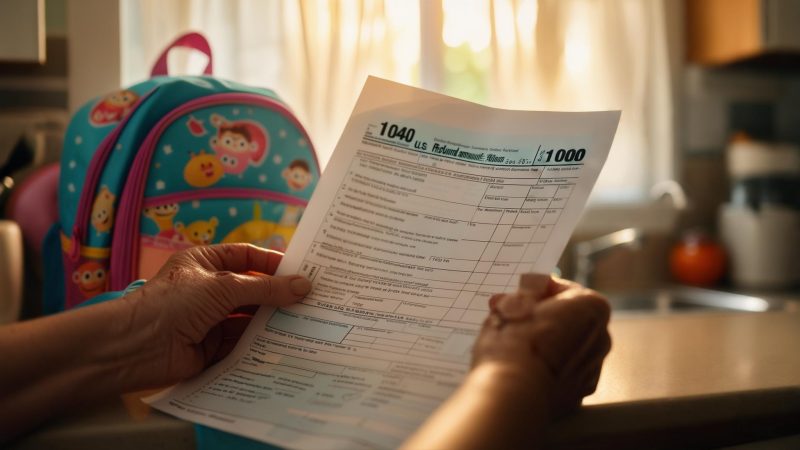
Patricia’s return was e-filed on February 3, 2026. By February 24th — day 21 — the IRS Where’s My Refund tool still showed “Return Received” with no movement to “Refund Approved.” She called the IRS helpline, waited 47 minutes, and was told only that her return was “under review.”
A second call on March 10th yielded more information: the IRS had flagged her return because her filing status had changed from “Married Filing Jointly” to “Single,” and the income profile shift triggered an automated identity verification process. She was told a letter — IRS Notice CP05 — had been mailed to her, requesting no action but informing her the review could take up to 60 additional days from the notice date.
A Furnace, a Roof, and a Calendar That Wouldn’t Move
The $1,847 refund wasn’t abstract money to Patricia. Her home, a three-bedroom house she and Leonard bought in 1988, had a furnace installed in 2003 that a technician had told her in November 2025 was “living on luck.” A replacement would cost between $3,200 and $4,800 installed. She had been quoted $11,000 for partial roof repair above the back bedroom where a slow leak had started appearing during heavy rain.
Her savings — approximately $22,000 in a certificate of deposit — she considers untouchable except for medical emergencies, a boundary she has set firmly since Leonard’s final illness cost the family over $14,000 in out-of-pocket expenses not covered by Medicare. The tax refund was supposed to cover a furnace service contract renewal and a temporary patch on the roof while she saved for the full repair.
“I’m not asking my kids for money,” she said plainly, without a trace of self-pity. “They have their own mortgages and their own children. I’m 65, not 95. I can figure this out.” But figuring it out, she acknowledged, became harder every week the refund didn’t arrive.
When the Money Finally Arrived — and What It Couldn’t Fix
The deposit appeared on April 22, 2026 — 78 days after filing. By then, the furnace had required an emergency service call in early March that cost $340, a repair Patricia paid from her checking account rather than touch her CD. The temporary roof patch she had planned to schedule in February had been delayed into late spring, pushing the work into a season when contractors’ schedules were already full.
“When I saw that deposit, I didn’t feel relief exactly,” Patricia told me. “I felt tired. Like I’d been holding my breath for two months and finally let go, but I was already exhausted from holding it.”
She updated her W-4P with OPM — the Office of Personnel Management, which administers CSRS pension payments — following the AARP preparer’s recommendation. The new withholding amount means she will receive approximately $127 more per month in pension payments going forward, reducing her over-withholding but also reducing the size of any future refund. Whether that trade-off serves her better depends on how reliably the IRS processes returns without flagging them — a question her experience has made her deeply skeptical about.
What Patricia’s Story Reveals About Fixed-Income Tax Filing
Patricia’s case is not unique. According to the National Taxpayer Advocate’s 2025 Annual Report, identity verification holds and CP05 reviews affected millions of returns in the 2025 filing season, with average resolution times extending well beyond the IRS’s published estimates. Widowed and recently divorced filers who change their filing status are among the profiles most frequently flagged by automated systems.
The challenge for retirees like Patricia is that their financial margins don’t accommodate uncertainty the way a salaried worker’s might. There is no bonus coming, no overtime to pick up, no option to accelerate income. When a payment is delayed, the ripple effects are immediate and concrete — a repair deferred, a bill stretched, a reserve depleted.
As I left Patricia’s house that afternoon, she walked me to the door and pointed at the back corner of the ceiling in her hallway — a faint watermark, a ring of pale brown against the white paint. “That’s the roof,” she said. “It’s been there since October. Every time it rains hard, I put a bucket under it and tell myself next month will be different.”
She said it without bitterness, which somehow made it worse. Thirty-two years of federal service, a life built on reliability and routine, and now the machinery she trusted most — the IRS, the systems she had always filed on time and without complaint — had made her wait eleven weeks for money she had already earned and already needed. The bucket is still in the hallway closet.
Related: She Retired After 32 Years at USPS. Then Her Roof Started Leaking and Her Savings Weren’t Enough.



Leave a Reply