

Roughly 1 in 3 self-employed filers experiences a refund delay longer than 21 days, according to IRS processing data — but for Duane Peralta, that statistic stopped being abstract the moment his workers’ compensation insurer sent back a denial letter the same week his tax transcript showed a processing hold.
I connected with Duane through a veterans’ support group in Memphis, Tennessee, where he had spoken at a meeting in early 2025 about the financial spiral that followed a workplace injury. A group coordinator passed along his contact after my editor at Check Day America asked me to look into how self-employed tradespeople were navigating IRS delays during a period of unusually high return-review rates. When I sat down with Duane Peralta at a diner near his shop on Summer Avenue, he arrived in a work jacket with grease still on his knuckles — and a spiral notebook full of dates, call reference numbers, and printed IRS transcript pages.
He had been keeping records since October 2024. That is when everything started going wrong.
A Hand Injury, a Denial Letter, and $8,400 in Bills
Duane, 33, has run his own auto repair shop since he was 27. He is widowed, his two adult children live out of state, and by most measures he had finally reached the kind of financial stability that takes years to build. His shop brought in approximately $87,000 in gross revenue in 2024 — a number he reached after a profitable expansion that let him hire a part-time assistant and upgrade his equipment.
That equipment included a hydraulic lift he purchased secondhand in the spring of 2024. On October 11th, the lift failed while he was working underneath a Ford F-150. The collapse pinned his left hand, fracturing two metacarpals and requiring outpatient surgery at Regional One Health in Memphis. He filed a workers’ compensation claim the following week.
The denial came December 9th. The insurer cited a clause about equipment purchased outside of an approved vendor list. Duane disputed the decision and hired an attorney, but the appeal process was expected to take months.
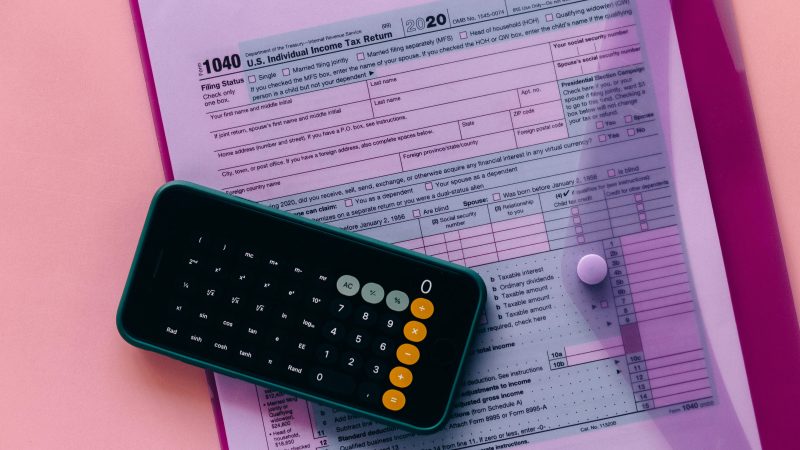
By the time Duane sat down with his tax preparer in late January 2025, he had roughly $4,200 in anticipated federal refund — a figure built from self-employment deductions, a home-office claim, depreciation on shop equipment, and a partial medical expense deduction. He filed on February 14th, electronically, through a paid preparer using Schedule C and Form SE. He expected a direct deposit in the standard 10-to-21-day window.
The IRS Tracker Said ‘Processing’ for Five Weeks Straight
The IRS Where’s My Refund tool showed “Return Received” on February 15th — one day after filing. Then nothing changed. For five consecutive weeks, the status bar sat frozen on the first of three steps. Duane told me he checked the tool every morning before opening his shop.
On March 19th, he called the IRS helpline. After a 47-minute hold, he was told his return had been flagged for “additional review” under IRS identity verification protocols — a process that can be triggered by first-time filers of certain schedules, changes in deduction patterns, or automated fraud filters. No specific reason was given. He was told to allow up to 60 additional days.
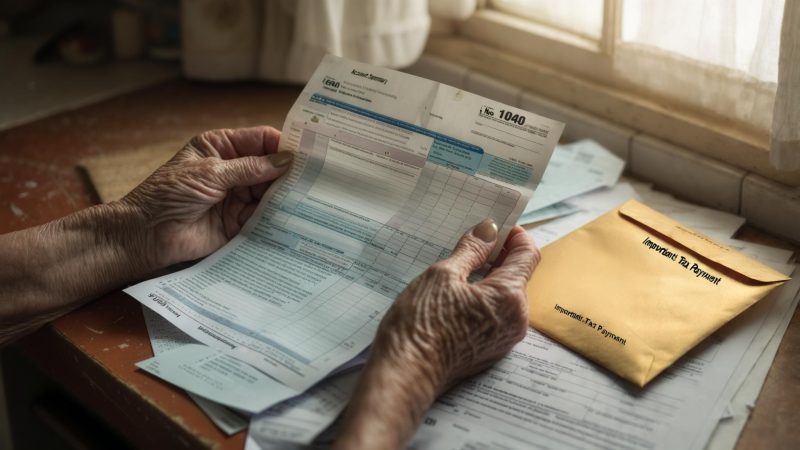
Duane did not receive a CP05 notice until April 1st. He had been waiting 46 days by that point. The notice asked him to verify income reported on his Schedule C by providing supporting documentation — specifically, bank statements and 1099-NEC forms from two clients that accounted for roughly $31,000 of his reported income.
“I had everything,” he told me, spreading out a folder on the diner table. “Bank statements, copies of the 1099s, the invoices. I faxed it all to the number on the notice the same day it arrived.”
Lifestyle Inflation Made the Wait Harder Than It Should Have Been
This is the part of Duane’s story that he told me with visible discomfort. When his shop revenue climbed in mid-2023, he made a series of spending decisions that looked reasonable at the time. He bought a new truck — a 2023 Ram 1500 with a $698 monthly payment. He started sending his two adult children, both living in other states, $400 a month combined “just because I could.” He bumped his own salary draw from the business, increased his dining-out budget, and stopped making contributions to the SEP-IRA he had opened in 2022.
He is generous to a fault — his words, not mine. “I finally had money and I acted like I’d always have money,” he said quietly. “That’s the honest version.”
By the time the workers’ comp denial arrived and the IRS refund stalled, Duane had roughly $1,100 in his personal checking account. His shop account had more, but drawing heavily from it during a period when he was operating at reduced capacity due to his hand injury felt risky. He postponed the hospital payment. He called his son and asked him not to expect the usual transfer that month. “That was the hardest phone call,” he said.
What Finally Broke the Logjam
After faxing his documentation on April 1st, Duane waited. He called the IRS again on April 22nd — day 67 of his wait — and this time reached an agent who confirmed his documentation had been received and was under review. The agent told him his return was in “processing” status and that a refund date should generate within 9 business days.
The deposit hit his bank account on May 3rd, 2025 — exactly 78 days after he filed.
The full $4,200 arrived without adjustment. No additional tax was assessed. No penalties were applied. The review had been a verification process only, and his documentation satisfied every question the IRS raised.
Where Duane Stands Now — and What He Wishes He Had Done Differently
When I spoke with Duane in early April 2026, the workers’ comp appeal was still unresolved — his attorney had told him a hearing was likely set for summer 2026. He had rebuilt his personal savings to approximately $9,000, restarted his SEP-IRA contributions at $200 per month, and cut the Ram 1500 loose in November 2025, trading down to a used 2019 Tacoma and eliminating the monthly payment entirely.
He still sends money to his kids when he can. But the amount is smaller, and more deliberate. “I spent two years acting like the good times were permanent,” he told me. “They’re not permanent. The lift falls, the check gets held, and then you find out real quick what your cushion actually looks like.”
What Duane said he wished he had known earlier was specific and practical: self-employed filers should expect longer review timelines when their deductions increase significantly year-over-year, and they should have physical documentation organized before filing — not scrambled together after a notice arrives. He also said he had no idea the IRS offered a Taxpayer Advocate Service for cases involving financial hardship, something a neighbor mentioned to him only after the refund had already arrived.
Duane’s outcome was ultimately positive — full refund, no adjustments, no penalties. But the 78-day gap cost him a late payment fee from the hospital and two months of stress he described as among the worst of his adult life. The injury, the denial, and the frozen refund all happened in the same four-month window. Any one of those alone would have been manageable. Together, they exposed every financial corner he had cut during the years when the money was good.
As I left the diner, Duane was already heading back to the shop — he had a transmission job waiting. He shook my hand with the injured one, which still has a slight curve to the ring finger. He seemed at peace with the version of the story he had told me. Not proud of every decision, but honest about it. That honesty, more than the dollar amounts, is what stayed with me.
Related: Her Workers’ Comp Was Denied, Her Insurance Was Dropped, and Her Rent Jumped $800 — What One Jacksonville Woman Did Next
Related: A Detroit Social Worker Found $34,000 in Hidden Marital Debt. Then His SNAP Application Was Denied.


Leave a Reply