

By Vivienne Marlowe Reyes, Senior Tax & Stimulus Writer — Published April 1, 2026
The waiting room of the Social Security Administration office on Farnam Street in Omaha smelled like recycled air and old coffee. I was there in late February 2026 to report on benefit processing backlogs when I noticed a man in a burgundy Omaha Public Schools jacket two rows over, thumbing through a manila folder and staring at his phone like it owed him something.
That was Clarence Guzman, 50, a school bus driver with 18 years behind the wheel and a tax year that had just quietly collapsed on him. He had come to check his projected Social Security retirement benefit — a visit he said he had been putting off for two years. What he had not planned on was the envelope sitting on his kitchen counter at home: a collections notice for $14,850 in credit card debt his ex-wife had run up during their marriage, debt he says he never knew existed until three days earlier.
We talked for nearly two hours that afternoon. By the time I left, Clarence had walked me through a financial year that looked manageable on the surface and genuinely complicated underneath.
The Overtime He No Longer Had
Clarence’s income story starts with a number he no longer earns. For roughly a decade, he drove Saturday extra-service routes for Omaha Public Schools — field trips, athletic transfers, district events. That overtime added approximately $12,600 to his annual earnings, bringing his total compensation to just over $71,000 in calendar year 2024.
In the spring of 2025, the district cut Saturday routes citing budget constraints. His income dropped back to his base salary of $58,400. He adjusted his spending — fewer dinners out, a delayed kitchen repair, a fishing trip scratched from the calendar. What he did not adjust was his W-4 withholding election on file with the district payroll office.
The structural problem, as he later understood it, was that the additional withholding from those Saturday paychecks had quietly inflated his annual refund for years. Without that extra withholding in tax year 2025, less total federal tax was held from his checks overall — even though his W-4 elections had not changed. According to WIVB’s reporting on 2026 refund trends, failing to account for income changes across pay sources is one of the most common reasons taxpayers see a smaller refund than expected.
Clarence filed in mid-January 2026 using the same online software he had used for six consecutive years. He entered his W-2, his single filing status following his August 2024 divorce, and submitted. Then he waited.
The Refund That Came Back Wrong
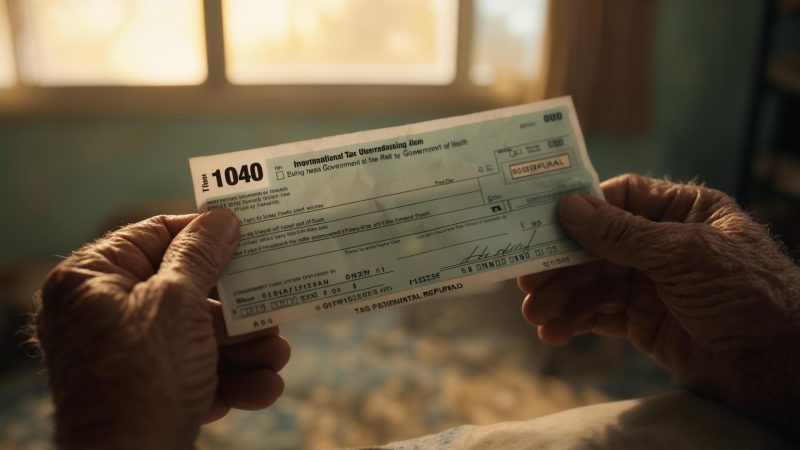
The IRS accepted his return on January 19, 2026. The “Where’s My Refund” tool moved through its stages without drama. On February 4th, a direct deposit of $1,847 landed in his checking account. He stared at that number for what he described as a long, uncomfortable moment.
He had been expecting roughly $3,200 — consistent with the refunds he received in 2023 and 2024, back when overtime was part of the equation. He had mentally earmarked that money for brake work on his truck, a security deposit on a renewed apartment lease, and what he vaguely called “getting ahead for once.” Instead, he was $1,363 short of a plan that no longer held.
The broader context made it sting slightly differently. IRS data through February 6, 2026 puts the average federal refund this season at $2,290 — up nearly 11% from the same period a year earlier, representing roughly a $350 year-over-year gain. Clarence’s $1,847 landed below even that elevated average, which only sharpened his frustration.
“I ran the numbers three times,” Clarence told me. “I kept thinking I’d made a data-entry error somewhere. Then I realized the error was back in April 2025, when I didn’t fix my withholding after losing those routes.”
When the Hidden Debt Arrived
The collections letter came on a Thursday, eleven days after his refund deposited. It was from a debt resolution company acting on behalf of two credit card issuers. The total: $14,850 spread across three accounts, all opened during his marriage, all carrying his name as either a joint account holder or authorized user.
Clarence had been divorced since August 2024. The settlement had been handled through a mediator rather than full legal representation — a decision he said he made to keep costs down and the process civil. His ex-wife had verbally agreed to handle the outstanding balances. She had not.
Two financial shocks in eleven days: a smaller refund followed by a collections notice for nearly $15,000. Clarence told me he did not tell anyone — not his sister in Lincoln, not a coworker he had worked alongside for a decade. That silence tracked with how he described himself throughout our conversation: someone who projects stability even when the underlying numbers say otherwise.
He told me he had come to the SSA that afternoon partly to anchor himself in something concrete. The agency representative had told him his projected benefit at full retirement age 67 was approximately $1,940 per month, based on his current earnings record. That number, at least, felt like something he could depend on.
Where Clarence Stands Now — And What He Wishes He Had Done Differently
By early March 2026, Clarence had engaged a debt negotiation firm to dispute which portion of the $14,850 was legally his obligation under the terms of his divorce agreement. He was told the process could take four to six months. He was not optimistic, but he was moving.
The $1,847 refund went toward his truck: brake work and rear tires that together ran $1,210. The remaining $637 sits in a savings account he has not touched. He described it, without irony, as his “psychological buffer” — a phrase that said more about where his head was than any spreadsheet could.
He also said he plans to request a W-4 review with his school district’s payroll department before the 2026 tax year closes — something he acknowledged should have happened the moment the Saturday routes disappeared. The loss of that overtime income, combined with the shift to single filing status after the divorce, produced a compounding withholding gap that neither his software nor his expectations had caught.
What Clarence’s year makes visible is how a financial plan can unravel without a single dramatic mistake. He did not make reckless choices. He made confident ones built on variables that had always been stable — until they were not. The overtime had always been there. His wife had always handled those accounts. Neither assumption survived 2025 intact.
He walked out of the SSA building that February afternoon with his projected benefit printout tucked back into the manila folder, jacket folded over his arm, moving toward the parking lot at a pace that looked, from the outside, entirely unhurried. Carrying weight without showing it is a particular kind of skill. Clarence Guzman has had years of practice.
Related: She Cosigned a Loan She Never Borrowed. Now She Owes Taxes on Debt She Never Spent.



Leave a Reply