
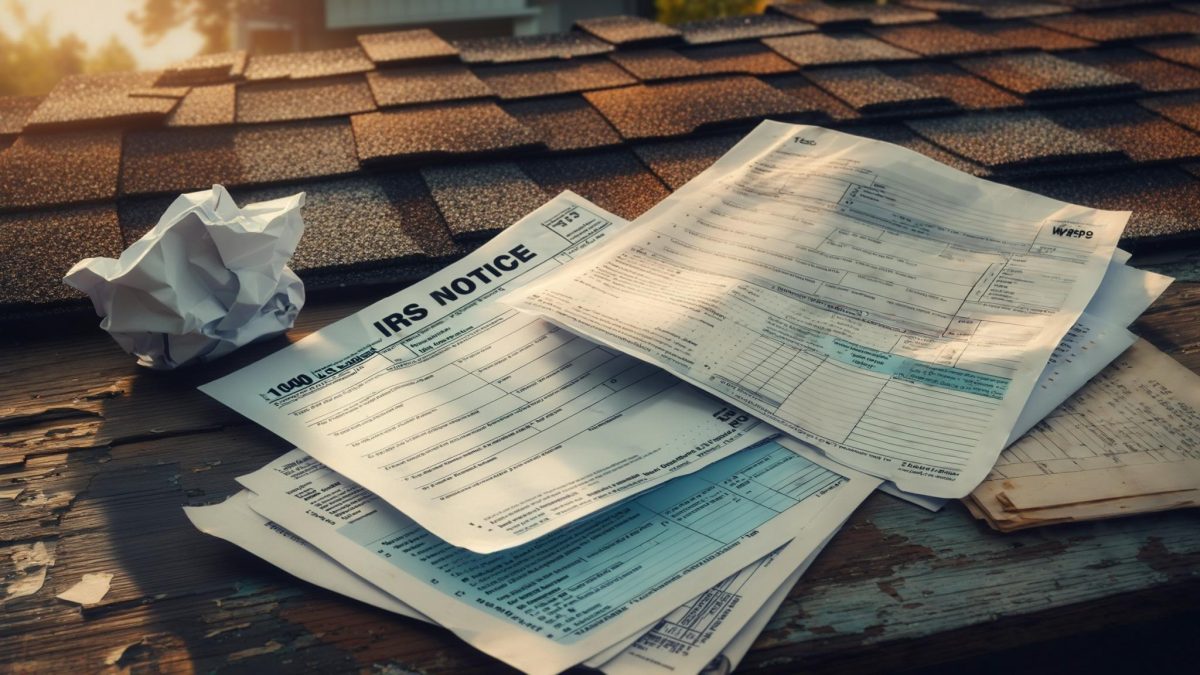
Roughly 1 in 5 tax refunds issued by the IRS each year is delayed beyond the agency’s standard 21-day processing window, according to data from the IRS Taxpayer Advocate Service. For most filers, a delay is a minor inconvenience. For Vernon Ivanovic, a 50-year-old pharmacy technician from Jacksonville, Florida, it meant watching a hole in his roof get wider while a four-figure check sat frozen somewhere inside an IRS processing queue.
I first heard Vernon’s voice on a local Jacksonville AM radio program called Your Money, Your Way, sometime in mid-March of this year. He was a call-in guest talking about premium tax credits and the frustration of waiting on a refund. His tone wasn’t angry — it was careful, measured, the voice of someone who had learned to choose his words around financial stress. After the segment ended, I reached out through the station’s producer and asked if he’d be willing to sit down. He agreed, and we met at a Panera Bread near the Regency Square area on a Tuesday afternoon.
A Refund Built on Tight Math
Vernon Ivanovic has been a pharmacy technician for nineteen years. He earns approximately $72,000 annually — a salary that puts his household in a comfortable bracket on paper, but one that stretches thin when you factor in a spouse who stays home with three children, a marketplace health insurance plan that costs the family roughly $610 per month after the Advanced Premium Tax Credit, and a home that has needed serious attention since a windstorm tore through his neighborhood in the fall of 2024.
That storm is where things started to unravel. Vernon filed a claim with his property insurer. The claim was paid — $6,200 for partial roof and fence damage — but the insurer subsequently dropped his policy at renewal. “They sent a letter in January 2025 saying they were non-renewing,” Vernon told me, stirring his coffee. “No reason given except ‘claims history.’ One claim in eleven years.”
He eventually found a new insurer through the Florida Citizens Property Insurance Corporation — the state’s insurer of last resort — at a premium nearly double his previous rate. The roof repairs that the original claim didn’t fully cover, estimated by a contractor at $8,500, have been sitting unfinished since November 2024. Vernon told me he had been mentally earmarking his 2025 federal tax refund for exactly that job.
Filing Early, Waiting Anyway
Vernon filed his 2025 federal return on February 3, 2026 — well ahead of the April 15 deadline. He used a paid tax preparer and submitted electronically with direct deposit selected. His expected refund was $4,200, a figure that included the Child Tax Credit for his three dependents and a reconciliation of the Advanced Premium Tax Credit he’d received through the ACA marketplace during 2025.
The IRS’s standard processing window for electronically filed returns with direct deposit is 21 days, according to the IRS’s official refund tracking page. Vernon checked the “Where’s My Refund” tool on the IRS website starting around day ten. For more than two weeks, the status bar showed a single stage: Return Received. It never moved to Refund Approved.
Then, on approximately February 28, a letter arrived at Vernon’s home. It was a CP05 notice. The IRS was reviewing his return and needed up to 60 additional days. No specific item was flagged. No action was required. Just — wait.
What a CP05 Notice Actually Means — and What It Doesn’t
The CP05 is one of the IRS’s most common review notices, and it surfaces frequently when a return includes credits that require income verification — particularly the Premium Tax Credit, which is reconciled on Form 8962 and compared against marketplace data submitted by the insurer. A mismatch between what a taxpayer reported and what the insurer reported to the IRS can trigger the hold automatically.
Vernon’s situation — self-purchased ACA marketplace coverage with an Advanced Premium Tax Credit — is a known flag in the IRS’s automated screening system. His tax preparer had warned him this was possible. “She told me in January, ‘if you got the advance credit, your return might take longer,’”, Vernon recalled. “I just didn’t expect ‘longer’ to mean two months.”
During the waiting period, Vernon told me he checked the IRS portal almost every day. The status never updated beyond Return Received until the very end. He also called the IRS helpline twice. The first call, he waited 47 minutes and was told the return was under review with no further details available. The second call, in late March, resulted in a recorded message saying wait times exceeded available capacity.
The Check Arrives — Smaller Than Expected
On the morning of April 1, 2026 — fifty-seven days after he filed — Vernon received a direct deposit notification from his bank. The amount was $3,847. His expected refund had been $4,200. The difference of $353 arrived separately, about a week later, with a CP12 notice explaining that the IRS had corrected a math error and adjusted his refund accordingly. Vernon says his preparer is still reviewing the explanation.
He has used the refund to pay down roughly $2,400 in credit card debt accumulated during the months the roof repairs were deferred, and set aside the remainder toward the repair contractor’s deposit. The full $8,500 job is still not scheduled. His wife is researching contractor payment plans. The tarp, Vernon mentioned somewhat flatly, has held up better than expected.
The Bigger Picture Behind Vernon’s Story
What Vernon’s experience illustrates isn’t unusual — but it is underreported. According to data published by the IRS Taxpayer Advocate Service’s 2025 Annual Report to Congress, identity theft filters and income verification holds delayed millions of refunds in recent filing seasons, with ACA-related returns disproportionately represented in the backlog due to the complexity of Form 8962 reconciliation.
For families like Vernon’s — upper-middle income on paper, but exposed through marketplace insurance, a lapsed property policy, and deferred maintenance — a tax refund isn’t a windfall. It’s a financial patch. When it’s delayed by two months and arrives smaller than expected, the ripple effect touches everything from credit card balances to contractor scheduling to whether a tarp becomes a permanent fixture.
When I asked Vernon what he would do differently, he paused for a long moment. “I don’t know that I could have done anything differently,” he said. “I filed early. I used direct deposit. I did everything they tell you to do. The system just — did what it did.” There was no bitterness in it, really. Just the careful realism of someone who has learned to build contingency into every plan.
He mentioned, almost as an aside, that he’s already planning to file his 2026 return in late January next year — as early as the IRS will accept it. He wants to get ahead of what he now considers an almost predictable delay. Whether that optimism is warranted is something only next April will reveal.
Related: A Fraudulent Tax Return Was Filed in His Name — Then Duane Got One IRS Letter That Changed Everything
Related: She Counted on Her Tax Refund to Pay Rent. Then a Debt Collector Claimed It First.




Leave a Reply