
Roughly one in five American households that qualify for the Earned Income Tax Credit never claim it — leaving billions of dollars sitting uncollected at the IRS each year. For Carlos Mendez, a 55-year-old restaurant manager from Miami, Florida, not claiming every dollar owed to him was never an option. He couldn’t afford that mistake.
When I sat down with Carlos at a diner booth in Little Havana on a Tuesday afternoon in March 2026, he’d already ordered coffee for both of us before I arrived. That told me everything I needed to know about him.
A Family Built on Two Marriages and One Salary
Carlos managed a mid-size restaurant in Coral Gables for eleven years before COVID-19 shuttered the industry in 2020. He watched his savings — roughly $34,000 accumulated over a decade — drain away across fourteen months of unemployment and irregular gig work. By the time he landed a new management position in late 2021, he was starting from zero at 50 years old.
The new job pays $52,000 a year. It is less than he made before. The family, meanwhile, got larger. Carlos has two biological children, ages 8 and 11. His wife, Elena, brought two children of her own into the marriage — ages 7 and 13. Four kids. One income, most months.
“Elena’s ex is supposed to pay $650 a month in child support,” Carlos told me, stirring his coffee without drinking it. “Last year he paid it four times. Four times out of twelve. So we just stopped counting on it.”
The math in the Mendez household is tight by any measure. Rent in their three-bedroom apartment runs $2,300 a month. Groceries for six people — Carlos, Elena, and four growing children — average around $900 monthly. Between car insurance, utilities, school fees, and the unpredictability of Elena’s ex, there is no margin. There has not been a margin in years.
Filing Taxes When Every Dollar Is Already Spoken For
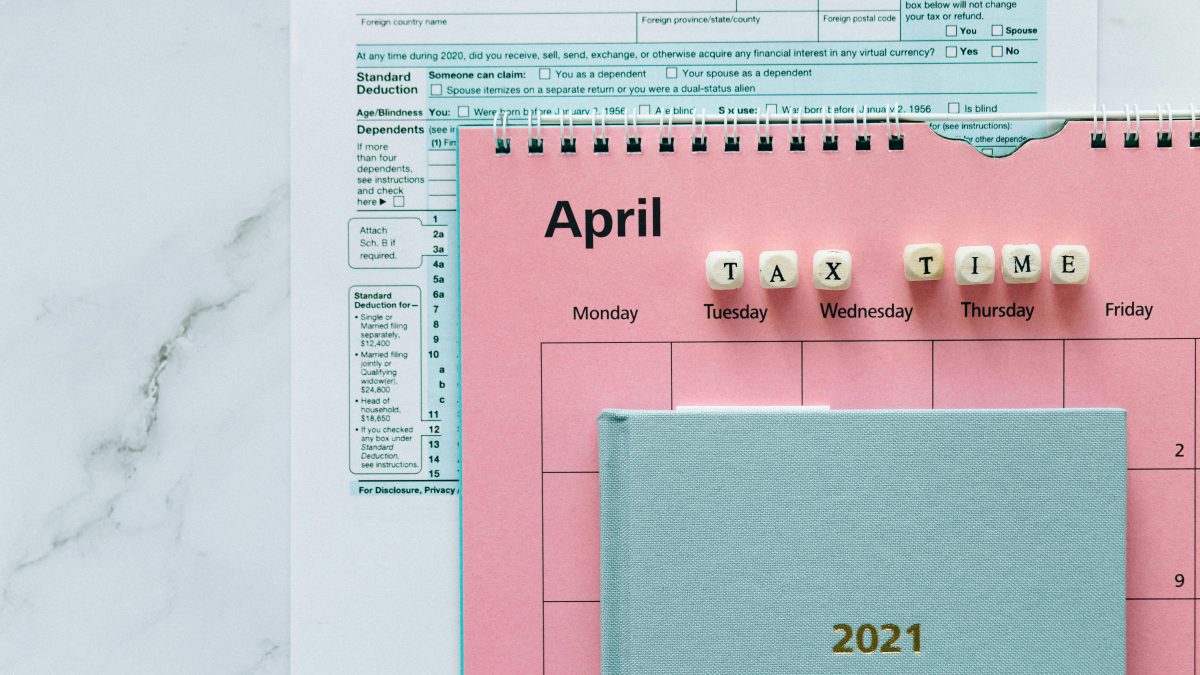
Carlos e-filed his 2025 federal return on January 29, 2026, using tax software he’s relied on for the past six years. He claimed the Child Tax Credit for his two biological children — worth up to $2,000 per qualifying child under current law — and worked with a local tax preparer to ensure the blended family situation was documented correctly.
The total refund came to $4,847. For most households, that number might mean a vacation or a chunk toward a down payment. For Carlos, it was already allocated before it arrived.
The IRS typically processes e-filed returns within 21 days, according to the agency’s own published guidelines. Carlos knew this. He checked the IRS Where’s My Refund tool daily, sometimes twice a day. For the first three weeks, the tool showed “Return Received.” Then it stalled.
The 47-Day Wait and What It Actually Cost
By mid-February, Carlos’s return still hadn’t moved past the “Return Received” status. He called the IRS helpline and waited on hold for 58 minutes before reaching an agent, who told him his return had been selected for additional review — a routine process the agency uses to verify identity and confirm credit eligibility on returns involving dependents.
No fraud. No error. Just the system doing what the system does.
But the calendar kept moving. The dentist appointment for his youngest was pushed back. The electric bill accumulated a late fee. Elena picked up a weekend catering shift to cover the shortfall, which meant Carlos handled all four kids alone those two Saturdays. He described it without complaint, the way people describe things they’ve simply accepted.
“You know what’s hard?” he said, leaning back in the booth. “Not the money part. The explaining. My 13-year-old stepdaughter asks why she can’t go on the school trip to Orlando. What do I say? I can’t tell her the government is holding our money in review. She’s 13.”
The $4,847 direct deposit landed in Carlos’s checking account on March 17, 2026 — 47 days after he filed. He showed me the notification on his phone, still saved in his screenshots folder. The timestamp was 6:04 a.m.
What the Refund Actually Covered — and What It Couldn’t
Carlos pulled a crumpled notepad page from his jacket pocket. He’d written the allocation down weeks before the money arrived, and he tracked it afterward to see how accurate he’d been. He was, almost to the dollar.
- $1,140 — Pediatric dental work for his youngest (crown and one filling)
- $1,275 — Overdue electric bill plus the $47 late fee it had accumulated
- $920 — Two months of supplemental groceries to restock what they’d depleted
- $385 — Baseball registration and equipment for his 11-year-old
- $650 — School trip deposit for his 13-year-old stepdaughter
- $477 — Absorbed into general household expenses and a car repair that came up
That last $477, he noted, had been earmarked as emergency savings. It lasted nine days before the car needed a new serpentine belt.
As Carlos explained the breakdown, he didn’t sound sorry for himself. He sounded like someone who has learned to be a precise and unsentimental accountant of his own life. He noted the school trip deposit for his stepdaughter — the 13-year-old who had asked the hard question — with visible satisfaction. That one he’d protected from the beginning.
The Bigger Picture He Can’t Stop Thinking About
According to the IRS Statistics of Income division, the average federal tax refund for the 2025 filing season is approximately $3,138. Carlos’s refund came in above that — a product of two qualifying children, his income bracket, and credits he and his tax preparer were careful to claim correctly.
But what struck me more than the numbers was the psychological weight Carlos carries around something that arrives once a year and disappears in days. He is 55. He has spent the prime earning years of his life in an industry that was dismantled overnight by a pandemic. He rebuilt, at a lower salary, with a larger family, and no cushion beneath him.
“I think about retirement sometimes,” he said, and then he stopped for a moment. “And then I stop thinking about it. Because I can’t afford to think about it yet. Right now I’m thinking about September — my oldest starts middle school. That’s a new uniform, new fees. I’ll worry about retirement when the kids are older.”
Carlos is generous in a way that costs him. He paid the school trip deposit for his stepdaughter before he paid his own car registration. He mentioned it offhandedly, the way people mention something they’ve already decided isn’t up for debate.
When I left the diner, Carlos insisted on paying for the coffee. I let him, because declining felt like its own kind of disrespect. He had a 4 p.m. shift to get back to, four kids who would need dinner, and a tax return already being mentally allocated for next year.
The 47-day wait didn’t break anything in the Mendez household. But it bent things. A late fee here, a postponed appointment there, a mother picking up weekend shifts she didn’t plan on. These are the costs that don’t show up in any IRS processing statistic — the friction tax that families living paycheck to paycheck absorb every time a system moves slower than the bills do.
Carlos Mendez is not waiting for a windfall. He’s waiting for September, and the new uniform, and the fees that come with middle school. And he’ll file again in January, and check the tracker twice a day, and hope it comes in under 21 days this time.
Related: He Has $22K Saved and a Baby Due in Four Months — The Math That’s Keeping Him Up at Night




Leave a Reply