Roughly 5.6 million tax refunds are intercepted annually through the federal Treasury Offset Program, according to the Bureau of the Fiscal Service — a number that sounds abstract until you meet the person staring at a bank balance that never moved. I met Glenn LaRoche on a cold Tuesday morning in late March 2026, introduced by Pastor Elaine Morrow at New Cornerstone Church in Raleigh, North Carolina. She had pulled me aside after a community outreach meeting and said, quietly, that she knew a man who needed to tell his story but would never ask anyone to listen.
Glenn LaRoche is 58 years old, with the kind of careful posture that comes from decades of managing other people’s problems before his own. He has run the floor at a regional retail chain’s Raleigh location for eleven years. He is divorced, pays child support for two children, and carries roughly $41,000 in federal student loan debt from a graduate degree in business management he finished at 49 — convinced, he told me, that the degree would move him into a regional director role that never materialized. He lives alone in a two-bedroom apartment about ten minutes from the store he manages.
The Refund Glenn Was Planning Around
Glenn filed his federal return on February 9, 2026 — electronically, using software he has used for the past six years. His W-2 showed a gross income of approximately $74,800. After standard deductions and a modest contribution to his 401(k), his software calculated a federal refund of $3,412. He told me he knew exactly where every dollar of that money was going before the IRS had even acknowledged receipt of his return.
“I had it mapped out,” Glenn told me, sitting across a laminate table at a coffee shop near his apartment. “Student loan catch-up payment was $900. I owed a balance on my car insurance renewal — $480. And I was going to put $1,200 toward an emergency account I’ve basically emptied twice in the last three years. The rest was for the kids’ spring stuff.”
The IRS Where’s My Refund tool showed his return as “Received” on February 10, then “Approved” on February 19. Glenn checked it twice a day during that window. By February 25, the status had updated to “Refund Sent.” He checked his bank account that morning, and again that afternoon. Nothing arrived.
The Letter He Almost Threw Away
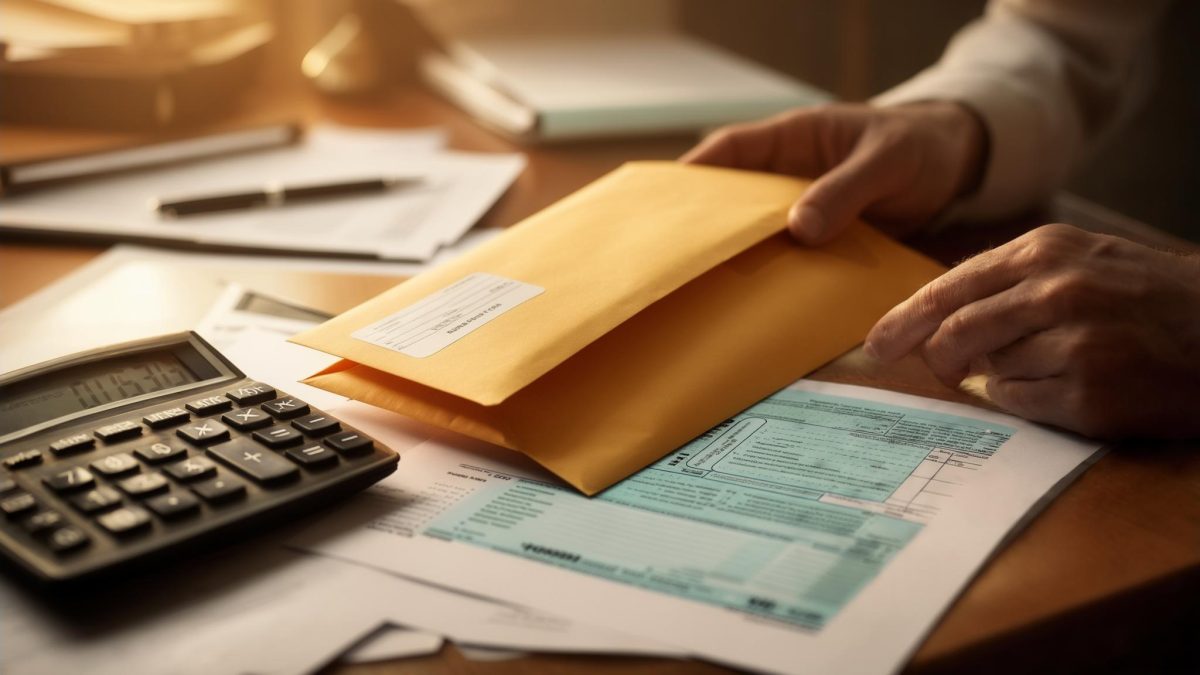
Three days after the IRS portal showed his refund as sent, a letter arrived from the U.S. Department of the Treasury’s Bureau of the Fiscal Service. Glenn described the envelope as nondescript — no bold warnings on the outside, no indication of urgency. He set it on his kitchen counter for two days under a grocery receipt and a phone bill.
“I thought it was junk,” he said, and then paused. “No — I think part of me didn’t want to open it. When you’re already stretched, another piece of paper from the government doesn’t feel like good news.”
When he finally opened it, the letter identified an offset of his full $3,412 refund under the Treasury Offset Program. The seizure was split: $2,114 directed to his federal student loan servicer for a debt that had entered default status in September 2025, and $1,298 directed to the North Carolina child support enforcement agency for a reported arrearage. Glenn told me he did not know either obligation had reached the point of offset eligibility.
Piecing Together How It Happened
As Glenn explained the timeline to me, it became clear that two separate financial threads had unraveled at roughly the same time. His student loan — taken out federally to fund his graduate program between 2013 and 2015 — had been in income-driven repayment. But in late 2024, he had missed three consecutive payments after absorbing a $340 monthly increase in his child support obligation, ordered by a Wake County family court judge following a modification request from his ex-wife.
By September 2025, his loan servicer had reported him to the Department of Education’s default resolution group. Glenn said he had received at least one letter about the delinquency but had called his servicer and believed — incorrectly — that a brief forbearance request he had submitted would pause any collections activity.
The child support arrearage was the piece that stung the most, Glenn told me. He said he had been current on his monthly obligation but had fallen behind during a period in late 2024 when his store hours were cut for six weeks during an inventory restructure. A gap of roughly $1,100 in payments during that stretch had quietly compounded with interest through the state enforcement system.
The Quiet Aftermath — and What Changed
Glenn did not call his family. He told me that immediately, without my asking. His daughter lives in Charlotte; his son is in college in Wilmington. His parents are elderly and he sends them small amounts when he can. Asking for help, he said, is something he has trained himself to see as failure — a mindset he acknowledged, even as he held it.
In the weeks after the offset letter arrived, Glenn did two things. He called the student loan servicer’s default resolution line and, after approximately 40 minutes on hold, was told he could apply for a rehabilitation plan — a nine-month program through which he would make reduced, income-based payments to bring the loan out of default status. His estimated monthly rehabilitation payment was quoted at $87. He enrolled by phone on March 4, 2026.
The child support arrearage was more complicated. Glenn retained a family law attorney in Raleigh for a one-time consultation — $175 — and was advised to file paperwork with the Wake County child support office documenting the income reduction period. As of the date we spoke, that process was ongoing. The arrearage had been partially satisfied by the offset, leaving a remaining balance of approximately $440.
What Glenn Wants Other People to Know
When I asked Glenn what he would do differently, he was quiet for a moment — the kind of quiet that has more content in it than most people’s full sentences. He told me he wishes he had called his loan servicer the moment he missed his first payment in early 2024, instead of assuming the situation was manageable by itself. He also said he did not fully understand how the Treasury Offset Program worked before this happened to him.
“I knew the IRS could do things to you if you owed them money,” he said. “I didn’t know they could take a refund you’d already earned — through withholding — for a debt with a completely different agency. That caught me off guard.”
According to the Federal Student Aid office, borrowers whose loans are in default can be subject to Treasury offset at any point after a statutory pre-offset notice is issued — even if the borrower never received or read the notice. The offset process is automated and does not require a court order.
Glenn told me he has already looked up that number. He said he is going to call it every year now before he files — a ritual born entirely from this experience. He is not embarrassed to say so. That, Pastor Morrow told me when I followed up with her afterward, represents real progress for a man who spent most of 2025 pretending nothing was wrong.
When I left the coffee shop that Tuesday, Glenn was nursing his second cup and answering a call from one of his store’s shift supervisors. He handled it in under ninety seconds — calm, specific, authoritative. Then he looked at me and said the last thing I wrote down: “I’m better at other people’s problems than my own. Working on it.”
There is no clean resolution to Glenn LaRoche’s story as of this writing. The $3,412 is gone. The rehabilitation plan is nine months from completion. The arrearage paperwork is still pending in Wake County. What exists, instead, is a 58-year-old man who opened the letter, made the calls, and is paying the $87 a month. That is not a triumph. But it is not paralysis either. For Glenn, right now, that appears to be enough.
Related: A Fraudulent Tax Return Was Filed in His Name — Then Duane Got One IRS Letter That Changed Everything
Related: A Garnishment She Didn’t See Coming Wiped Out Her Tax Refund — and Forced a Hard Family Conversation


Leave a Reply