

The window for the average electronically filed tax refund is narrow but well-documented: according to IRS.gov, most e-filed returns with direct deposit are processed within 21 days. For Ivan Gantt, that window slammed shut on day nine — and didn’t reopen for more than six weeks.
I first heard from Ivan in mid-February 2026. He had read a piece I wrote last fall about filers who get caught between IRS processing backlogs and urgent home repair timelines. He sent a brief email through our publication’s tip line: “I think I’m living your article right now.” We arranged a call the following week, and I ended up speaking with him three more times before his situation fully resolved.
Ivan is 46 years old, divorced, and has been a flight attendant based out of Denver International Airport for eleven years. He pays child support for two kids, ages 13 and 16, and owns a modest ranch-style home in the Montbello neighborhood that he bought in 2019. He is, by his own description, a spreadsheet person — the kind of filer who has his W-2 organized by January 20 and his refund amount estimated before the ink is dry.
When I sat down with Ivan on a video call in late February, he had a notepad beside his laptop and a water bottle he never touched. He told me his 2025 return showed a federal refund of $3,247 — enough, he hoped, to cover the first installment on a roof repair he’d been deferring since November.
A Refund He Was Already Spending in His Head
Ivan filed his return electronically through his tax software on February 8, 2026. His situation was more complicated than a single W-2: he had three months of COBRA coverage in 2025 following a brief gap in his airline’s union health plan, two separate income sources from a side scheduling contract he picked up, and the standard child support deductions he documents meticulously each year.
The COBRA premiums alone had cost him $1,847 per month for three months — $5,541 total — while his mortgage payment sits at $1,590 per month. He paid more for temporary health coverage than he did to keep the roof over his head, a fact he mentioned with the flat affect of someone who has repeated it enough times that the outrage has worn smooth.
He checked the IRS Where’s My Refund tool every morning at 6 a.m. before his first departure. For eight days, the status bar showed “Return Received.” That was expected. On day nine, instead of moving to “Refund Approved,” the status froze — and three days later, a letter arrived in his mailbox.
The Letter That Stopped Everything
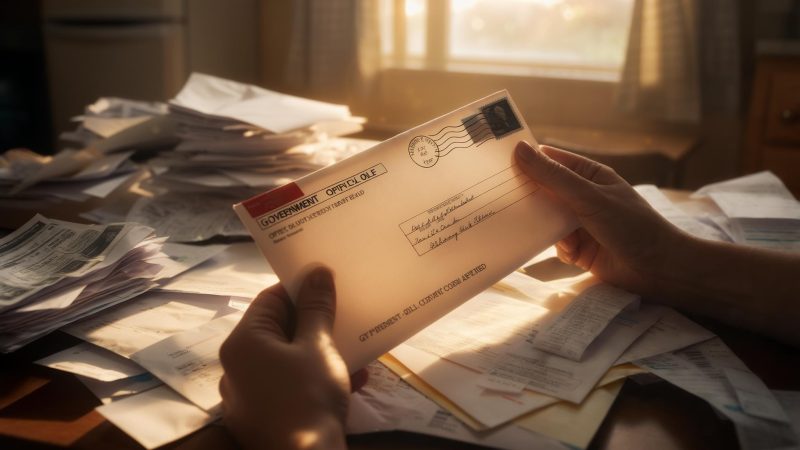
The letter was a 5071C, the IRS identity verification notice. It informed Ivan that the agency needed to confirm his identity before processing his return, and directed him to the IRS Identity Verification Service at idverify.irs.gov. Ivan told me he read it twice standing at his mailbox in 28-degree Denver weather.
The 5071C letter is one of the more common IRS identity verification notices. According to IRS guidance, it is sent when the agency’s fraud filters flag a return as potentially suspicious — not necessarily because fraud occurred, but because something in the return pattern triggered a review. For Ivan, the most likely culprit was the combination of multiple income sources, COBRA documentation, and a slightly different employer EIN on his secondary contract compared to prior years.
He completed the online verification on February 28, three days after the letter arrived. The process required him to confirm his identity against prior tax return data, his financial account information, and a government-issued ID. It took about 25 minutes. The confirmation screen told him to allow up to nine weeks for his refund to process.
The Treasury Offset He Didn’t See Coming
Ivan spent the first two weeks of March checking the tracker compulsively — what he called “a terrible habit I could not stop.” He knew, intellectually, that the nine-week window applied. He also knew his roof contractor had a slot opening in late March and couldn’t hold it.
On March 18, the tracker updated to “Refund Approved.” But the amount shown was not $3,247. It was $2,835.
“I actually refreshed the page four times,” Ivan told me. “I thought it was a display error. It wasn’t.”
The difference — $412 — had been withheld through the Treasury Offset Program (TOP), a federal program administered by the Bureau of the Fiscal Service that allows state and federal agencies to intercept tax refunds to satisfy certain debts. Ivan’s debt, it turned out, was a child support arrearage that had been reported to the state agency in late 2025 due to a payment processing error. He had made every payment. The error was administrative — a direct deposit that hit the wrong account number during a banking transition — but the offset had already been submitted to the federal system before it was corrected.
Ivan called his state child support enforcement agency the same day he saw the reduced refund amount. After a 47-minute hold, a representative confirmed the error and told him the $412 would be returned within 30 to 90 business days. He told me the phrase “30 to 90 business days” landed like a second letter in the mailbox.
What $2,835 Looks Like Against an $8,500 Roof
The $2,835 direct deposit hit Ivan’s account on March 24, 2026 — 44 days after he filed. It was enough to make a partial deposit on the roof repair, keep the contractor’s slot, and cover one more month of health insurance premiums now that he had re-enrolled in his union plan in early March.
It was not enough to finish the roof. The contractor is scheduled to complete roughly 60 percent of the work, with the remaining balance — approximately $3,200 — deferred until Ivan can pull together additional funds over the spring.
When I spoke with Ivan a final time at the end of March, he was tracking the $412 offset dispute with the same daily-check discipline he’d applied to the Where’s My Refund tool. He had a folder — physical, not digital — with every letter, every confirmation number, every timestamp. He estimated the correction would arrive sometime in June.
What stays with me from my conversations with Ivan is something he said near the end of our last call — not with bitterness, but with the measured tone of someone who has processed a thing fully. He told me the hardest part was not the money itself. It was building a plan around numbers that turned out to be estimates, and discovering that even the most careful planning can’t fully account for a system with its own timeline.
“I do this for a living — not taxes, but logistics,” he said. “I manage schedules. I know that things slip. But when it’s your own finances, you don’t let yourself plan for the slip. You plan for the number that’s supposed to be there.”
As of April 1, 2026, Ivan’s roof repair is half-done, his child support dispute is open, and his $412 is somewhere in a government processing queue. He’s already filed a calendar reminder for the 90-business-day mark. Of course he has.
Related: COBRA Was Costing More Than Our Rent. Then My Husband’s Hidden $34,000 in Debt Surfaced.



Leave a Reply