

Tax refund season closes quickly for people who need it most. By the final week of March 2026, the IRS had already issued more than 61 million refunds totaling over $201 billion — but for a significant slice of filers, the money arrived already spoken for. Tommy Bianchi, a 46-year-old HVAC technician from Phoenix, Arizona, is one of them.
When I met Tommy at a diner off Interstate 10 on a Wednesday morning, he had his phone face-up on the table, the IRS Where’s My Refund tool open in his browser. He’d been checking it every morning for 19 days. “It says ‘refund approved,'” he told me, sliding the screen across. “But I’ve learned not to celebrate until the money’s actually in my account.”
The Debt That Followed the Divorce
Tommy’s divorce was finalized in early 2023. He described it as “the most expensive thing that ever happened to me, and I didn’t choose it.” His legal fees alone came to $22,000, all of it charged across two credit cards when his savings account ran dry after the first six months of proceedings.
The settlement gave his ex-wife primary custody of their two children — a 14-year-old daughter and an 11-year-old son — and the house they’d owned for eight years in the Ahwatukee neighborhood. Tommy moved into a one-bedroom rental in Tempe. The court set child support at $1,600 per month, which his attorney confirmed represented approximately 25 percent of his gross monthly income.
Three years into renting, Tommy hasn’t been able to save more than a few hundred dollars at a time before something — a car repair, an emergency vet bill for his dog, a credit card minimum — pulls it back down. “I make decent money,” he said. “HVAC in Phoenix, I’m not hurting for work. But I feel like I’m running in place.”
He currently owes approximately $14,200 on the two credit cards, down from $22,000 — three years of minimum-plus payments that have cost him roughly $4,000 in interest alone. His goal, stated plainly over coffee, is to pay off the cards, save $30,000 for a down payment, and buy a small house before his kids are grown. “I want them to have a real place to come to,” he said. “Not just a one-bedroom apartment where they sleep on an air mattress.”
Why the Tax Refund Became His Annual Reset Button
For filers in Tommy’s income bracket — he estimated his 2025 W-2 gross at approximately $79,000 — a tax refund isn’t guaranteed. The size depends on withholding elections, deductions, and any credits available. Tommy files as head of household, claims his two children as dependents on alternating years per their custody agreement, and uses the standard deduction.
In the years he can claim both children, his refund has historically been larger. In 2024, claiming both kids, he received $3,840 from the IRS. In 2023, when his ex-wife claimed both as part of the divorce settlement terms, his refund was $610. “That was a brutal year,” he told me. “I was counting on more than that.”
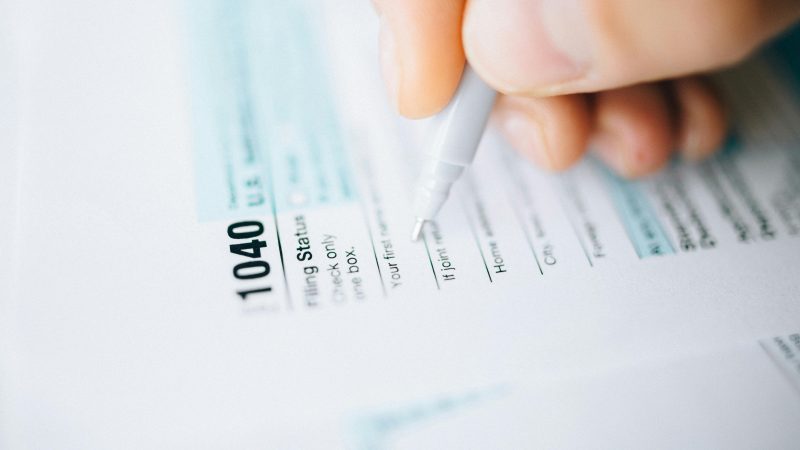
For tax year 2025, Tommy filed his return on January 28, 2026 — five days after receiving his W-2. He e-filed through a commercial tax software platform and elected direct deposit to his checking account. The IRS accepted his return on January 29. By the third week of February, the Where’s My Refund tool showed his refund as approved. The expected deposit date displayed was February 18.
February 18 came and went.
When the Refund Didn’t Arrive — and What the IRS Actually Said
Tommy called the IRS automated refund hotline on February 20. The system confirmed his refund had been approved but offered no explanation for the delay. He called again on February 25 and was connected to a representative after a 47-minute hold. That’s when he learned about the Treasury Offset Program.
Tommy told me he had fallen behind on child support by $400 in November 2025 — a month when two emergency service calls on his personal truck cost him over $1,200 in repairs. He made up the $400 in December, but the state had already submitted his case to the offset program. “I paid it back,” he said, frustration edging into his voice. “I paid it back the next month. But it didn’t matter — the flag was already in the system.”
According to the IRS representative Tommy spoke with, the offset had been flagged but the actual amount to be withheld was still being calculated by the state of Arizona’s child support enforcement office. His refund — which he expected to be roughly $3,100 for tax year 2025 — was in a holding pattern while the agencies communicated.
The Money Arrives — and Where It Went
On March 11, 2026 — 41 days after he filed — Tommy received a direct deposit of $2,690. A separate paper notice from the Bureau of the Fiscal Service arrived four days later explaining that $410 had been applied to his child support arrears account. The total refund had been approximately $3,100, consistent with his estimate.
When I asked Tommy what he did with the $2,690, he was quiet for a moment. “I put $1,500 on the credit card,” he said. “That was the plan. That’s always the plan.” He paused. “Then my kids came for the weekend.”
He did apply $1,500 to the Visa card, bringing his combined credit card balance to approximately $12,700. The remaining $790 went toward March rent and a utility bill. The down payment account he described — a savings account he opened last year specifically for a house — received nothing from this refund. Its current balance, he said without looking up, was $340.
Tommy knows what the math looks like from the outside. He said it before I could frame the question. “I know. I know it doesn’t add up. But those are my kids, and I see them four days a month. What am I supposed to do — tell them we can’t go anywhere?”
Three Years Renting, No Clear Path to Ownership
The Phoenix housing market hasn’t stood still while Tommy treads water. The median home sale price in the Phoenix metro area has remained elevated well above $400,000, according to recent market data. A conventional loan with 5 percent down on a $380,000 home would require roughly $19,000 upfront — plus closing costs that typically run 2 to 5 percent of the purchase price. Tommy’s $30,000 target is realistic on paper. Getting there is the problem.
His child support obligation runs until his younger child turns 18 — which is seven years away. His credit card interest rates sit at 22.99 percent and 19.99 percent. At his current pace of repayment, he’ll be clear of that debt in roughly three to four years, assuming no new emergencies pull him backward.
“I’m not asking for sympathy,” Tommy told me as we wrapped up. “I made choices. The divorce happened. I put those fees on the card because I didn’t have another option. But sometimes I feel like the system just — it just keeps you exactly where you are. You get a little bit ahead and then something clips you back.”
The Treasury Offset notice, when it finally arrived in the mail four days after his deposit, listed a toll-free number to dispute the withholding if he believed it was applied in error. Tommy said he didn’t call. “It wasn’t in error. I was late. I own that.”
When I left Tommy at the diner, he was already back on his phone — not the refund tracker this time, but a home listing app. He was scrolling through houses in the $320,000 range, the ones that need work, the ones with small yards. “My son wants a trampoline,” he said, not looking up. “I keep telling him, give me a couple more years.”
A couple more years. That’s the plan. Whether the math cooperates is another story entirely — and one Tommy Bianchi is still in the middle of writing.
Related: She Earns $72,000 a Year as a Nurse and Still Qualified for SNAP — Denver’s Math Didn’t Add Up



Leave a Reply