

Roughly one in five taxpayers who file electronically and claim refundable credits wait longer than the IRS’s promised 21-day window for their refund, according to IRS refund tracking data. For most of those people, the delay is an inconvenience. For Ivan Fitzgerald, 56, it was something closer to a slow-motion financial emergency.
I first encountered Ivan in mid-February 2026, in the waiting room of a Social Security Administration office on Olive Boulevard in St. Louis. I was there reporting on a separate story about delayed benefit adjustments when Ivan sat down in the plastic chair next to mine, paperwork fanned across his lap, his reading glasses pushed up on his forehead like he’d forgotten they were there. We started talking the way strangers do when they’ve been waiting too long. Within ten minutes, I knew I was listening to a story worth telling.
Ivan is a pharmacy technician — twenty-two years at the same regional hospital network, a job that has given him stability but not insulation from the kind of financial shocks that arrive without warning. He was widowed in 2019. His two adult children live out of state. He sends each of them money every month, a habit he described not as obligation but as instinct. He lives alone in a two-bedroom house in Maplewood, and until last October, he considered himself in reasonable financial shape.
The Insurance Change That Upended His Budget
The short answer to what changed is simple: his employer switched pharmacy benefit providers in October 2025. The longer answer is what Ivan spent twenty minutes explaining to me in that SSA waiting room.
Before the switch, Ivan paid roughly $47 a month out-of-pocket for a medication he takes daily to manage a chronic condition he preferred not to name publicly. After the new plan kicked in, his cost rose to $312 a month — the new insurer placed his prescription in a higher tier. He also takes a second medication that went from a $22 copay to $94. Combined, his monthly prescription spending jumped by roughly $337.
Ivan had also been sending $400 a month to his daughter in Portland, who had recently lost her job, and $200 a month to his son in Atlanta, who was dealing with a car repair situation that stretched longer than expected. “I know they’re adults,” Ivan told me, “but they’re still my kids. I don’t know how to turn that part off.”
By January 2026, he had drawn down roughly $2,100 from the emergency savings he’d spent years building. His tax refund, he decided, would be the reset button.
Filing Early and Watching the Clock
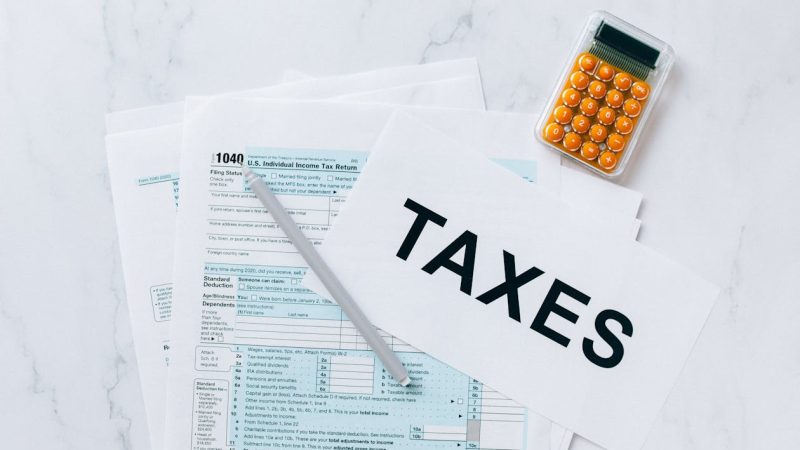
Ivan filed his 2025 federal return electronically on January 28, 2026, using tax software he’s relied on for the past six years. He claimed the standard deduction — $15,000 for single filers in tax year 2025 — and reported wages of approximately $68,400. His withholding had been set a touch high throughout the year, which he does deliberately. His expected refund came to $3,150.
He checked the IRS Where’s My Refund tool on February 4, a week after filing. The first status bar — Return Received — was lit. He checked again on February 10. The second bar — Refund Approved — was also lit. The tool showed a projected deposit date of February 18.
February 18 came and went. So did February 19, 20, and 21. Ivan checked the tool every morning before work. The second bar stayed lit. The third bar — Refund Sent — never moved. “I kept thinking it was a glitch in the website,” he told me. “I work with computers all day. I know glitches happen. But after two weeks of the same screen, I started thinking something was actually wrong.”
Thirty-Eight Days of ‘Approved’
This is where Ivan’s story becomes less unusual than he realized. The IRS can hold a return in “Approved” status for a variety of reasons that aren’t immediately visible to the filer. Ivan’s return included a claim for a retirement savings credit — he contributed $2,200 to his employer’s 403(b) plan in 2025 — and returns with certain credits occasionally trigger additional verification steps, even when no fraud is suspected.
Ivan called the IRS helpline on February 25 — 28 days after filing — and waited 74 minutes before reaching an agent. The agent confirmed his return had no errors or identity flags. They told him the delay was related to “additional processing” but could not provide a specific release date. Ivan described the call to me with a kind of exhausted humor: “She was very polite. She said everything looks fine and it should be there soon. And I thought — I’ve been telling myself that for three weeks.”
Between February 18 and March 3, Ivan paid for his prescriptions out of pocket — roughly $406 in total — and sent his daughter $400 as planned. He did not send his son money in February, a decision he said created a tension in their relationship he hadn’t fully resolved when we spoke. He charged $280 in grocery and utility expenses to a credit card he typically pays in full each month.
The Refund Arrives — and What He Did With It
On March 3, 2026 — 34 days after the projected deposit date and 38 days after approval status was first shown — Ivan’s $3,150 refund landed in his checking account. He confirmed this by logging into his bank app at 6:14 in the morning before his shift.
The math left him roughly $630 short of where his emergency fund stood before October’s insurance change. “It’s not where I wanted to be,” Ivan said. “But it’s better than it was last month. I’ll take better.”
When I asked him how he felt the morning the money appeared, he paused for a moment before answering. “Relieved,” he said. “And then immediately worried it was a mistake and they’d take it back. I didn’t buy anything that day. I just let it sit there and looked at it.”
What This Delay Actually Cost Him
Ivan came out the other side of this situation in one piece, financially speaking. But a 38-day refund delay at the wrong moment in someone’s financial life can carry real costs beyond frustration.
Ivan told me he plans to adjust his withholding for 2026 — he’s considering filing a new W-4 with his employer so that less money is held throughout the year. He acknowledged, with a dry laugh, that he’s been meaning to do that for four years. “I know it’s not smart to let the government hold your money all year,” he said. “But there’s something about getting a lump sum that feels different. It’s the only time I actually put money away instead of spending it.”
I left the SSA office that February afternoon with Ivan’s number and a promise to follow up after his refund arrived. When I called him on March 5, two days after the deposit, he sounded different — lighter, though cautious about it. The relief in his voice was real. So was the edge underneath it. He knew the prescription bills would keep coming. He knew his daughter was still job-hunting. He knew this particular crisis had passed, but he couldn’t be sure the next one would resolve so neatly.
What stayed with me, writing this, was something he said before we hung up. “I’m okay,” he told me. “I’m just aware now that okay can change pretty fast. And I don’t know if I was aware of that before.”
Related: After His Wife Retired, Oscar Kirby’s Drug Costs Jumped $340 a Month — Here’s What Happened



Leave a Reply