
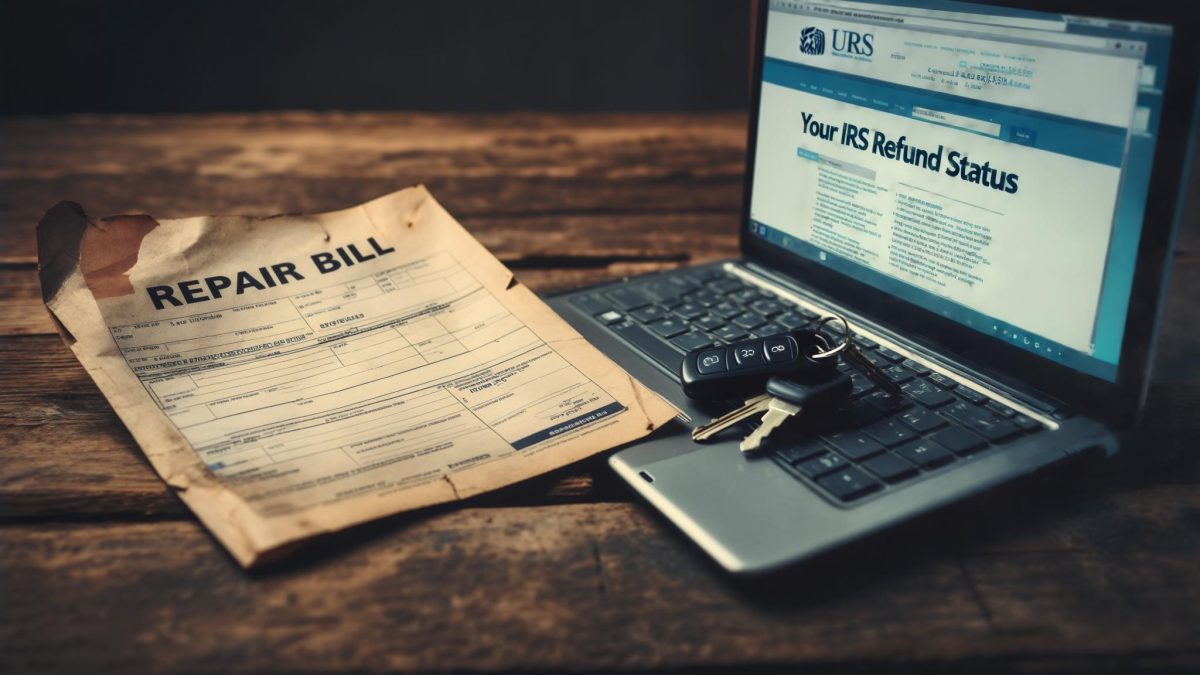
Have you ever looked at your bank account and realized that a raise — something you worked years for — somehow left you more financially exposed than before? That question was still fresh in my mind when I first came across a post by James Castillo in a Facebook group nominally for retirees discussing government payment schedules. James, 41, is not retired. He’s a flight attendant based out of Oklahoma City, Oklahoma, and he’d wandered into that group looking for anyone who understood IRS refund timelines. His post was short and specific: “Filed February 14th. Still nothing. Anyone else stuck in processing limbo?”
I reached out via direct message that same evening. Within 24 hours, James had agreed to speak with me in detail. Over two phone calls and a follow-up email exchange in late March 2026, he walked me through what had become one of the more quietly devastating financial episodes of his adult life — a story that connects lifestyle inflation, a broken-down Chevy Equinox, and a tax refund that the IRS held for sixty-three days.
A Raise That Changed the Math — But Not Quite Enough
James has worked as a flight attendant for a major regional carrier for eleven years. In April 2025, he received a contract-driven pay increase that pushed his annual gross from approximately $53,000 to just over $63,000. On paper, it was meaningful. In practice, the family’s spending adjusted almost immediately to absorb it.
His household includes his wife, Dara, who works part-time as a medical billing specialist from home, and their nine-year-old son, Marcus, who has a neurodevelopmental condition requiring regular occupational therapy and specialized educational support. Those therapy copays alone run roughly $380 per month. The family does not qualify for full Medicaid support at their combined income level, but they are not far above the threshold.
James described the lifestyle inflation to me with a kind of tired self-awareness. “We didn’t go crazy,” he told me. “We just stopped saying no to small things as often. A nicer grocery run here. A weekend trip to Tulsa for Marcus’s birthday. By fall, the buffer we thought we had was basically gone.” That pattern — sometimes called lifestyle creep — is common enough that the Consumer Financial Protection Bureau has flagged it repeatedly in household financial stability reports.
Then, in early January 2026, the Equinox died. A transmission failure. The repair estimate from two separate mechanics came in at $2,380 and $2,450, respectively. James parks at a crew lot six miles from his home; without a car, every shift required coordinating rides from coworkers or paying for rideshares. In the first three weeks of January, he spent $214 on rideshare costs alone.
Filing Early and Counting on a Specific Number
James is not the kind of person who files late. He described pulling together his documents — his W-2 from the airline, Dara’s 1099-NEC from her billing work, and receipts for Marcus’s qualified medical expenses — with methodical focus starting in late January. He filed electronically on February 14, 2026, using tax software he’s used for four consecutive years.
His anticipated refund was $3,118. That figure came from a combination of federal withholding he’d over-contributed during the year and the Child Tax Credit, for which Marcus qualifies. James had modeled the number carefully. “I had a spreadsheet going back to November,” he said. “I knew what I was expecting. The car repair was basically already earmarked in my head.”
The IRS’s “Where’s My Refund” tool initially showed a status of “Return Received” within 48 hours of filing — which James checked multiple times daily. By the third week of February, he expected the status to shift to “Refund Approved.” It did not. The bar stayed frozen at the first stage for nearly five weeks.
Sixty-Three Days in Processing Limbo
By early March, James had tried calling the IRS Taxpayer Assistance line multiple times. He reported hold times ranging from 44 minutes to over two hours before being disconnected. On one occasion, he was told by an automated system that agents were unavailable and to call back another day.
When I asked James what he believed caused the delay, he had done enough research to offer a reasoned theory. He suspected that the combination of a self-employment 1099 from Dara’s work and a shift in his own withholding status — he had adjusted his W-4 mid-year after the raise — may have triggered additional scrutiny. He never received an official notice explaining the hold, which he found more frustrating than the delay itself.
The family did what families in that position do. James borrowed $800 from his brother-in-law in mid-February to cover an initial partial repair that got the car running in a limited capacity. Dara shifted some of Marcus’s therapy sessions to telehealth to reduce the transportation burden. They delayed a $430 dental bill for James that had been sitting since December.
What Finally Broke the Logjam
On April 2, 2026 — sixty-three days after filing — the “Where’s My Refund” status changed overnight. “Refund Approved.” Direct deposit was issued within two business days. The amount deposited was $3,118 — exactly what James had calculated. No explanation arrived for the delay. No notice. The money simply appeared.
The first thing James did was repay his brother-in-law. The second was schedule the full transmission repair. The remaining balance — roughly $718 after the repair and repayment — went into a savings account he described as “the emergency fund we should have had six months ago.”
The Part That Doesn’t Resolve Cleanly
What struck me most in my conversations with James was not the crisis itself but the gap between his careful planning and the outcome he nearly faced. He had a spreadsheet. He had filed early. He had made reasonable assumptions based on the IRS’s own published processing timelines. And he had still come within weeks of a scenario where his son’s therapy sessions might have been paused for financial reasons.
James was candid about the role his own spending played. “The raise was real. The lifestyle creep was real. I’m not blaming the IRS for the fact that we didn’t have a cushion,” he told me. That kind of self-assessment is not easy to articulate, and I found it worth reporting plainly. The delay exacerbated a vulnerability that already existed.
For families operating at the margin of lower-middle income — where a raise is real but so is the cost of a child’s specialized care — a two-month gap in an expected payment is not an abstraction. According to data from the Federal Reserve’s annual household survey, roughly 37 percent of American adults would have difficulty covering an unexpected $400 expense. James’s situation involved a $2,400 repair — and a refund that took three times as long as the IRS’s stated standard to arrive.
When I asked James what, if anything, he’d do differently in 2026 going forward, he paused before answering. “I’m not going to count on that refund for anything essential again,” he said. “That’s the lesson. Not the IRS’s fault. Not the car’s fault. That’s just me learning something I probably should have known.”
James Castillo’s refund arrived. His car is repaired. His son’s appointments continued without interruption. Those are the facts. But the sixty-three days between filing and deposit — and the $214 spent on rideshares, the $800 borrowed, the dental bill still sitting unpaid — are also facts. They exist alongside the resolution, not erased by it.
Related: She Cosigned a Loan in Good Faith — Then Watched Her Retirement Plan Unravel at 55
Related: She Retired from USPS at 33 With a Spine Condition — Then Her Health Insurance Bill Hit $612 a Month




Leave a Reply