

Have you ever made a plan around money that wasn’t yours yet — and then watched that plan slowly come apart? It’s a feeling most of us know, even if we don’t talk about it out loud.
I met Wanda McBride on a Tuesday afternoon in late February at a QuikTrip off I-95 in Jacksonville, Florida. I was standing at the pump behind her when I heard her voice — flat, measured, the kind of tone people use when they’ve rehearsed a conversation a dozen times. She was on the phone saying, “Just tell me if it’s been processed. That’s all I’m asking.” When she hung up, she exhaled slowly and stared at her phone screen for a moment longer than necessary.
I introduced myself and asked if she’d be willing to talk. She looked at me for a second, then shrugged. “Sure,” she said. “Not like I have anywhere else to be.” That was the first thing Wanda McBride told me. It wouldn’t be the last thing that stopped me cold.
The Plan That Made Sense on Paper
When I sat down with Wanda McBride at a diner two days later, she walked me through the math with the precision of someone who had run these numbers so many times they’d stopped feeling real. Wanda, 30, works as a construction foreman in Jacksonville and also runs a small contracting side business she launched in 2021. Her household income, between her foreman salary and business revenue, had historically put the family in a comfortable bracket — her husband works part-time, and they have two kids, ages 12 and 4.
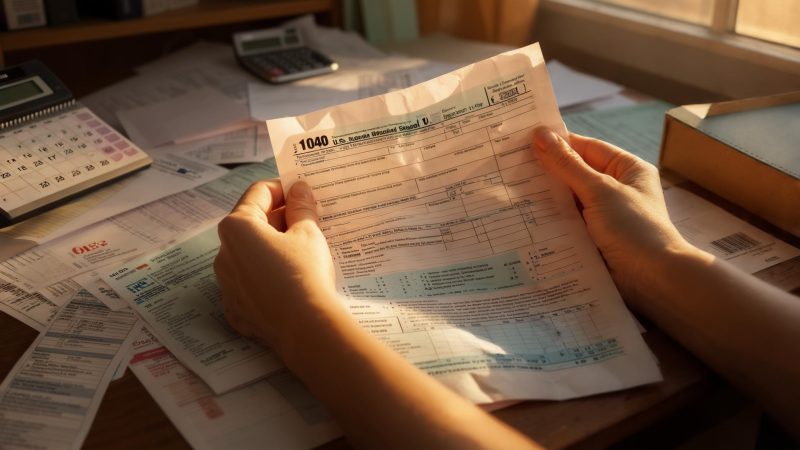
She filed her 2025 federal return on February 4, 2026, using tax software she’d relied on for four years. After factoring in business deductions, a child tax credit for her younger daughter, and withholding from her W-2, her expected refund came to $6,412. According to the IRS refunds portal, most electronically filed returns with direct deposit are processed within 21 days. Wanda had February 25th circled in her head.
That date mattered because of the roof. A contractor had inspected the McBride home in January and delivered an estimate of $8,500 to replace a section of the roof that had sustained water damage over two consecutive rainy seasons. She had $2,200 set aside. The refund would close the gap.
“I wasn’t spending it before it came,” she told me, leaning back in the booth. “I just needed it to come when they said it would. That’s not a lot to ask.”
When ‘Where’s My Refund’ Becomes the Enemy
By March 4 — Day 28 — Wanda had checked the IRS Where’s My Refund tool every morning. The status had moved from “Return Received” to “Return Being Processed” and then — nothing. No update. No explanation. Just the same gray bar sitting in the middle of the screen.
She called the IRS at 1-800-829-1040 on March 9. After a 47-minute hold, she was told her return had been flagged for additional review under what the representative described as a routine identity verification process. No letter had been mailed. No timeline was given. She was told to call back in two weeks if she hadn’t received correspondence.
“I’ve been doing this job for eight years,” Wanda said. “I know what it means when someone tells you ‘two weeks’ and doesn’t give you a reason. It means they don’t actually know.” She wasn’t angry when she said this. She was just — accurate.
The IRS does have a formal process for taxpayers experiencing delays. Filers can contact the Taxpayer Advocate Service if a refund delay is causing financial hardship — defined by the IRS as an inability to meet basic living expenses. Wanda didn’t know this at the time. She found out through a coworker in mid-March, more than five weeks into her wait.
The Business Side of the Problem
The refund delay was one pressure point. The other was quieter and had been building for longer. Wanda’s contracting side business, which had generated roughly $38,000 in gross revenue during 2023, had fallen to $24,700 in 2025. She attributed the drop to increased material costs, two clients who had stalled large projects indefinitely, and growing competition from larger firms moving into the Jacksonville residential market.
The business income drop didn’t change her refund amount significantly — she had adjusted her estimated tax payments accordingly — but it changed the margin she was operating on. There was less buffer. The refund had gone from a nice-to-have to a weight-bearing wall in the household budget.
That numbness she described wasn’t indifference — it was the result of sustained financial strain in a household that looked fine from the outside. High earners aren’t immune to cash flow problems. They’re sometimes less visible, which makes them harder to discuss.
What Finally Happened — and What It Cost
On April 6, 2026 — Day 61 after filing — Wanda’s direct deposit arrived. The full $6,412 landed in her checking account at 5:14 a.m., according to the bank notification she showed me. No prior notice. No explanation for the delay. The IRS’s Where’s My Refund tool updated to “Refund Sent” at some point the night before.
She called the roofing contractor the same morning. The crew had moved on to another project and couldn’t reschedule until late May. The $8,500 estimate had also been revised upward — material costs had risen another four percent since January, bringing the new quote to $8,820.
When I asked Wanda how she felt when the deposit finally hit, she was quiet for a moment. “Relieved, I guess,” she said. “But the window I needed it for had already passed. So it felt like winning an argument after it stopped mattering.”
The Quiet Toll of Waiting
What struck me most about Wanda wasn’t anger or frustration — it was the absence of it. She had moved so far into the experience of financial uncertainty that the emotional charge had simply worn off. She described checking the IRS tool every morning the same way someone might describe checking the weather: habitual, low-expectation, mostly pointless.
“My kids don’t know any of this,” she told me. “My 12-year-old knows something’s tight sometimes. But I’ve worked too hard for them to feel it the way I feel it.” She looked out the window. “I don’t know if that’s the right call. I just know it’s the one I made.”
The roof repair is now scheduled for the last week of May. Wanda covered the gap with a combination of the refund and a portion of her emergency savings. The business is still declining and she hasn’t yet figured out how to reverse that trend. There’s no tidy resolution here — just a woman managing an ongoing situation with precision and very little drama.
I asked her what she would have done differently. She thought about it longer than I expected. “Filed earlier, maybe,” she finally said. “But honestly, I don’t know that it would’ve changed anything. The IRS wasn’t waiting on me. I was waiting on them.”
That’s not a lesson or a takeaway. It’s just what it was — and for Wanda McBride, it was enough of a burden to carry without dressing it up as anything else.
Related: Her Co-Signed Loan Went Bad, Her Business Stalled, and Then Medicare Ate Her Social Security Raise



Leave a Reply