
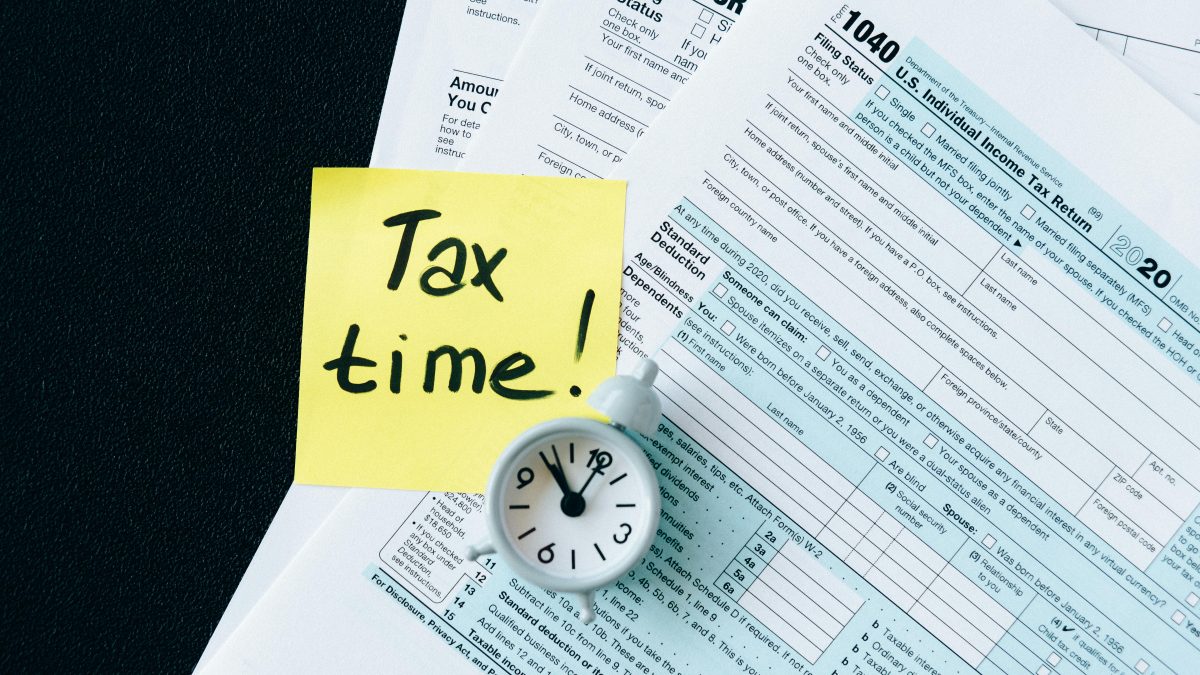
The conventional wisdom says that tax season is a financial reset — a reliable windfall that working families can plan around. But for people already stretched thin by injury, rising costs, and misinformation, the gap between what the IRS might send and what social media promises can cost more than anyone expects.
I met Lucille Trujillo at a neighborhood barbecue in Richmond, VA, in late February 2026. A mutual friend pulled me aside and said, quietly, “You need to talk to this woman.” Lucille was standing near the grill, holding a two-year-old on one hip and a paper plate in her free hand. She looked tired in the specific way that people look when they’ve been managing too many problems for too long.
She agreed to sit down with me the following Saturday. We met at her kitchen table, her son Mateo asleep in the next room, a stack of manila folders on the table between us. One was labeled Workers Comp. Another said IRS 2025. A third had a sticky note on the front that read, in her handwriting: Stimulus — real or not???
A Back Injury, a Denied Claim, and a Changed Insurance Plan
Lucille has worked in construction for 19 years. She’s a foreman now — the kind of person who shows up before anyone else and leaves after the site is locked. In November 2025, she slipped on a rain-soaked scaffold at a job site in Henrico County and hurt her lower back. She filed a workers compensation claim the same week.
By January 2026, the claim had been denied. The insurer’s letter cited insufficient documentation of a “work-related causal mechanism” — language she described to me as “the most expensive sentence I’ve ever read.” Without that coverage, she was left paying out-of-pocket for a muscle relaxant and an anti-inflammatory her doctor had prescribed.
Her employer had switched insurance carriers on January 1, 2026, and her old plan’s formulary no longer applied. The two prescriptions that had cost her $22 a month combined were now $170 a month under the new plan. “I thought it was a billing error at first,” she told me. “I kept calling the pharmacy thinking someone made a mistake. They hadn’t.”
Her take-home pay, after taxes and childcare costs for Mateo, left roughly $310 in discretionary income per month. The prescription change alone consumed more than half of that buffer. She started rationing doses — taking one pill instead of two, skipping days — which her doctor had explicitly told her not to do.
Then the Stimulus Rumors Started
In January and February 2026, social media feeds across the country were flooded with posts claiming the federal government was preparing to send Americans $2,000 checks funded by Trump’s tariff revenues. Lucille saw several of them. So did her coworkers. The posts cited executive orders, referenced the IRS, and included screenshots that looked, to an untrained eye, like official government communications.
“My coworker Danny showed me a post that said the deposits were going out in February,” Lucille told me. “It had the IRS seal on it. It looked real. I’m not stupid — I know things online can be fake — but this looked official.” She paused and adjusted Mateo on her knee. “I wanted it to be real. That’s on me.”
She made a calculation that, under the circumstances, was entirely understandable: she would hold off on refilling her prescriptions for two to three weeks, wait for the $2,000 to hit her bank account, and then pay the pharmacy balance in full. February passed. The deposit never came.
What the IRS Refund Calendar Actually Said
Lucille had e-filed her 2025 federal return on February 4, 2026 — the same week the IRS officially opened the 2026 filing season, which had begun accepting returns on January 26. She claimed the Earned Income Tax Credit and the Child Tax Credit for Mateo. Because she claimed those specific credits, her refund was subject to a mandatory hold under the PATH Act — the IRS cannot legally release EITC and CTC refunds before mid-February.
According to the IRS refund calendar, taxpayers who e-filed with direct deposit and claimed PATH Act credits in early February could generally expect their refund to arrive between February 27 and March 6, 2026 — assuming no issues with the return. Lucille hadn’t known about the PATH Act hold. Nobody had told her.
When I asked Lucille whether she had used the IRS’s “Where’s My Refund” tracker during those weeks, she shook her head. “I didn’t know that was a thing,” she said. “I was checking my bank app every morning like that was going to tell me something.” The IRS tool, available at IRS.gov/refunds, can be accessed 24 hours after e-filing and gives taxpayers a status update — approved, processing, or sent — with an estimated deposit date.
The Refund Arrives — and What It Actually Covered
On March 3, 2026, Lucille’s direct deposit landed: $1,847. It was less than she had hoped — she had initially estimated closer to $2,100 — but she later realized a small math error on her end had accounted for the difference. The refund reflected her EITC and the Child Tax Credit for Mateo, along with a modest overpayment from her withholding.
She paid the pharmacy first — all $340 of it. Then she put $600 toward two months of upcoming childcare. She set aside $300 for a car repair she had been postponing since December. What remained, roughly $607, went into her checking account as a buffer. “I didn’t buy anything for myself,” she told me, without self-pity, just as a statement of fact.
The workers comp appeal is still pending. Her attorney — a legal aid lawyer she connected with through a Richmond nonprofit — filed a formal appeal in February. She doesn’t know what that outcome will be. She’s not counting on it.
The Broader Picture: Stimulus Confusion in 2026
Lucille’s experience is not unusual. According to reporting by the Austin American-Statesman, claims about $2,000 tariff-funded stimulus payments spread throughout 2025 and continued into early 2026, fueled partly by comments President Trump made suggesting Americans might receive a share of tariff revenues. But as of today, March 31, 2026, no such payment has been authorized by Congress.
Trump’s proposal for a tariff dividend — sometimes called a “tariff check” — has been discussed, and a bill introduced in Congress would create such a rebate program. But discussion is not legislation. The April 15, 2026 tax filing deadline is real. The $2,000 check, for now, is not.
The tax deadline itself — April 15, 2026 — is fixed. For people like Lucille who have already filed, the focus now is on understanding what was submitted and tracking its status. For those who haven’t filed yet, the window is narrowing.
What Lucille Would Tell Someone in Her Position
When I asked Lucille what she wished she had known in January, she didn’t give me a policy answer. She gave me a practical one.
She’s not bitter about it. That’s the thing about Lucille — she processes setbacks as information rather than grievances. She told me she plans to check the IRS tracker next year from the day she files. She plans to call the pharmacy before she delays a refill, not after. Small adjustments, practical ones.
When I left her apartment, Mateo had woken up and was pulling at the manila folders on the table. Lucille scooped him up, tucked the Workers Comp folder under her arm, and walked me to the door. She had a job site walkthrough in two hours. She was already thinking about it.
The refund had come. The stimulus hadn’t. And Lucille Trujillo, as she had done with most things in her life, had found a way to work with what actually arrived.


Leave a Reply