

The folding tables at the Bernalillo County Public Library were still being set up when Patricia Gutierrez walked in carrying a manila folder thick with papers. It was a Tuesday afternoon in late January 2026, and the library was hosting a Medicare enrollment information session — not a tax help clinic. But Patricia had seen me talking to a caseworker near the entrance, recognized me from a local news segment, and made a beeline. “You write about the IRS stuff, right?” she said. “I need someone to hear what happened to me.”
I pulled up a chair, and we talked for nearly two hours. What she described was not a dramatic fraud case or a six-figure audit. It was something quieter and, in many ways, more damaging: an ordinary tax refund that the IRS delayed for eleven weeks while Patricia, a bank teller earning roughly $31,000 a year, tried to keep the lights on and the child support payments current without it.
A Refund She Had Already Spent — On Paper
Patricia Gutierrez filed her 2025 federal return on February 3, 2026, using a free online filing service. She had claimed the Earned Income Tax Credit, a standard deduction, and a small premium tax credit related to her marketplace health insurance plan — she has no employer-sponsored coverage through her bank employer, a common situation for part-time and reduced-hour workers. Her expected refund came to $1,847.
According to the IRS refunds portal, most electronically filed returns that include direct deposit are processed within 21 days. Patricia knew this. She had already earmarked the money: $600 toward overdue renter’s insurance (she lost her previous property insurance policy after filing a water damage claim in 2024 and had been going without), $480 to catch up on a medical bill from an urgent care visit, and the remainder as a buffer for the months when her hours at the bank get cut.
“I check ‘Where’s My Refund’ every single morning,” Patricia told me. “February 24 comes — nothing. March 10 — nothing. I call the number and it just says ‘processing.’ I’m a bank teller. I understand what processing means. That’s not an answer.”
The Letter That Explained Nothing and Everything
On March 4, 2026 — roughly four weeks after Patricia filed — a CP05 notice arrived at her apartment on Candelaria Road. The CP05 is an IRS form letter informing a taxpayer that their return has been selected for review and that no refund will be issued until that review is complete. It does not specify what is being reviewed, does not give a timeline, and does not require the taxpayer to do anything — except wait.
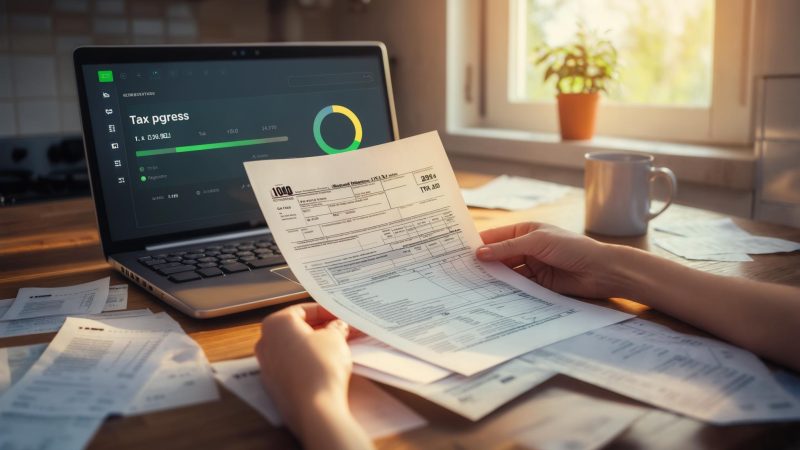
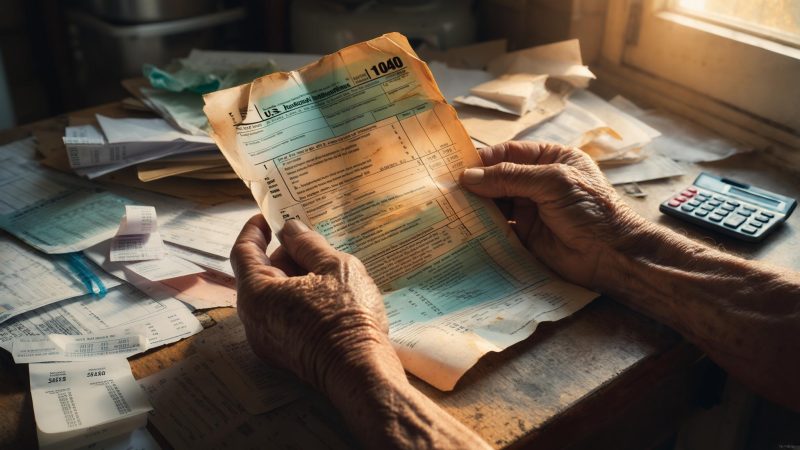
Patricia’s folder contained the CP05 letter, her original filing confirmation, three printed screenshots of the “Where’s My Refund” tracker, and a handwritten list of dates and phone calls. She had called the IRS taxpayer assistance line four times between March and April. Two calls resulted in hold times exceeding 90 minutes before disconnecting. One reached an automated system that directed her back to the website. One, on March 29, reached a live agent who confirmed the return was under review and could not provide an estimated resolution date.
The Financial Squeeze Behind the Wait
To understand why eleven weeks mattered so much to Patricia, you have to understand the arithmetic of her month. She earns roughly $14.90 an hour as a bank teller, but her hours fluctuate — some weeks 32 hours, some closer to 24 when the branch is overstaffed. Her take-home pay averages between $1,800 and $2,100 per month depending on the schedule. She pays $387 per month in child support for her two children, ages 13 and 16, who live with their father in Rio Rancho.
After rent, utilities, her ACA marketplace premium (subsidized but still $118 per month), child support, and groceries, Patricia typically has between $200 and $350 left over each month. That margin evaporates fast. In February, a car repair — a belt replacement she couldn’t defer — cost $340. In March, her hours were cut to 26 per week for three weeks while the branch handled a staffing transition. “There were two weeks in March where I genuinely did not know if I was going to make child support on time,” she told me. “That terrifies me. Missing that payment isn’t just a financial problem. It’s a legal problem.”
She did not miss the payment. She borrowed $300 from her sister and made it current. But that kind of borrowing carries its own weight — emotional, relational, financial. “My sister doesn’t have money to spare either,” Patricia said. “She did it because she loves me. But I hated asking.”
What Finally Moved the Refund
The CP05 review concluded without any additional contact from the IRS. Patricia did not receive a follow-up letter, did not submit any documentation, and was not asked to verify her identity through ID.me or any other portal. On April 18, 2026, the “Where’s My Refund” tracker updated to “Refund Approved.” On April 28, $1,847 arrived in her checking account — 84 days after she filed.
The IRS does not send an explanation when a CP05 review closes in the taxpayer’s favor. There is no letter saying “we checked, everything is fine, here is your money.” The refund simply arrives. According to the Taxpayer Advocate Service, delays tied to EITC verification are among the most common sources of extended processing times, particularly for returns filed in January and February when fraud-screening algorithms are most active.
When I asked Patricia how she felt when the deposit hit, she paused longer than I expected. “Relieved, obviously. But also angry? Like, the money was mine the whole time. The IRS confirmed that. Nobody apologized. Nobody explained what they were looking for. It just appeared.”
What Patricia Would Do Differently — and What She Cannot Change
By the time we wrapped up our conversation at the library, the Medicare enrollment tables were filling with other attendees. Patricia had gotten the answers she came for — or at least the confirmation that her experience was not unusual. But she was not satisfied, and she said as much.
Patricia said she plans to file even earlier in 2027 — potentially in late January as soon as her W-2 arrives — hoping to get ahead of the volume that triggers automated holds. She is also looking into whether a Volunteer Income Tax Assistance site near her home could help her review her return before submission. VITA sites, run by IRS-certified volunteers, offer free preparation for households earning under approximately $67,000.
What she cannot change is the structural reality: irregular income, no employer health coverage, child support obligations that do not flex with her paycheck schedule, and a rental insurance gap that still has not been fully resolved. The $1,847 helped. It covered the medical bill and brought the insurance current. The buffer she planned for largely went to paying back her sister and covering the March shortfall.
As I walked out of the library that afternoon, I kept thinking about the manila folder Patricia carried in. Every page in it represented an attempt to get an answer from a system that was not designed to give one. She is not a complicated case. She is a bank teller who filed her taxes correctly and waited three months for money that was already hers. The system worked, eventually. Whether that counts as working well is a different question entirely.
Related: My Neighbor Got a $6,500 Tax Refund While I Got $400 — The Federal Tax Credits She Claimed That I Ignored
Related: She Counted on Her Tax Refund to Pay Rent. Then a Debt Collector Claimed It First.


Leave a Reply