

The direct deposit notification came through at 6:47 a.m. on a Saturday, while Brittany Holloway was still in bed. She screenshot it, sent it to her mom, and then lay there staring at the ceiling for twenty minutes — because she had absolutely no idea what to do next.
When I met with Brittany at a coffee shop on Charlotte Avenue in Nashville earlier this month, she laughed at that memory. But underneath the laugh was something recognizable: the particular anxiety of a person who has worked hard to do everything right and still feels one wrong move away from falling behind.
A Refund She Had Been Planning Around for Months
Brittany Holloway is 25 years old, a dental assistant at a practice in Midtown Nashville, and the first person in her family to finish any college coursework. She completed two years at Nashville State Community College, carries $8,000 in student loan debt from that program, and has $3,000 remaining on a credit card she opened at 19 — the kind of card with a 24.99% APR that felt like a lifeline at the time and now feels like a slow leak.
She earns $17 an hour. In a city where the average one-bedroom apartment now runs north of $1,500 a month, that wage — roughly $2,200 in monthly take-home pay — leaves almost no margin. She shares a two-bedroom with a roommate and pays $925 for her share. After groceries, her car payment, utilities, and minimum debt payments, she told me she ends most months with somewhere between $80 and $200 left over.
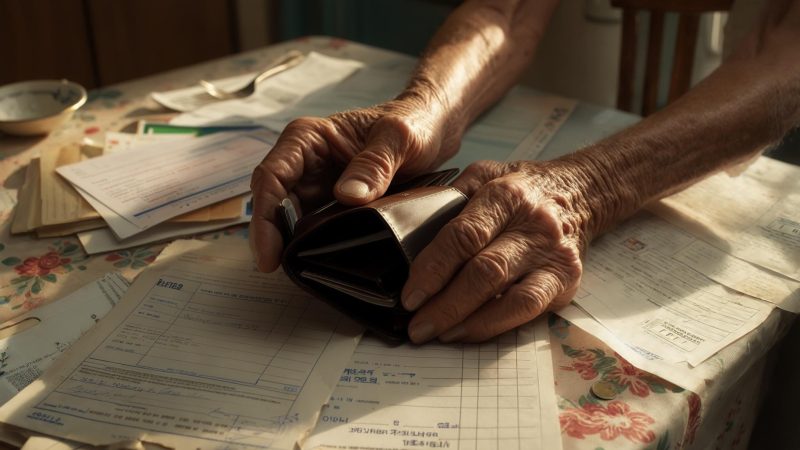
So her tax refund — $1,147 for the 2025 tax year — was not a windfall. It was a pressure valve. She had been mentally earmarking it since November, moving the number around in different combinations: wipe out the credit card balance faster, build a small emergency cushion, finally open the Roth IRA three separate TikToks had told her she absolutely needed by 25.
The IRS Timeline Held Up Its End of the Deal
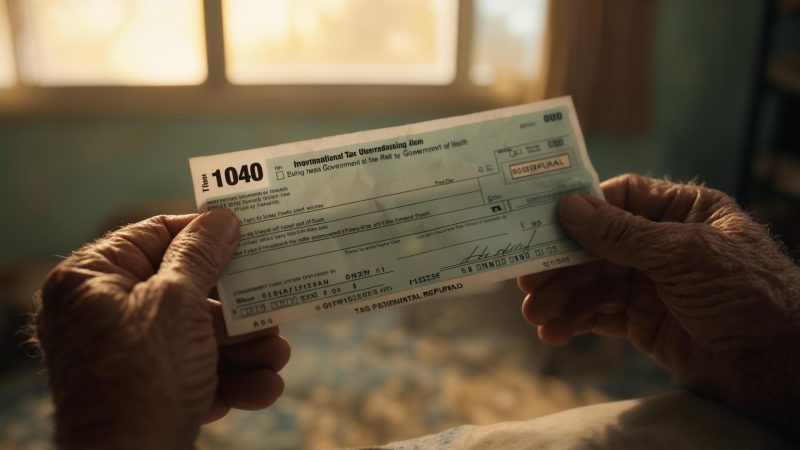
Brittany filed electronically on February 14, 2026 — Valentine’s Day, which she noted with a dry smile was “the most romantic thing I did all week.” She used a free filing software and submitted a straightforward W-2 return with no unusual credits or deductions beyond the standard amount. According to IRS.gov, the agency issues most refunds within 21 days of an accepted e-filed return — and for Brittany, that timeline held almost exactly. Her refund hit her checking account on March 7, 2026.
She checked the IRS Where’s My Refund tool every day starting on day five. “I know you’re not supposed to keep checking it,” she told me, “but I couldn’t help it. I’d convinced myself something was going to go wrong.” Nothing went wrong. The status moved from Return Received to Refund Approved on day 18, and the deposit followed within 72 hours.
The Real Wait Was What Came After the Deposit
Here is where Brittany’s story gets harder to tell cleanly — because unlike the IRS timeline, her own decision-making had no clean resolution date. The $1,147 sat in her checking account for six days while she consumed more financial content, texted friends, and changed her plan at least four times.
She described the competing voices in her head with uncomfortable precision. One financial creator she follows regularly argues that any high-interest credit card debt should be paid in full before a single dollar goes into savings or investments. Another creator she watches with equal devotion insists that young women especially need to start investing immediately to close the gender wealth gap, even in small amounts. A third account she follows suggested splitting windfalls three ways — debt, savings, and a modest “fun” allocation — to avoid the psychological trap of deprivation spending.
What Brittany did not have was anyone in her personal life to reality-check any of it. Her parents never had a savings account she knew of growing up. Her older brother handles his finances “like the rest of us — just surviving,” she said. There was no financial literacy class at Nashville State. She graduated with a certificate, a credential, and no framework for what to do when money actually arrived.
How She Split the Money — and What She Regrets
On March 13, 2026 — six days after the deposit — Brittany made her decision. She paid $600 toward her credit card balance, which brought it from $3,000 to $2,400. She transferred $300 into a high-yield savings account she had opened the previous fall but rarely contributed to. The remaining $247 went toward a brake job her car had needed for two months that she had been putting off.
The car repair was not in any of the plans she had drafted. It was simply a necessity that had been waiting for the right moment, and the refund provided it. She does not regret that part. The other splits are less settled in her mind.
“Looking back, I should have put the whole $847 toward the card,” she told me, referring to the amount left after the car repair. “The savings felt good in the moment — like I was doing what the TikToks said. But $300 in savings while I’ve got $2,400 at 25% interest — I don’t think that math works out for me.” She paused. “But I don’t actually know. That’s the thing. I still don’t actually know.”
What Brittany Is Thinking About Now
When I spoke with Brittany in late March 2026, she had adjusted her federal withholding on her W-4. A coworker had pointed out that a large refund essentially means you gave the IRS an interest-free loan all year — and that at her income level, that matters. She submitted an updated W-4 to her employer and estimates she’ll see an extra $85 to $95 per month in her paychecks going forward rather than waiting for a lump sum next spring.
Whether that monthly amount will actually move the needle on her credit card faster, she is not certain. Her credit card’s minimum payment is $65 a month. She currently pays $100. She is thinking about increasing that to $175 with the extra withholding money — but she also knows she said a version of this to herself in November, and the credit card balance barely moved.
She is not alone in that feeling, even if social media makes it seem otherwise. The Consumer Financial Protection Bureau has documented repeatedly that financial literacy gaps fall disproportionately on first-generation college students and lower-income households — the exact demographic Brittany occupies. The gap is not a character flaw. It is structural.
What struck me most, sitting across from Brittany Holloway over a cup of coffee she had clearly budgeted for, was not how confused she was. It was how hard she was working to be less confused. She has a spreadsheet. She has a folder of bookmarked articles. She screenshots IRS refund status updates. She is doing, by any reasonable measure, everything someone told her to do — and still feels like she is guessing.
The $1,147 is mostly gone now. The brakes work. The credit card balance is lower than it was. The savings account has $300 more than it had before. Whether that was the optimal sequence of decisions is a question Brittany Holloway is still turning over — and one that, as a reporter, I am not in a position to answer for her. What I can say is that she asked it at all, and kept asking it, and that seems like the thing that matters most at 25.


Leave a Reply