

With the April 15, 2026 tax filing deadline now just days away, millions of Americans are watching their refund status on IRS.gov’s Where’s My Refund tool — refreshing it at midnight, willing the status bar to move. Patricia Underwood was doing the same thing in mid-March. She had filed on time, filed electronically, and watched her refund status flip to “Approved.” Then the deposit date passed. Then another week passed. Then the letter came.
I first encountered Patricia in late February, when she called into a San Jose-area radio segment on tax season and benefits that I was monitoring for a follow-up story. She didn’t call in to ask about deductions or credits. She called in, audibly irritated, to say she was tired of financial content aimed at people who already had everything figured out. I tracked her down after the segment ended through the station’s producer. She agreed to talk — but made clear from the first text that she didn’t trust journalists any more than she trusted financial planners.
When I sat down with Patricia Underwood at a coffee shop in San Jose’s Willow Glen neighborhood on a Tuesday morning in early April 2026, she arrived in work boots and a union jacket, hard hat under her arm. She is 34, a licensed union electrician earning roughly $89,000 a year, and she is the primary financial support for her younger brother Marcus, a junior at San Jose State. She is sharp, methodical, and deeply skeptical of advice she cannot verify with her own two hands.
How a $12,000 Cosigned Loan Became a $4,200 Refund Problem
In spring 2022, Patricia cosigned a $12,000 personal loan so Marcus could buy a reliable car for his commute to campus. The math seemed manageable: Marcus had a part-time job, the monthly payment was $228, and Patricia’s credit score — built carefully through years of union dues, one paid-off credit card, and no missed bills — was strong enough to get him approved. She told me she signed the documents in about fifteen minutes. “I figured, he’s a good kid. I just needed to sign a paper. I didn’t think it would ever come back to me,” she said.
Marcus held up his end for nearly two years. Then, in September 2024, he lost the part-time retail job that had been covering the loan payment. He fell behind. By December 2024, the account was formally in default, and the lender reported it to a collections agency. That agency, in turn, certified the debt with the U.S. Treasury’s Bureau of Fiscal Service — under Patricia’s Social Security number, because she was the cosigner of record.
Patricia didn’t learn any of this in real time. She found out in January 2025 when a credit monitoring app flagged a 47-point drop in her score. By then, the debt had grown to approximately $8,600 after late fees and penalties — and it was already in the federal offset system.
Filing Taxes and Watching the Clock
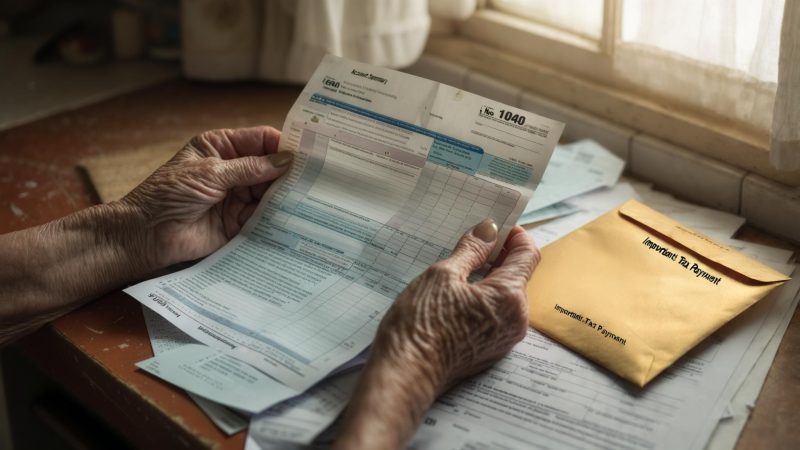
Patricia filed her 2025 federal return on February 28, 2026. She used tax software, filed electronically, and got her acceptance confirmation within hours. The IRS tracker moved to “Return Received” the same day, then advanced to “Return Approved” around March 7. The estimated direct deposit date was March 14, 2026.
March 14 came and went with nothing in her bank account. She refreshed the tracker. Still “Approved.” She called the IRS help line and sat on hold for 47 minutes before hanging up. “I kept thinking, maybe it’s just slow. Maybe it’s a bank thing. I didn’t want to freak out,” she told me, her voice flat and controlled in a way that made clear she absolutely had been a little freaked out.
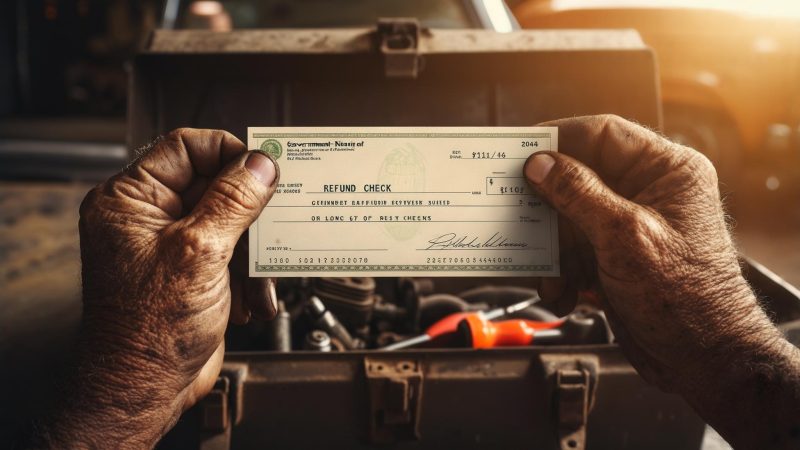
On March 18, 2026, a letter arrived from the U.S. Department of the Treasury, Bureau of Fiscal Service. It was a Notice of Offset. Her full $4,200 refund had been seized and applied to the outstanding defaulted loan — the one she’d cosigned four years earlier for a car Marcus no longer drives.
What the Treasury Offset Program Actually Does — and Why It Surprised Her
The Treasury Offset Program (TOP) is a federal debt collection system that intercepts outgoing federal payments — including tax refunds, federal salaries, and even some benefit payments — to satisfy certified debts. When a lender or collection agency registers a debt with the Bureau of Fiscal Service, that agency can legally divert any federal payment owed to the debtor before it reaches the debtor’s bank account.
The piece Patricia didn’t know — and that most cosigners don’t know until it’s too late — is that an IRS refund marked “Approved” on the tracking tool has cleared the IRS’s process, but it hasn’t yet been disbursed. The offset happens during that disbursement window, after IRS approval and before the money reaches your account. The two agencies operate independently.
Patricia’s situation is also complicated by notification gaps. The Bureau of Fiscal Service is required to send a pre-offset notice — a letter warning that a refund may be intercepted — before taking action. Patricia told me she never received one. Her best guess is that it went to a former address still on file with the lender. By the time the actual offset notice arrived on March 18, the money was already gone.
The Outcome — and What Patricia Is Still Facing
As of our conversation in early April 2026, Patricia had received no portion of her refund back. Her dispute with the Bureau of Fiscal Service was filed but unresolved. Disputing a Treasury offset requires proving the debt was already paid, was not legally valid, or was incorrectly attributed — cosigner status alone does not constitute grounds for reversal. Her case, from what she described, is unlikely to succeed on those terms.
Marcus had resumed making payments on the remaining balance — roughly $150 a month toward the $4,400 still owed — but those payments go to the lender directly. They don’t flow back to Patricia, and they don’t reduce the amount the Treasury already took from her refund. Her $4,200 is gone in any practical sense.
There was a second, quieter thread to our conversation. Patricia has no retirement savings — none. At 34, earning close to $90,000 a year, she has never opened an IRA or made a single contribution to a retirement account. She is aware that IRS tax credits exist for retirement contributions — her union rep has mentioned the Saver’s Credit more than once — but she dismisses them as something for people with room in their budget. Losing $4,200 she’d planned to use for Marcus’s books and one outstanding bill made the retirement question feel even more distant.
“I’m not broke,” she said, firmly, toward the end of our conversation. “I make good money. But that $4,200 was mine. I earned it. I paid my taxes all year through withholding, and the government just took it to pay for something I didn’t even buy.” She is not wrong about the math. And she is not wrong about the feeling.
What she is bracing for now is next year. The remaining $4,400 debt is still certified with the Bureau of Fiscal Service. If it isn’t paid in full before she files her 2026 return, the same process will repeat — and next year’s refund may face the same fate. She’s considering adjusting her withholding to reduce the refund amount entirely, so there would be less for a potential offset to take. That isn’t financial advice; it’s what she told me she was thinking about on the drive home from work.
When I left her at that coffee shop in Willow Glen, she was already checking her phone — bank account app, out of habit. Nothing new. She put the phone in her jacket pocket, picked up her hard hat, and said she had to get back to the job site. “One disaster at a time,” she said, and almost smiled. Then she walked out the door into the April sun.

Leave a Reply