
Have you ever built a life around a set of values — simplicity, presence, purpose — only to discover that the financial world operates on an entirely different set of rules? That question sat with me for days after I spent an afternoon with Grace Nakamura in her home studio in Portland, Oregon, surrounded by bolsters and candles and the kind of deliberate calm that takes years to cultivate.
Grace is 38, a part-time yoga instructor and wellness blogger who left a corporate HR role three years ago to pursue what she calls a more intentional life. On paper, the pivot looked peaceful. In practice, it came with a tax bill she never saw coming.
The Life She Built — and the Income That Came With It
When Grace left her HR director position in 2023, she wasn’t walking away from financial security entirely. Her partner, Daniel, earns roughly $140,000 a year in software project management, and that salary covers their mortgage, their daughter’s school expenses, and most of their monthly costs. Grace contributes approximately $18,000 annually — a patchwork of income from yoga classes, wellness retreats, and her blog’s affiliate partnerships and sponsored posts.
What Grace didn’t fully grasp was how differently the IRS treats that $18,000 compared to Daniel’s W-2 salary. Unlike her partner’s employer, no one was withholding federal income tax or Social Security contributions from her class fees or her blog payments. She was, in IRS terms, self-employed — and that classification carries a tax burden that surprised her completely.
Grace told me she spent her first year out of corporate life assuming the math would work itself out at tax time. Daniel’s employer withholds taxes aggressively from his paycheck — they’d received small refunds in past years when they both had W-2 income. She carried that mental model into her new reality without questioning it.
The Bill That Arrived in April 2025
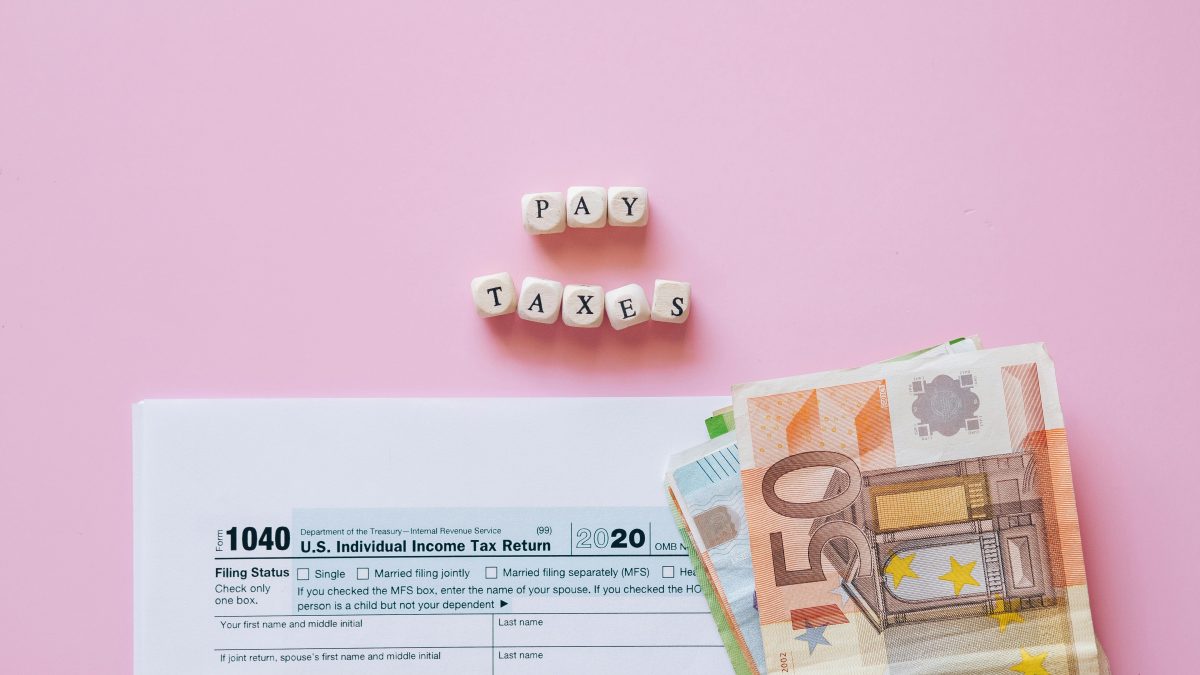
When I asked Grace to walk me through the actual moment of reckoning, she paused and looked at her hands. It was late March 2025, she said. She and Daniel had filed jointly using a tax software platform they’d used for years. The system ran the numbers, and instead of the modest refund they’d grown accustomed to, a balance due of $3,847 appeared on the screen.
That figure broke down, roughly, like this: her net self-employment income triggered the full 15.3% SE tax — approximately $2,754. Her blog and class income also pushed their joint adjusted gross income into a slightly higher bracket than Daniel’s withholding had anticipated, adding several hundred dollars more in regular income tax liability. She had made zero estimated quarterly payments throughout 2024, as required by the IRS for self-employed filers who expect to owe $1,000 or more.
The IRS requires self-employed individuals to submit estimated tax payments four times a year — typically due in April, June, September, and January. According to the IRS Form 1040-ES instructions, missing these payments can trigger an underpayment penalty, even if you pay the full amount by April 15. Grace had missed all four deadlines for tax year 2024.
The Conversation She Wasn’t Ready to Have
Grace and Daniel have what she describes as a philosophically complicated relationship with money. He grew up in a household that tracked every dollar. She grew up in one where her parents, both artists, treated financial anxiety as a kind of spiritual failure. Those two frameworks don’t always coexist comfortably.
The $3,847 bill forced a conversation that went well beyond taxes. As Grace explained it to me, Daniel wasn’t angry — but he was shaken. Their family has no emergency fund to speak of, no life insurance on either of them, and no disability coverage protecting his $140,000 income. The tax bill didn’t just reveal a filing gap; it illuminated something larger.
Grace told me she earns just enough from her wellness work to feel like a contributor, but not enough to function as a true financial partner if Daniel’s income disappeared. She privately worries about what would happen to their daughter, Maya, now seven years old, if something went wrong. They have no will. They have no plan.
What Happened After They Filed
Grace and Daniel paid the $3,847 balance in full by April 15, 2025, using savings they’d set aside for a family trip to Japan. The trip didn’t happen. She said that loss — symbolic and concrete at the same time — hit harder than the money itself.
When Grace filed for tax year 2025 in early March 2026, her balance due had dropped to $411. She described it as a genuinely emotional moment — not because of the number, but because of what it represented. She’d learned how the system worked and had operated inside it, deliberately, for the first time.
The Bigger Picture Grace Hasn’t Fully Resolved
Grace’s tax situation improved. But when I asked her about the broader financial picture — the absence of life insurance, the lack of a will, the reality that her $18,000 income could not sustain her family if Daniel’s salary disappeared — she went quiet in a way that told me more than any answer could.
She told me she and Daniel have talked about it. They’ve looked at term life insurance quotes. The conversations stall, she said, somewhere between the cost and the discomfort of imagining the scenarios that make coverage necessary.
According to the IRS self-employed resource hub, roughly 16 million Americans file Schedule C as their primary income source — a number that has grown significantly since the pandemic. Many of them, like Grace, are first-generation self-employed workers who came from industries where taxes were handled entirely by someone else.
The tax system doesn’t distinguish between philosophical objectors and the simply uninformed. It bills them the same.
As I drove back across the Morrison Bridge after our interview, I kept thinking about the Japan trip that didn’t happen. Not because a vacation is particularly consequential — but because the loss of it revealed something that Grace was already carrying quietly: the gap between the life she wanted and the financial infrastructure that life actually requires. That gap isn’t unique to her. And the IRS, unlike a yoga mat, offers very little in the way of comfort while you figure it out.
Related: She Left Her Corporate Job to Teach Yoga — Then Realized Her Family Had No Safety Net at All



Leave a Reply