
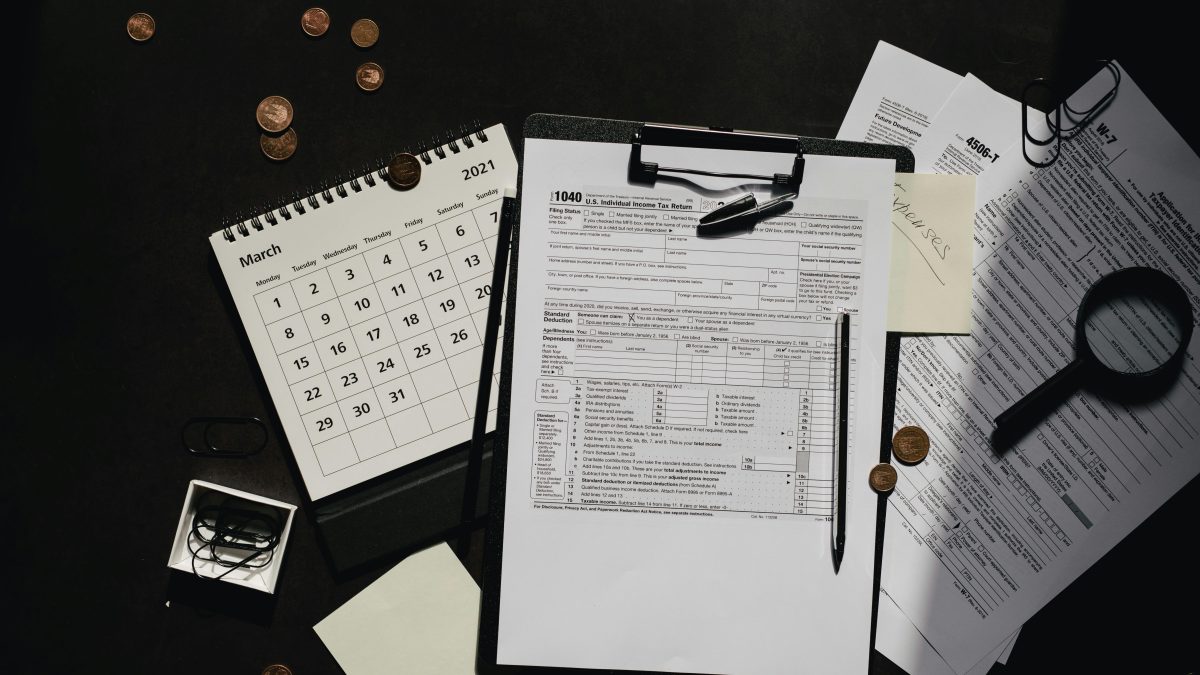
Have you ever built a financial plan so carefully that a single government letter could threaten to knock the whole thing sideways? That question was already in my mind when I drove to San Jose in early April 2025 to meet Linda Chen-Ramirez at a coffee shop near her office. She had asked to meet somewhere neutral — not at home, not at work. I understood why the moment she started talking.
Linda is 58, a senior accountant at a mid-size tech firm, the kind of person who color-codes her financial spreadsheets and sets calendar reminders for estimated tax deadlines. She rebuilt her finances from scratch after a divorce at 49 stripped away nearly a decade of joint savings. Nine years later, she earns well and lives carefully. But she is squeezed, hard, between two obligations that never let up: her 23-year-old daughter’s college tuition and her 81-year-old mother’s assisted living costs in a facility that runs $4,900 per month.
Why She Filed on February 3rd
Linda filed her 2024 federal income tax return on February 3rd — the earliest she could after receiving her final W-2 from her employer. She filed electronically, selected direct deposit, and expected her refund within the standard 21-day window that the IRS advertises for e-filed returns with no errors, according to irs.gov.
Her anticipated refund was $3,847. That number was not random. Linda had calculated it carefully against her withholdings, her 401(k) contributions, and two specific deductions she counts on every year: the Lifetime Learning Credit for her daughter’s continuing undergraduate credits, and a partial medical expense deduction tied to her mother’s care costs that exceed 7.5% of her adjusted gross income.
“I had that refund mentally allocated the day I filed,” Linda told me, wrapping both hands around her coffee cup. “February’s assisted living payment was covered. March’s was covered. But April’s — I was counting on the refund to cushion that bill while I waited for my next paycheck cycle to clear.”
The plan was precise, as all of Linda’s plans are. Then, on day 28, instead of a deposit notification, she opened her mailbox and found IRS Notice 5071C.
The 5071C Letter and What It Actually Means
A 5071C notice is the IRS’s way of telling a taxpayer it needs to verify their identity before releasing a refund. According to the IRS identity verification portal, the agency sends these letters when its fraud detection systems flag a return for additional review — not necessarily because of an error, but because something in the filing pattern triggered a security filter.
For Linda, the trigger was likely the combination of a large refund claim and a change in her filing address — she had moved apartments in October 2024, and her return reflected a different address than what the IRS had on file from her previous year’s return.
Linda knew what a 5071C was — she is, after all, an accountant. But knowing what it was and managing the timing of it were two different problems. “I pulled up IRS.gov that same night,” she said. “The verification tool asked me to create an ID.me account, upload a photo ID, take a selfie. It took about forty minutes total. I thought that would be the end of it.”
It was not the end of it. After completing ID.me verification on day 30, Linda checked the IRS “Where’s My Refund” tool daily. The status remained stuck on “We have received your tax return and it is being processed” for another three weeks.
The Month in Between — and What It Cost Her
Linda’s mother’s assisted living facility does not offer grace periods. The April bill — $4,900 — was due on the 1st. Linda’s refund had still not arrived.
She covered it from her emergency fund, which she had spent years rebuilding after the divorce depleted it. Pulling from that account did not break her, but it stung in a way that went beyond the dollar amount. “That account represents nine years of starting over,” she told me quietly. “Every time I have to touch it for something it wasn’t meant for, I feel like I’m going backwards.”
While she waited, Linda made two phone calls to the IRS. The first, on day 35, resulted in a 47-minute hold before she reached an agent who confirmed her identity verification was complete but said the return was still “in processing” with no estimated completion date. The second call, on day 48, produced similar information. The agent she spoke with was courteous, she said, but had no timeline to offer.
This experience is not unusual. According to the IRS Taxpayer Advocate Service, identity verification holds can extend refund timelines well beyond 21 days, with some cases taking 60 to 120 days to resolve depending on case volume and staffing levels at IRS processing centers.
The Refund Arrives — With Mixed Feelings
On April 5th — day 61 — Linda’s direct deposit of $3,847 landed in her checking account. She texted me a screenshot that afternoon with a single line: “Finally.”
She replenished her emergency fund the same week. Her daughter’s spring tuition installment was paid on time — that had never actually been in jeopardy, Linda clarified, because she keeps tuition payments in a separate sub-account. But the psychological weight of the delay affected how she plans to file in 2026.
When I asked her what she would do differently, she had a specific list ready. As Linda explained, she has already updated her mailing address directly with the IRS using Form 8822, and she plans to file even earlier next year — potentially in late January — to get ahead of any processing backlog. She also told me she is restructuring her withholding slightly so that she expects a smaller refund in the future, reducing the size of the payment that could trigger a security flag.
The Bigger Picture Linda Carries With Her
The $3,847 refund was real money for Linda, but it was not the whole story of what she was managing. She contributes the maximum catch-up amount to her 401(k) — $30,500 in 2025 for workers 50 and older, according to IRS retirement contribution guidelines (taxpayeradvocate.irs.gov). That contribution lowers her taxable income, which in turn shapes her refund calculation each year.
But even maxing her 401(k) doesn’t quiet the background anxiety she described. Her divorce settlement at 49 cost her the marital home and required a QDRO — a Qualified Domestic Relations Order — that divided her former spouse’s pension. She came out of that process with less retirement footing than she had expected to have at this point in her life.
Her mother’s assisted living costs — roughly $58,800 per year — are not covered by Medicare, which does not pay for custodial long-term care. Linda has been absorbing most of that cost herself, with partial support from her mother’s Social Security income. The medical expense deduction she claims each year softens the tax impact modestly, but only the amount exceeding 7.5% of her AGI qualifies.
When I asked Linda what she wishes more people understood about her situation, she didn’t hesitate. “Nobody sees the math,” she said. “They see that I have a good job and I live in a nice city and they think I’m fine. The math tells a different story.”
I left San Jose that afternoon thinking about how many Linda Chen-Ramirezes exist in this country — people who are technically doing everything correctly, and still holding their breath every time the IRS sends a letter. The 61-day wait resolved without permanent damage. The emergency fund got replenished. The refund arrived intact. But the experience left a mark, and not just a financial one.
Linda’s story is not a cautionary tale about making mistakes. It is a more uncomfortable kind of story: one about how even a well-executed plan can be disrupted by a system that moves on its own schedule, indifferent to the tightly balanced obligations waiting on the other side.
Related: She Filed Her 2023 Taxes in April and Called It Done — Then Discovered a $7,500 EV Credit She Missed and Got a Refund Check Months Later
Related: Your paycheck has shown Medicare taxes withheld for years — your employer may have kept that money and never forwarded a single dollar to the IRS (americanrelief.info)



Leave a Reply