

The break room at Denver Health smells like reheated coffee and hand sanitizer, which is where Samantha Reeves told me she does most of her financial planning. Twelve-hour shifts don’t leave much room for sitting at a kitchen table with a spreadsheet. So she does the math in her head, between patients, calculating whether her next paycheck covers daycare before the late fee kicks in.
When I sat down with Samantha Reeves in early March 2026, she had just come off a double shift and was still in her scrubs. She is 31 years old, a registered nurse at a community hospital, and the sole financial provider for herself and her seven-year-old daughter, Lily. Her ex-partner left two years ago and has not contributed financially since. She manages everything — rent, daycare, groceries, student loans — on one income in one of the most expensive cities in the American West.
The Refund She Was Counting On
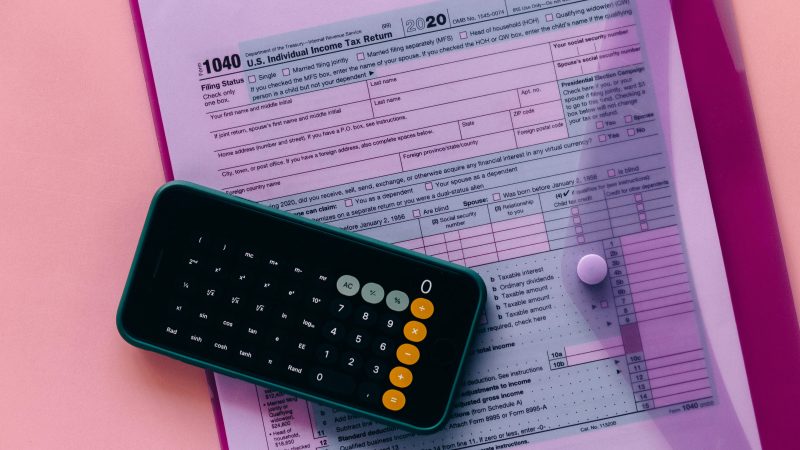
Samantha filed her 2025 federal return on February 3, 2026, using tax software she paid $47 for. She had her W-2 from the hospital, documentation for her Child and Dependent Care Credit, and records of her student loan interest deduction. She was expecting a refund of approximately $4,200 — a figure she had mentally earmarked months before she ever opened the software.
“That refund is not a bonus for me,” she told me, leaning forward over her coffee cup. “It’s the month I don’t have to choose between paying down my loans or keeping the lights on. I plan my whole spring around it.”
The IRS’s own guidance, published on IRS.gov, states that most electronically filed returns with direct deposit are processed within 21 days. Samantha knew this. She had filed electronically, selected direct deposit, and double-checked her routing number. She set a mental calendar: file February 3rd, deposit by February 24th, pay down her Navient loan balance before the March statement closed.
That timeline did not hold.
When “Being Processed” Becomes a Wall
By February 18th, the IRS’s Where’s My Refund tool showed her return status as “Return Received.” That was fine — expected, even. But by March 3rd, two weeks past the 21-day window, the status had not moved to “Refund Approved.” It still read “Being Processed.”
Samantha told me she checked the tool every morning before her shift. “I’d wake up at 5:45, look at my phone, and it still just said ‘being processed.’ After three weeks of that, I stopped telling myself it would update the next day.”
What Samantha did not fully realize at the time — and what she explained to me with some frustration after the fact — was that her return included both the Child Tax Credit and the Child and Dependent Care Credit. According to IRS guidance on refundable credits, returns with these credits can face longer processing windows, especially during peak filing season in February and March.
She had not claimed anything incorrectly. There was no audit, no notice, no error. Her return was simply in a queue.
The Cost of Waiting When You Have No Cushion
Denver’s cost of living does not pause for IRS processing queues. Samantha’s rent runs $1,650 per month for a two-bedroom apartment she shares with Lily in the Globeville neighborhood. Daycare for Lily costs $1,400 per month — a figure Samantha described to me as “basically a second rent.” Her student loan balance sits at approximately $38,000, a remnant of her nursing degree from a community college and a subsequent BSN program.
She picks up overtime shifts when she can, sometimes working 60 hours in a week, but she told me the math on burnout is real. “If I burn out and can’t work, Lily has nothing. So I have to be careful about how many doubles I take. I can’t just grind my way out of every shortfall.”
During the weeks her refund sat in processing, Samantha paid her March daycare bill by pulling from a small emergency fund she had been building since January. She made the minimum payment on her student loans — $287 — instead of the extra $200 she had planned to put toward principal. She skipped the car maintenance appointment she had scheduled for late March, a decision she called “borrowing trouble from the future.”
The Refund Finally Arrived — and What Samantha Did With It
On April 19, 2026, eleven weeks after she filed, Samantha’s direct deposit of $4,187 landed in her checking account. (The final amount was $13 less than estimated, which her tax software attributed to a minor adjustment in her withholding calculation.) She sent me a text that morning: “It’s here. Finally.”
When I followed up with her by phone that evening, the relief in her voice was audible but measured. She had already moved money before we spoke. “I put $1,400 straight into the account I use for daycare — that’s April covered without touching my paycheck. I paid $500 toward my loans. I put $600 back into savings. And I made the car appointment.”
That left her with roughly $1,687 from the refund unallocated — money she described as “the part I actually get to think about.” She was considering putting it toward a small laptop for Lily, whose school had started requiring more at-home digital work. She had not decided yet.
What she had decided was that she would not plan her 2026 finances around receiving her refund by a specific date. “I told myself I’d file early again next year, but I’m not putting a bill on a credit card because I think the IRS is going to pay me back in three weeks. I learned that lesson.”
What Her Story Reflects About IRS Refund Timelines in 2026
Samantha’s experience is not unusual. According to the Taxpayer Advocate Service, returns that include refundable credits — particularly the Earned Income Tax Credit and Child Tax Credit — are more likely to require additional review, which can push processing beyond the standard 21-day window. The IRS processed approximately 160 million individual returns in 2025, and a meaningful share of those involved refundable credits.
The PATH Act, enacted in 2015, legally requires the IRS to hold refunds for returns claiming the EITC or Additional Child Tax Credit until at least mid-February, regardless of when the return was filed. Samantha filed February 3rd — before that hold lifted — which meant her return entered the queue later than she expected.
None of this was Samantha’s fault. She filed correctly, claimed credits she was legally entitled to, and submitted electronically. The system simply moves at a pace that does not account for the fact that some households are running on margins of a few hundred dollars.
“Nobody at the IRS knows I’m a single mom,” she said to me near the end of our conversation, not bitterly, just matter-of-factly. “The system doesn’t know that. It just processes returns.”
She paused, then added something I keep thinking about: “I’m not asking for special treatment. I just wish the timeline they advertise was the timeline that actually happened.”
Sitting across from Samantha Reeves in that break room, I thought about how many people file in February with the same mental calendar she had — the loan payment, the overdue bill, the small repair they’ve been putting off. The IRS’s 21-day estimate is accurate for many filers. But for households claiming refundable credits, working without a financial cushion, the gap between the estimate and reality can cost more than time.
Related: She Left Her Corporate Job to Teach Yoga — Then Realized Her Family Had No Safety Net at All



Leave a Reply