
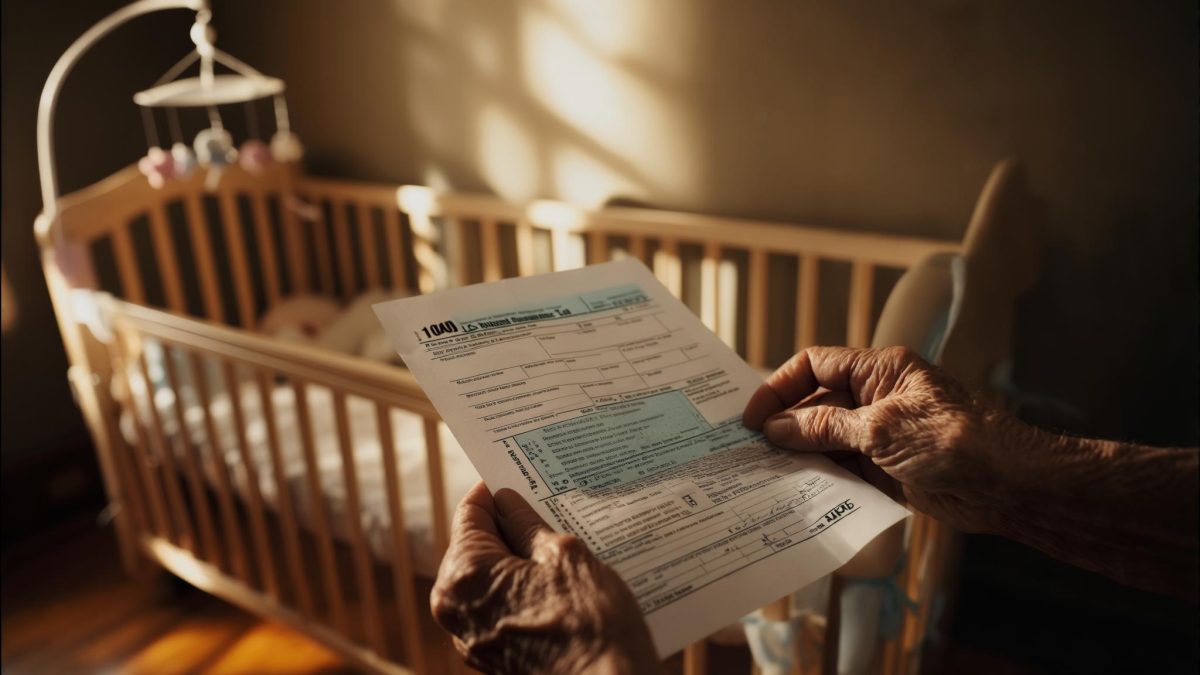
The IRS typically issues refunds within 21 days of accepting an electronically filed return — a window that feels abstract until it becomes the most important date on your calendar. For Kevin Andersen, 36, a union electrician from Minneapolis, that 21-day clock started ticking on January 28, 2026, and every morning he opened the IRS2Go app before his first cup of coffee.
When I sat down with Kevin at a diner near his jobsite in late March, he still had his phone face-up on the table between us — a habit, he said, that his wife Sarah had gently started mocking. “She’d say, ‘It’s not going to change faster if you stare at it,'” he told me, with a short laugh. “She was right. But I couldn’t stop.”
Kevin and Sarah are expecting their first child in late July. They earn a combined $105,000 a year — him through union wages, her as a medical office coordinator. By most measures, they’re doing fine. But “fine” has a way of feeling precarious when you’re four months out from a major life change and the math keeps coming up short no matter how many times you run it.
A Four-Month Countdown and a Pending IRS Deposit
Their $3,847 federal refund was not an accident. Kevin told me he and Sarah had deliberately over-withheld during 2025, adjusting their W-4s to claim fewer allowances after reading about using annual refunds as a forced savings mechanism. It was a strategy he’d absorbed from one of the four personal finance books he’d worked through since Sarah’s pregnancy was confirmed.
“I’ve read four personal finance books in the last six months,” Kevin told me. “They all give you different answers. The only thing I know for sure is that we’re behind.”
Behind is relative. The couple had $22,000 in savings when I spoke with them — not nothing, but stretched across two competing goals that both felt urgent and time-sensitive. They wanted a six-month emergency fund in place before the baby arrived, which their calculations put at roughly $17,500 to cover six months of essential expenses. They also wanted to build a meaningful down payment on a house in a Minneapolis market where cash offers have routinely outpaced financed bids.
Sarah’s employer does not offer paid maternity leave. She planned to take twelve weeks under the federal Family and Medical Leave Act, which protects her job but provides no salary replacement. For roughly three months, the household would run on Kevin’s income alone — approximately $5,200 per month after taxes and union dues. Their current monthly expenses, including rent, run close to $4,100.
The refund had become a mental placeholder — the deposit that would finally break the paralysis between goals. Kevin had sketched out an allocation plan on a notepad: $2,500 toward the emergency fund, the rest into a dedicated house account. But first, the money had to actually arrive.
The Numbers That Kept Kevin Up at Night
The gap between what they had and what they felt they needed was a concrete arithmetic problem Kevin kept reworking. “We make decent money,” he said, staring at the table for a moment. “We’re not reckless with it. But somehow we’re four months out from having a kid and we still don’t have enough in the bank to feel safe.”
The six-month emergency fund target of $17,500 was technically reachable with their existing $22,000. But they’d been mentally reserving a portion of that savings for a down payment, and pulling it back entirely felt like surrendering a goal two years in the making. The Minneapolis housing market had not been cooperative: median home prices in the metro area hovered around $370,000 through early 2026, and properties under $320,000 regularly attracted multiple offers within days of listing — many of them cash.
Kevin told me he’d gone back and forth on a single question for weeks: emergency fund or down payment. Every book he’d read gave him a framework. None of them accounted for a baby arriving in four months in a city where affordable rentals were also disappearing.
Forty-Three Days Waiting on Where’s My Refund
Kevin filed electronically on January 28, 2026, using the same tax software he’d used for three consecutive years. The IRS accepted the return within 24 hours. According to the IRS Where’s My Refund tool, filers who e-file with direct deposit can generally expect their refund within 21 days of acceptance. For Kevin, that window would have closed around February 18.
February 18 passed. The tracker still read “Return Received” — it had not advanced to “Refund Approved.” Kevin called the IRS refund hotline in late February and was told what many callers hear: his return was still being processed, and no specific timeline could be provided.
“Every morning I’d open the IRS app before coffee,” Kevin told me. “It just kept saying ‘processing.’ I started to wonder if we’d done something wrong on the return.” He hadn’t. His 2025 return included a claim under the IRS Energy Efficient Home Improvement Credit (Form 5695), covering a new heat pump the couple had installed. That credit has historically added processing time for some filers, though the IRS does not publicly specify which returns are held for additional review.
What the Refund Actually Changed — and What It Didn’t
With $3,847 deposited, Kevin and Sarah now had approximately $25,847 in total savings. That cleared the $17,500 emergency fund target with roughly $8,347 remaining. On paper, both goals became simultaneously achievable — at least minimally. The math held, but only if nothing went wrong between March and late July, and only if Sarah’s unpaid leave didn’t stretch the household thinner than projected.
The harder conversation — about the house — took longer to resolve. Kevin said he and Sarah had talked through it across two separate evenings before landing somewhere they could both accept.
“We decided we’re not buying a house this year,” Kevin told me. “That was hard to say out loud. But I can’t gamble on a down payment when Sarah’s not going to have income for three months.” He paused, then added: “The books all say emergency fund first. I kept trying to find a reason that didn’t apply to us. It does.”
The outcome is neither failure nor triumph. They will rent for at least another year, continue saving, and plan to re-enter the Minneapolis market in 2027 with a stronger down payment and a clearer picture of their actual post-baby expenses. The refund helped — but not in the cleanly decisive way Kevin had imagined when he was sketching allocation plans in January, before the waiting started.
The Weight of a Decision Finally Made
What stayed with me after leaving that diner wasn’t the specific dollar amounts — it was the quiet relief that had settled into Kevin’s voice once the decision was made. He’d spent months carrying both goals simultaneously, trying to optimize two outcomes that couldn’t fully coexist on his timeline. The unresolved tension had its own weight, separate from the financial strain itself.
“I think I was more stressed about not deciding than about anything else,” he told me, near the end of our conversation. “The money we have is enough to protect us. I just had to stop trying to make it do two things at once.”
Kevin will keep his adjusted W-4 in place for 2026 — deliberately over-withholding again, building toward next year’s refund with the same slow patience. The baby is due July 24. He’ll start checking the IRS app again next January.




Leave a Reply