
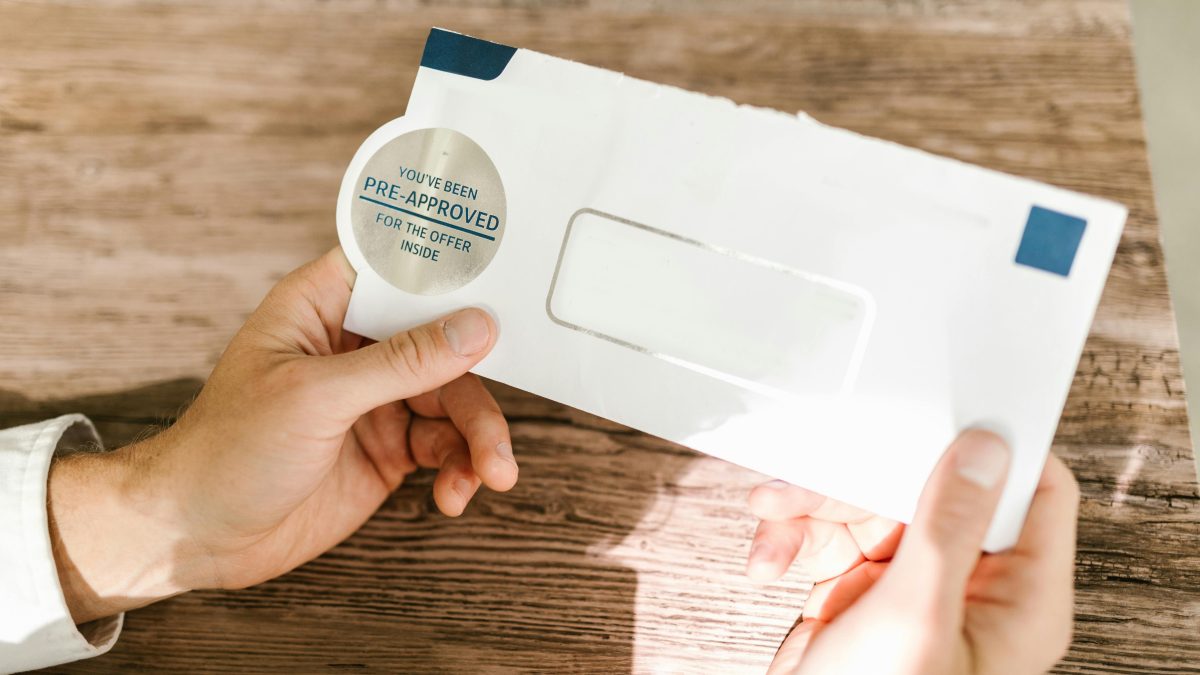
Roughly 4.5 million federal tax refunds are intercepted each year through the Treasury Offset Program, according to the Bureau of the Fiscal Service — a number that sounds abstract until you are sitting across from someone it happened to. I met Patricia Guzman through a veterans’ support group in St. Louis where she had shared her experience at a monthly meeting in January 2026. A group coordinator passed along her contact information, and she agreed to speak with me a few weeks later at a coffee shop off Olive Boulevard, a short drive from the neighborhood where she has lived for the past eleven years.
Patricia is 58, married, and works as an Uber driver — usually forty to fifty hours a week, though the income swings unpredictably from one month to the next. Her husband, Darnell, works part-time as a maintenance technician. Their adult son, Marcus, has significant cognitive disabilities and requires full-time supervision at home, which means one of them is almost always forfeiting income to be present. Patricia described their household as perpetually three bad weeks away from a real problem. That framing turned out to be more precise than she intended.
The Refund She Was Counting On
Patricia filed her 2025 federal taxes in early February through a paid preparer. Her combined household income — Uber earnings, Darnell’s wages, and a small caregiver stipend from Missouri’s developmental disabilities program — came to approximately $67,400 for the year. After standard deductions and a disability-related dependent care credit, her preparer calculated a federal refund of $4,218. Patricia had mentally earmarked nearly all of it.
“Marcus needs a new wheelchair lift installed in the van,” she told me, stirring her coffee without drinking it. “That quote came in at $3,100. The rest was going toward a medical bill from October. I had the whole thing spent before I even filed.”
The IRS accepted the return on February 9, 2026. The Where’s My Refund tool showed “Refund Approved” by February 18. Patricia’s direct deposit was scheduled to land on February 21. When she checked her bank account that morning, the deposit was $412.67.
She called her bank first, assuming a processing error. The bank confirmed the deposit amount was correct and final. She then called the IRS helpline and was placed on hold for forty-one minutes. When an agent picked up, they explained that her refund had been intercepted by the Bureau of the Fiscal Service under the Treasury Offset Program — and that the IRS itself had no ability to reverse or delay the offset.
The Debt She Thought Was Behind Her
The Bureau of the Fiscal Service sent Patricia a notice dated February 20 — one day before the deposit — explaining the offset. The intercepted amount of $3,805 was applied to a defaulted federal Perkins Loan that Patricia had taken out in 1994 to attend a community college program she never finished. The original loan balance was $2,200. With interest and collection fees accrued over thirty-two years, the figure had grown to $6,910. The offset covered $3,805 of that outstanding balance.
“I genuinely thought that debt was gone,” Patricia told me. “I hadn’t heard a single word about it since maybe 2001. No letters. No calls. Nothing on my credit report in years. I thought it had aged out or been forgiven or something.” Federal student loan debt, unlike most private debt, carries no statute of limitations for collection purposes — a fact that catches many borrowers off guard decades after the original default.
What compounded Patricia’s situation was the joint nature of her tax return. She and Darnell file jointly each year, which means his withholdings — approximately $1,400 of that $4,218 refund — were swept up in an offset for a debt that was entirely hers from before their marriage.
Navigating the Injured Spouse Claim
When I asked Patricia how she found out about Form 8379 — the IRS’s Injured Spouse Allocation form — she laughed in a way that didn’t sound particularly amused.
Form 8379 allows a spouse who is not responsible for a debt to claim their share of a jointly filed refund back from the IRS. According to the IRS, the form can be filed with the original return or submitted separately after an offset has already occurred. When filed after the fact, the IRS estimates a processing time of up to fourteen weeks for a paper submission.
Patricia filed Form 8379 by mail on March 3, 2026. She calculated that Darnell’s portion of the offset — based on his proportional contribution to total household withholding — was approximately $1,390. That is the amount she is now waiting to recover.
The Cost of Irregular Income — and the Gap Nobody Talks About
What struck me most about Patricia’s situation was not the offset itself — painful as it was — but the structural vulnerability that made the refund so critical in the first place. Uber driving income arrives in irregular surges. A good week in December might bring $1,100; a slow week in February might bring $380. That variability makes quarterly estimated tax payments difficult to calibrate and leaves the annual refund as the one predictable financial event in the household calendar.
“I basically use my refund as a savings account I can’t touch until April,” she said. “I know that’s not smart. But when every month is different, the refund is the one thing I can actually plan around. And this year they took it before I could even touch it.”
Marcus’s disability benefits — a combination of SSI and Missouri state support — cover approximately $1,650 per month in direct assistance. Patricia estimates his actual care costs, including adaptive equipment, specialized transportation, and prescription co-pays not covered by Medicaid, run closer to $2,400 per month. That $750 monthly shortfall is absorbed by Patricia and Darnell, and the math requires that every expected dollar actually arrive.
The wheelchair van lift she had planned to purchase with the refund has been postponed. Patricia told me she has started driving additional hours on weekends to rebuild the cash reserve — a solution she acknowledged is only possible because Marcus’s father-in-law has been staying with the family since February and can cover supervision shifts. “He’s 74,” she said. “That arrangement has an expiration date.”
Where Things Stand — and What She Would Do Differently
As of the date of our conversation, Patricia is waiting on the Form 8379 processing and has contacted the Default Resolution Group at the Department of Education to explore a loan rehabilitation agreement on the remaining Perkins balance — roughly $3,105 after the offset. Loan rehabilitation, which requires nine consecutive on-time payments under an income-driven arrangement, would remove the default status and stop future offsets, according to Federal Student Aid.
She is also looking at whether her 2026 withholding adjustments — filing a new W-4 equivalent through her Uber tax settings — can reduce the size of any future refund and therefore limit the government’s single-intercept opportunity. Patricia has no formal financial advisor. Her planning happens in late-night research sessions and conversations at the veterans’ group, which has become something of an informal clearinghouse for exactly this kind of bureaucratic navigation.
The Treasury Offset Program does allow taxpayers to check whether their refund is at risk before it is intercepted. The Bureau of the Fiscal Service operates a TOP call center at 800-304-3107 where individuals can verify whether their Social Security number is in the offset database — a step that takes roughly five minutes and can prevent the specific kind of planning failure Patricia described.
Before I left the coffee shop, I asked Patricia what she would tell someone in a similar position who just found out their refund had been intercepted. She set her cup down and thought about it for a moment longer than I expected.
Patricia drove her next Uber shift forty minutes after we finished talking. The van lift is still on layaway at a mobility equipment supplier in Florissant. She expects to be back to pick it up sometime in the summer — one way or another.



Leave a Reply