

The first quarter estimated tax deadline — April 15, 2026 — is now two weeks away for roughly 16 million self-employed Americans, and for people like Deshawn Parker, that date carries a specific kind of dread. Not just the pressure of writing a check, but the memory of what happened the last time he ignored it.
I met Deshawn at a coffee shop in Detroit’s Midtown neighborhood on a Tuesday morning in late March. He was 27, wearing a weathered hoodie from a local design collective, laptop open, stylus tucked behind one ear. He looked like someone who was always mid-project — which, he told me, was both the best and worst part of being a freelance graphic designer.
From a Stable Paycheck to an Irregular Life
Deshawn Parker spent three years at a warehouse logistics company on the east side of Detroit. The pay was steady — around $38,000 annually — and taxes were withheld automatically from every check. He had no idea how much the IRS was taking, or when. It just happened.
In early 2024, he quit. He had a small but growing portfolio of brand identity work and a few recurring clients. Some months, he told me, the work flooded in. Other months, the silence was deafening.
His 2025 gross income from freelance work came out to approximately $37,400 — nearly the same as his warehouse salary. On paper, the leap had worked. What the paper didn’t show was what was waiting for him at tax time.
The Bill He Never Planned For
When I asked Deshawn to describe the moment he realized what he owed, he set down his coffee and laughed — the kind of laugh that’s covering something else.
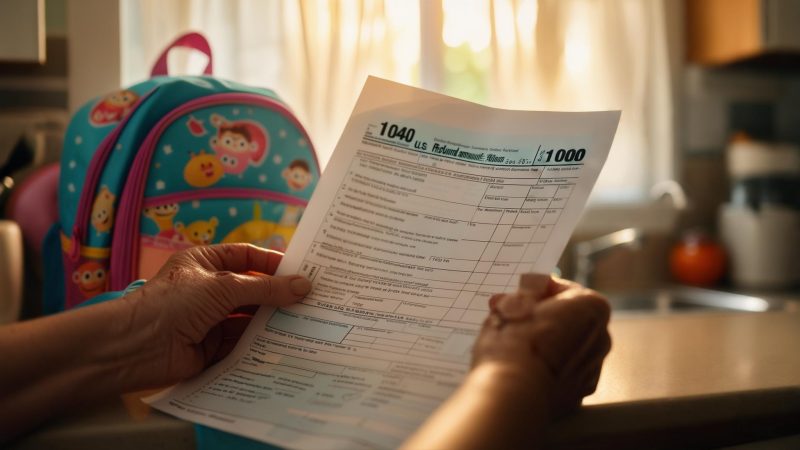
It wasn’t a glitch. When Deshawn filed his 2025 return in February 2026, his tax software calculated that he owed $4,200 to the federal government. The reason was straightforward, even if it felt anything but: as a self-employed worker, he was responsible for paying both the employee and employer portions of Social Security and Medicare taxes — a combined 15.3% self-employment tax on net earnings, according to the IRS.
On top of that, nobody had been withholding income taxes from his client payments throughout the year. No employer. No system. No automatic deduction. The IRS expects self-employed people to pay quarterly estimated taxes using Form 1040-ES — in April, June, September, and January. Deshawn had paid none of them.
The IRS assessed a small underpayment penalty on his return — approximately $210 — because he had skipped all four quarterly deadlines. It wasn’t catastrophic, but it added insult to an already painful situation.
Medical Debt, a Damaged Credit Score, and No Safety Net
The tax bill didn’t arrive in a vacuum. Six months before he filed, Deshawn had an emergency appendectomy. He had no employer-sponsored health insurance — a reality faced by many of the roughly 10 million self-employed workers who purchase coverage independently or go without. The hospital stay generated $14,000 in medical bills.
He told me he tried to negotiate a payment plan, but the account moved to a collections agency before he could get through to the right person at the billing department. By the time he filed his taxes, that $14,000 debt sat in collections and had already pulled his credit score down significantly — a damage that he described as both financial and psychological.
Deshawn’s creative confidence — the thing that made him leave the warehouse in the first place — had worked against him when it came to financial planning. He described a pattern of hustle-mode optimism: good months made him feel like everything was solved, slow months sent him spiraling. There was no middle ground where calm, consistent planning happened.
How He Handled the $4,200 Bill
Deshawn did not have $4,200 sitting in savings. When I asked where the money came from, he was blunt.
He filed his return on February 18, 2026, and paid the full balance — $4,200 plus the $210 penalty — electronically through the IRS Direct Pay system. The IRS confirmed receipt within two business days. No payment plan. No negotiation. He just wanted it done.
Where Things Stand Now — and What’s Coming April 15
When I spoke with Deshawn in late March 2026, the April 15 first-quarter estimated tax deadline was on his radar for the first time — genuinely on his radar, not just something he’d seen in a Reddit thread and scrolled past.
He had set aside $900 from two recent contract payments specifically for that quarterly payment. His 2026 income was off to a stronger start than 2025, with approximately $8,200 in confirmed contracts through March. Whether that pace held, he couldn’t say.
The medical debt remained unresolved. He had contacted the collections agency and was attempting to negotiate a lump-sum settlement — a common approach where agencies sometimes accept less than the full balance. He told me nothing had been finalized. The $14,000 figure still loomed.
His credit score, last checked in early March 2026, sat at 591 — damaged but not destroyed. He wasn’t planning to buy a car or apply for credit in the near term. For now, the focus was on keeping the quarterly tax payments current and not repeating 2025.
There’s no triumphant ending to Deshawn’s story — at least not yet. He paid a bill he didn’t see coming, carrying the weight of medical debt that arrived even less expectedly. What he has now is clarity he didn’t have eighteen months ago, bought at a price he’s still calculating. That kind of education rarely comes cheap, and for freelancers navigating a tax system designed around steady employment, it often doesn’t come early enough.
As I packed up my recorder and walked back out onto Woodward Avenue, Deshawn was already back on his laptop, working on something. The hustle hadn’t stopped. It just had a new note attached to it.



Leave a Reply