

Most people assume the fastest way to fix a cash-flow crisis is to get your tax refund quickly. File early, e-file, use direct deposit — the IRS will have your money to you in 21 days. That’s the standard advice, repeated in every personal finance column from January through April. Reggie Espinoza did everything right. It still took 49 days. And those 49 days nearly broke him.
I first heard about Reggie through a mutual friend, Marcus, at a neighborhood barbecue in the South Valley of Albuquerque last February. Marcus pulled me aside near the grill and said, almost offhandedly, “You write about taxes and government checks — you should talk to my buddy Reggie. He’s been staring at that IRS tracker every morning like it owes him something.” It did, actually. $4,217 to be exact.
A few days later, I sat down with Reggie Espinoza at a Lotaburger on Central Avenue. He’s 60, a high school math teacher with 22 years in Albuquerque Public Schools, a warm laugh that arrives before his sentences, and the particular brand of low-grade anxiety that builds when you’re the only earner in a household of five and your COBRA bill lands on the first of every month like a small disaster.
The Setup: A Refund That Was Supposed to Be a Lifeline
Reggie’s financial picture in early 2026 was complicated in ways that are entirely ordinary for a teacher in his position. His base salary is roughly $52,000 a year. His wife, Carmen, is a stay-at-home parent to their three kids, the youngest of whom is 14. The family had lost employer-sponsored health insurance the previous spring when Reggie briefly left APS for what turned out to be a short-lived administrative role at a charter school. When that position dissolved in August 2025, he returned to teaching — but COBRA coverage for the gap period was already in motion.
That COBRA premium was $2,340 a month. Their rent in the South Valley is $1,850.
“I mapped it out,” Reggie told me, pulling up a notes app on his phone. “If the refund hit by February 17th like the IRS said it could, I’d have enough to cover February and March COBRA, catch up on a credit card that was already 30 days late, and have maybe $400 left over. That was the plan.” He paused. “Math teachers make plans. We like when things add up.”
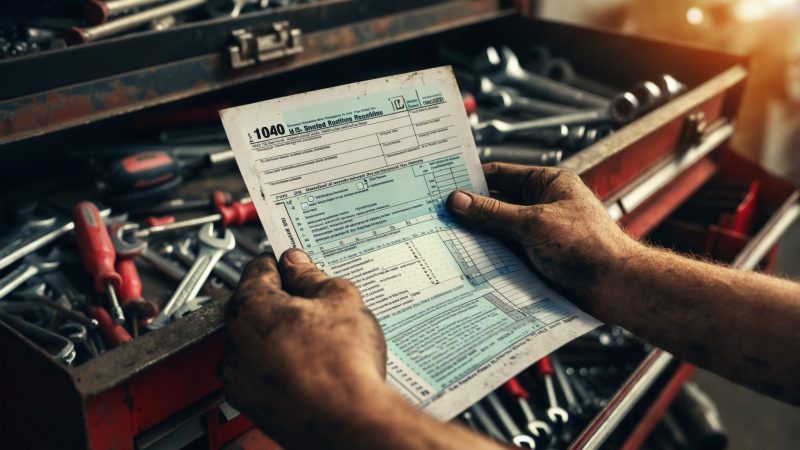
He filed his Form 1040 electronically on January 27, 2026, using tax software. The IRS acknowledged receipt on January 29. The refund — driven largely by the Lifetime Learning Credit and withholding overages on his W-2 — was calculated at $4,217. Direct deposit was selected. Everything, by the book, pointed to a refund arriving between February 13 and February 19.
Seven Weeks of “Processing” — What the IRS Tracker Doesn’t Tell You
The IRS “Where’s My Refund” tool is designed to give filers transparency. In practice, Reggie said, it felt like staring at a loading screen with no estimated time remaining. The tool showed one status from January 29 onward: “Your return has been received and is being processed.”
That message did not change until March 11.
According to the IRS operations page, most e-filed returns with direct deposit are processed within 21 days — but the agency explicitly notes that some returns require additional review and can take longer. What it doesn’t spell out clearly is what triggers that review or how long “longer” actually means.
Reggie’s return had been flagged, though he wouldn’t find out why until later. As he explained it to me, the issue appeared to stem from a mismatch between the Lifetime Learning Credit amount he claimed — $1,680, based on graduate-level coursework he completed in fall 2025 toward a second master’s degree — and a 1098-T form that had not yet been transmitted to the IRS by his university when he filed. That kind of timing gap is common in January, and it’s one of the quieter reasons early filers sometimes wait longer than they expect.
What the Delay Actually Cost — Beyond Dollars
By late February, Reggie’s buffer account — a modest $1,100 he’d built up over 18 months of deliberate saving — was gone. The February COBRA payment had cleared. The March payment was due March 1. His credit card, already carrying $3,400 at 24.99% APR, had tipped past 30 days late in January, and he’d missed the February minimum payment entirely.
“I know what happens to your credit score when you miss payments,” he told me, his voice even but tight. “I’ve been through it before. I spent three years rebuilding after some bad decisions in my forties. My score was at 647 going into this year. I worked hard for that number.” He looked out the window for a moment. “I don’t know what it is now. I haven’t looked.”
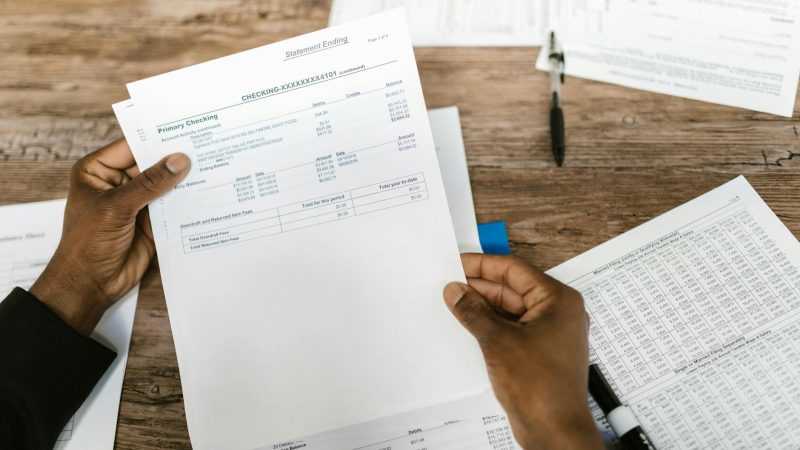
That avoidance — of bank statements, of credit score apps, of anything that might quantify the damage in real time — is something Reggie acknowledged freely. It’s not denial, exactly. It’s a coping mechanism that costs him information he probably needs.
He also carries approximately $38,000 in student loan debt from the graduate degree he completed in 2019 — the same coursework that was now, ironically, at the center of his refund delay. Payments on that balance had resumed after the federal forbearance period ended, adding another $290 a month to a budget that was already operating without margins.
The Turning Point: March 11, and a Two-Step Status Change
When Reggie opened “Where’s My Refund” on the morning of March 11, the status had finally changed. It now read: “Your refund has been approved.” Eight days later, on March 19, 2026 — 49 days after his original filing date — $4,217 landed in his checking account via direct deposit.
“I was in the middle of teaching second period when Carmen texted me,” Reggie said. “She just sent the number. ‘$4,217.’ That was the whole text. I had to finish a lesson on quadratic equations before I could even react.” He smiled at that. “My kids thought something was wrong with me because I kept getting this look on my face.”
The money went, almost immediately, to the March COBRA payment, the credit card minimum with a partial catch-up payment of $420, and two months of student loan dues he’d deferred informally by simply not paying them. By the time the allocation was done, $310 remained.
What Reggie Wishes He Had Known Before Filing
When I asked Reggie what he’d do differently, he was specific in a way that only someone who has run the numbers repeatedly can be. He’d considered several things in retrospect.
- File after February 15 when claiming education credits. The IRS traditionally holds refunds containing the American Opportunity or Lifetime Learning Credit until mid-February under the PATH Act, and 1098-T forms from universities may not be transmitted to the IRS until early February anyway. Filing in late January may create an automatic mismatch.
- Check whether your 1098-T is visible to the IRS before filing. You can verify third-party-reported information through the IRS Get Transcript tool, which shows what documents the IRS has received on your behalf.
- Do not build a payment schedule around the 21-day estimate. That figure applies to straightforward returns. Returns with education credits, self-employment income, or prior-year adjustments frequently take longer.
- Contact the IRS after 21 days if the tracker hasn’t updated. Reggie waited 41 days before calling. A Taxpayer Advocate referral is available for refund delays causing financial hardship — a fact he learned only after the refund had already landed.
He also said something that stuck with me as I drove back from that Lotaburger on Central. He said the hardest part wasn’t the money. It was the uncertainty — the inability to plan because the number he was planning around simply refused to arrive on schedule. For a man who teaches students how to solve for unknowns, having an unknown he couldn’t solve was its own particular torment.
Reggie’s COBRA coverage expired in early March when he was formally reinstated to APS benefits. His new monthly premium through the district is $487 — a reduction of $1,853 a month. That change, more than the refund itself, is what finally stabilized his household budget. The refund, when it came, was already spoken for. The breathing room came from somewhere else entirely.
When I left him that afternoon, he was grading tests on his phone — a photo of a student’s paper, annotated in a notes app. Still optimistic, still running numbers, still finding small order in the chaos. The $310 was sitting in his checking account untouched. He said he was afraid to move it.


Leave a Reply