

The waiting room at the Mecklenburg County free tax preparation clinic smelled like coffee and fluorescent light — the particular mix of a place where people come because the stakes are real. I was there in early February 2026, reporting on how working-class and small business filers navigate a tax season that grows more complicated every year. That’s when I spotted Donovan Lombardi at a corner table, a yellow legal pad in front of him covered in neat columns of numbers.
Donovan is 62, a barber with his own shop on Central Avenue in Charlotte. He has the kind of careful, deliberate energy you’d expect from someone who’s been cutting hair for 34 years — measured movements, measured words. He was widowed four years ago and lives alone now, his two adult children scattered across Georgia and Ohio. He came to the clinic with a manila folder thick enough to suggest he’d been carrying this particular problem for a while.
The Setup: A Self-Employed Filer With High Expectations
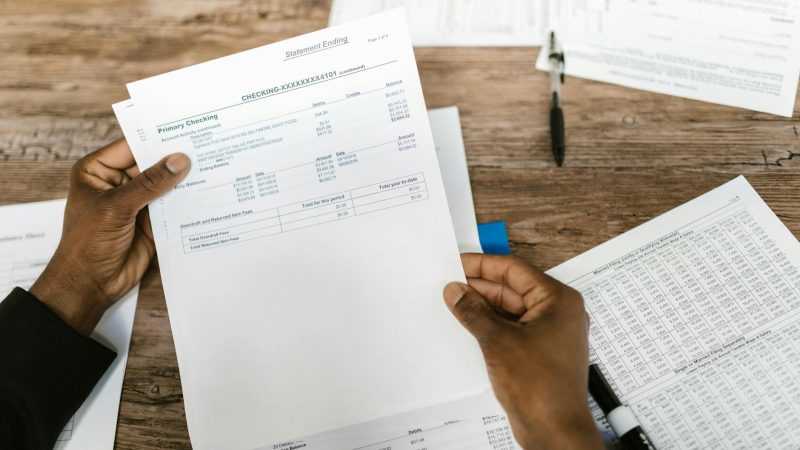
When I sat down with Donovan Lombardi after his session with the volunteer preparer, he was cautiously optimistic. His preparer had estimated a federal refund of approximately $4,200 — the result of overpaying his quarterly estimated taxes throughout 2025. As a sole proprietor, Donovan sends estimated payments to the IRS four times a year, and in 2025 he’d been conservative, rounding up each payment to avoid any penalty surprises.
“I’ve been doing it that way for about eight years,” Donovan told me, smoothing the edge of his legal pad. “I’d rather give them too much and get it back than owe them something I didn’t plan for.”
His 2025 gross receipts from the shop came in at roughly $187,000. After deductions for equipment, booth rental, supplies, and his health insurance premiums, his net self-employment income landed around $94,400. He had paid a total of $28,600 in estimated taxes across the four 2025 payment dates — April 15, June 16, September 15, and January 15, 2026 — according to the records he showed me.
His return was e-filed on February 3, 2026. The IRS acknowledgment came back within 24 hours confirming receipt. According to the IRS refunds portal, most electronically filed returns with direct deposit are processed within 21 days. Donovan circled February 24 on his kitchen calendar.
The Silence: When “Where’s My Refund” Stops Being Reassuring
February 24 came and went. Donovan checked the IRS “Where’s My Refund” tool — a feature available at IRS.gov that updates once daily — and saw his return was still listed as “processing.” He checked again on March 1. Same status. He told me he started waking up at 4 a.m. to check it before opening the shop.
The financial pressure wasn’t abstract. Donovan regularly sends money to both his daughter in Atlanta and his son in Columbus, Ohio — a habit that started when his wife, Patricia, died in 2022 after a long illness. He’d promised her he’d keep the family close in the ways that counted. That promise, as he described it to me, now has a monthly price tag of roughly $1,400 split between the two.
He had counted on the refund to cover a $1,900 repair to the shop’s HVAC unit — a fix his landlord was unwilling to absorb. With the refund stalled, he pulled from a short-term savings buffer he keeps specifically for the shop. “I don’t like touching that account,” he said. “That account is for emergencies, not for the government being slow.”
The Notice: A Schedule SE Discrepancy That Shrank the Check
On March 3, a CP12 notice arrived in Donovan’s mailbox. The CP12 is an IRS notice indicating the agency has corrected a math or calculation error on a return and that the refund amount has been adjusted. As Donovan explained to me, he’d never received one before and had no idea what it meant.
The preparer who had helped him at the clinic referred him to a second volunteer — a retired CPA who comes in on Tuesday afternoons. She walked him through the notice. The IRS had recalculated the deductible portion of his self-employment tax on Schedule SE, reducing his above-the-line deduction by $706. That adjustment increased his adjusted gross income slightly, which in turn reduced his refund by $353.
“Three hundred and fifty-three dollars is not nothing to me,” Donovan said when I followed up with him by phone after the deposit landed. “That’s not going to break me. But I want to understand how that happened so it doesn’t happen again.”
The retired CPA explained that the Schedule SE deduction — which allows self-employed individuals to deduct half of their self-employment tax from gross income — requires precise calculation based on net self-employment earnings. A rounding or entry difference in the software his original preparer used had produced a figure the IRS’s own calculation didn’t match.
The Broader Picture: Self-Employment Filing and IRS Delays in 2026
Donovan’s experience isn’t unusual. According to the IRS Taxpayer Advocate Service, returns that require additional review — including those with Schedule C and Schedule SE attachments — routinely take longer than the standard 21-day window, even when filed electronically without errors. Self-employed filers represent a disproportionate share of delayed refunds each year.
The CP12 notice specifically indicates the IRS found a discrepancy that worked in the taxpayer’s favor relative to what they originally owed, but reduced the refund amount. It differs from a CP2000 — which proposes additional tax owed based on information returns — in that no additional payment is required from the taxpayer. But it still shrinks the check.
For Donovan, the real cost wasn’t the $353 — it was the disruption to his mental accounting. He is, by his own description, someone who maps out his finances the way he maps out a haircut: with a plan, a sequence, and no room for surprises. The two-month wait forced him to improvise in ways that made him uncomfortable.
The Reflection: What Donovan Is Doing Differently in 2026
When I spoke with Donovan Lombardi a final time in late March, his tone had shifted from frustration to something closer to resolution. He’d already scheduled a session with a credentialed tax professional — an enrolled agent — to review his 2025 return line by line and set his 2026 estimated payments more precisely. He plans to reduce his quarterly overpayment so that his expected refund next year is closer to $500 than $4,000.
He paid the HVAC bill. He continued his monthly transfers to his daughter and son. The $3,847 that finally landed in his account on April 5 covered what he needed it to cover — just later and smaller than the plan called for. “The shop’s good,” he said. “I’m good. I just don’t like variables I can’t see coming.”
That last line stayed with me. Donovan Lombardi has built a business, raised children, and carried grief with the kind of quiet discipline that doesn’t show up in any tax form. The IRS delay didn’t break anything — but it reminded him, and me, how much ordinary financial stability depends on systems behaving the way we expect them to. When they don’t, the cost isn’t always measured in dollars.
He was back at the shop the next morning at 7 a.m., he told me. First client in the chair by 7:15. Legal pad put away for another year.


Leave a Reply