

Most people assume a bigger paycheck means a bigger tax refund. Tommy Bianchi believed the same thing — right up until the year his divorce rewrote every number he thought he understood about his finances.
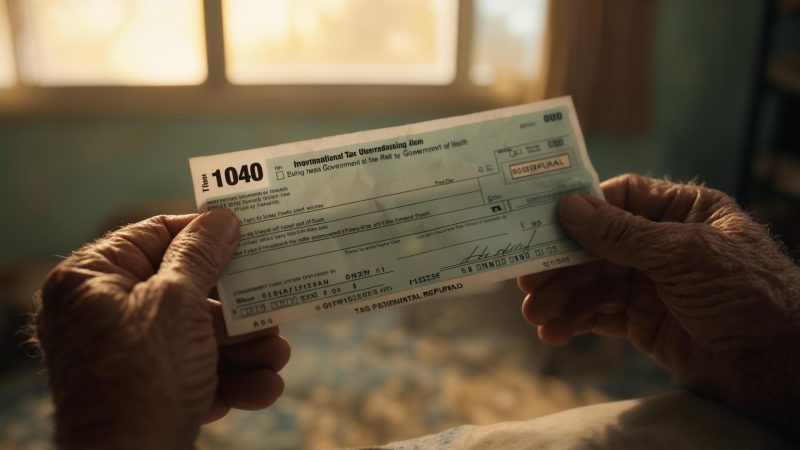
When I sat down with Tommy Bianchi at a diner off I-10 in Phoenix on a Tuesday morning in late March 2026, he was nursing black coffee and scrolling through the IRS “Where’s My Refund” tool on his phone. He was waiting for $847. He had been expecting $4,200.
Tommy is 46, a licensed HVAC technician who runs service calls across the Phoenix metro. He earns a solid hourly wage — enough, in another life, to carry a mortgage. But that life ended three years ago when his marriage did. The divorce settlement left his ex-wife in the house they had owned together, and Tommy with $22,000 in legal fees spread across two credit cards, a one-bedroom rental apartment, and a court-ordered child support obligation of $1,600 a month.
That $1,600 — $19,200 a year — represents roughly 25 percent of his gross income. He sees his two kids, ages 11 and 14, every other weekend.
How a Filing Status Change Quietly Erased His Expected Refund
The first blow came before the Treasury Offset Program ever got involved. For the tax year Tommy filed in early 2026, his situation had fundamentally changed from what he had been used to as a married filer — and he hadn’t fully adjusted his W-4 withholding at work to match.
During the marriage, Tommy and his ex filed jointly. That filing status came with a standard deduction of $30,000 for the 2025 tax year under the married filing jointly bracket. As a single filer in 2025, his standard deduction dropped to $15,000. His taxable income jumped accordingly, even though his actual earnings hadn’t changed much.
Tommy hadn’t updated his W-4 after the divorce finalized. His withholding was still calibrated to a two-income household with two dependency exemptions. His employer was pulling out less than what a single filer in his bracket actually owed. According to the IRS Tax Withholding Estimator, this is one of the most common post-divorce tax errors — and one of the most avoidable.
“I thought I was going to get a chunk back,” Tommy told me. “My buddy at work got $3,800. I figured I’d get at least that. I’m paying through the nose every month. I figured the government owed me something.”
The Treasury Offset Program: The Second Hit He Didn’t See Coming
Even after accounting for the filing status change, Tommy had calculated he was owed roughly $2,100 in federal refund before any offset. Then he received a CP49 notice from the IRS.
The notice explained that $1,253 of his refund had been intercepted through the Treasury Offset Program and applied to a past-due child support balance. Tommy had fallen two months behind on payments during a slow work period in late 2024 — a gap he had since closed — but the state’s child support enforcement agency had already submitted a collection referral to the Bureau of the Fiscal Service.
Tommy hadn’t known the referral was still active. By the time he called to check, the offset had already processed. The $1,253 was gone — applied to the arrearage balance — and the remaining $847 was sent as a direct deposit to his checking account on March 6, 2026.
What $847 Looks Like When You Owe $22,000
Tommy had built plans around that refund. Not lavish ones — he’s not a lavish guy. He wanted to put $1,500 toward the lower of his two credit cards to get one balance close enough to zero that he could close it out. The rest he’d talked himself into saving as the first real seed money toward a down payment on a house. He’s been renting for three years. He wants, badly, to stop.
As Tommy explained it to me, the weekends with his kids make the financial math even harder. He sees them every other weekend and feels the pressure to make those two days count. That means movies, go-kart tracks, the occasional Suns game. He knows he overspends. He knows it.
The $847 went toward his Visa balance — not enough to close it, just enough to feel like a partial answer. The credit card carrying $22,000 in divorce legal fees still sits there, accruing interest at 24.99 percent APR. He’s paying the minimum plus about $80 extra each month when he can manage it.
What Tommy Is Doing Differently Before the 2026 Tax Year Closes
By the time we finished our coffee, Tommy had a clearer picture of what had gone wrong — even if the clarity stung. He’d already called his HR department to update his W-4, switching his withholding to reflect his actual single-filer status and zero additional allowances. He expects more money taken out of each paycheck going forward, but fewer ugly surprises next March.
He also confirmed with the county child support enforcement office that his arrearage had been fully cleared and asked them to submit a withdrawal of the offset referral — something he learned he could formally request, documented through the state’s Office of Child Support Services.
That last point matters more than Tommy had realized. Under his settlement, he and his ex alternate claiming the two children as dependents — he gets the even years, she gets the odd years. For the 2025 tax year, it was her year. For 2026, it’s his. Depending on his income and the Child Tax Credit rules in place for that filing season, claiming two dependents could meaningfully change his refund picture next spring, per guidance published by the IRS on the Child Tax Credit.
The Part That Doesn’t Get Fixed by a Better Refund
Before I left, I asked Tommy what he actually wants out of the next few years. Not financially — just what he actually wants.
Tommy Bianchi is not a man who made catastrophically bad decisions. He worked steadily, paid his taxes, maintained his license, showed up. What happened to him happened to approximately 630,000 American men and women who finalize divorces each year — a financial system designed around stable households encountered a destabilized one, and the gaps showed up in the worst possible places, including the one moment each spring when people feel like they might finally catch a break.
The $847 is spent. The $22,000 is still there. His kids are coming over in two weeks, and he’s already looking at what’s playing at the Harkins near his apartment. He’ll probably spend more than he should.
Some numbers don’t tell the whole story. But Tommy’s do.



Leave a Reply