

The gas station on South Wilmot Road in Tucson was loud that Tuesday morning — a semi idling at the pump, a woman arguing into her phone two spots ahead of me in the snack line. I wasn’t trying to eavesdrop. But when the woman said, loudly enough for half the store to hear, “If that two-thousand-dollar check comes through, we can catch up on the house,” I turned around. Her name was Aisha Zielinski. She was 54, in a security guard uniform, and she had about forty dollars in her wallet.
I introduced myself and handed her a card. Three days later, she agreed to sit down with me at a diner off Interstate 10. What she told me over the next two hours was a story I’ve heard in different forms all across the country this tax season — a story about real financial pressure, a misleading flood of online rumors, and the hard math of waiting on the IRS.
The Weight of Three Financial Clocks Running at Once
Aisha works the overnight shift, 10 p.m. to 6 a.m., at a commercial storage facility on the east side of Tucson. She earns $17.40 an hour. With overtime, she brings home roughly $2,900 a month after taxes. Her husband, Marcus, drives for a grocery delivery service and clears about $1,600 most months. Together they’re raising a 17-year-old daughter, Priya, who has been accepted to a state university and plans to start in the fall of 2026.
The numbers, Aisha told me, have never quite added up. Their mortgage payment is $1,540 a month on a house they bought in 2019 — stretching at the time, but manageable. Then came a refinance in 2022 that lowered the rate but rolled closing costs back into the principal, pushing the balance back up to $197,000. By early 2025, with a property tax bill they couldn’t fully cover, they had fallen $3,400 behind with Pima County.
Then, in January 2026, her 2011 Honda Civic threw a timing belt. The repair shop on Speedway quoted $1,100. Aisha couldn’t swing it. She’s been bumming rides to work from a neighbor ever since, paying her $20 a night. “That’s four hundred dollars a month I didn’t budget for,” she told me, stirring her coffee slowly. “It just keeps compounding.”
The Stimulus Rumor That Reshaped Her Budget
Sometime in late January, Aisha’s Facebook feed filled up with posts about a $2,000 stimulus check — tariff-funded, supposedly coming through the IRS, supposedly approved by the Trump administration. She showed me screenshots on her phone: viral graphics with official-looking fonts, dollar amounts, and timelines. Some said checks would arrive by March 15. Others claimed direct deposits had already begun.
The reality, as fact-checkers and federal reporting have made clear, is that no such payment has been approved. According to Fox 5 DC’s fact check, claims about new IRS direct deposits and tariff dividend checks circulated widely throughout 2025 and into 2026 — but no legislation authorizing any such payment has passed Congress. President Trump has proposed the concept of tariff-funded checks, but a proposal is not a check.
According to Herald Mail Media’s reporting on the Supreme Court’s tariff ruling, even if a payment mechanism were established, significant legal and legislative hurdles remain. The $2,000 figure circulating online has no confirmed timeline, no confirmed eligibility threshold, and no confirmed delivery method.
Aisha had already mentally allocated $1,400 of that hypothetical $2,000 toward the property tax arrearage. She told Marcus they could use the rest as a down payment on a used car. “I had a whole plan,” she said. “And then my nephew called me and said, ‘Aisha, that’s not real.’ I felt like an idiot.”
What Her Actual IRS Refund Looked Like
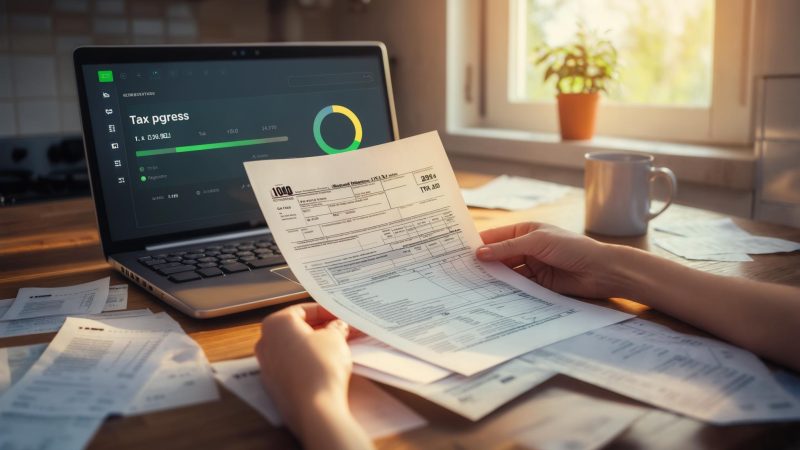
Aisha filed her 2025 federal return on February 9, 2026, using a free tax preparation service at a local library. She filed electronically and opted for direct deposit. The couple’s combined adjusted gross income for 2025 was approximately $53,800. After the standard deduction for married filing jointly ($30,000 for tax year 2025), their taxable income landed just under $24,000.
The refund of $1,814 arrived on February 28 — 19 days after she filed. According to Kiplinger’s IRS refund calendar, taxpayers who e-file and choose direct deposit typically receive refunds within 21 days, assuming no errors or review flags on the return. Aisha’s came in under that window.
It was less than she had hoped for, and far less than the $2,000 stimulus figure she had been tracking online. “I wasn’t ungrateful,” she told me carefully. “But I had two problems that needed more than eighteen hundred dollars. And I’d been telling myself I’d have four thousand.”
The Triage: One Problem Solved, One Left Waiting
When the refund landed, Aisha and Marcus sat at their kitchen table and made a list. The property tax arrearage — $3,400 — was the more urgent threat. Pima County had already sent a formal delinquency notice. The car repair, at $1,100, was painful but not an immediate legal risk.
The property tax partial payment bought her time. But the remaining $2,000 balance still looms. “I called the county and they were actually decent about it,” she said. “They set me up on a payment plan — $400 a month for five months. I can do that if nothing else breaks.”
The car is the unresolved chapter. Aisha has looked at a few used vehicles online, mostly in the $5,000–$7,000 range. But with a mortgage already over-leveraged and a daughter heading to college in the fall, taking on any new debt feels precarious. “Marcus said maybe we wait until Priya’s financial aid comes through and we see what that number is. That’s the next big thing we’re waiting on,” she told me.
The IRS Is Also Changing How It Pays — One More Thing to Track
Separate from the stimulus rumors, Aisha mentioned something else she’d heard: that the IRS was moving away from paper checks entirely. That part, at least, is grounded in fact. According to reporting on Executive Order 14247, the federal government has been modernizing payment delivery, pushing more recipients toward direct deposit and away from paper instruments.
For Aisha, this was a non-issue — she already had direct deposit set up and received her refund electronically. But for others in her network, especially older relatives who still receive paper checks, it’s one more administrative change to navigate during an already confusing tax season.
The broader picture of 2026 tax season confusion is something I’ve been tracking closely. According to reporting from app.com, the combination of unverified stimulus rumors and a real April 15 filing deadline has created significant stress for low- and middle-income filers this year — particularly those who, like Aisha, made financial decisions based on payments that have not materialized.
What Aisha Zielinski Wants Other People in Her Situation to Know
When I asked Aisha what she would tell someone who was in the same position she was in January — behind on bills, seeing stimulus check headlines, tempted to plan around them — she paused for a long time before answering.
She was clear-eyed about her own role in the situation. The bitterness she carries — from the 2022 refinance that she now feels she was pushed into, from years of wages that haven’t kept pace with Tucson’s rising cost of living — is real. But she’s not looking for someone to blame. She’s looking for the next month to be slightly less precarious than the last one.
As I drove back north on Interstate 10, I thought about the gap between what people need and what they’re told might be coming. Aisha’s $1,814 refund was real, and it helped. The $2,000 stimulus she’d planned around wasn’t real, and the planning cost her. The distance between those two things — about $186 in dollar terms, much larger in emotional terms — is exactly the distance that a rumor can create.
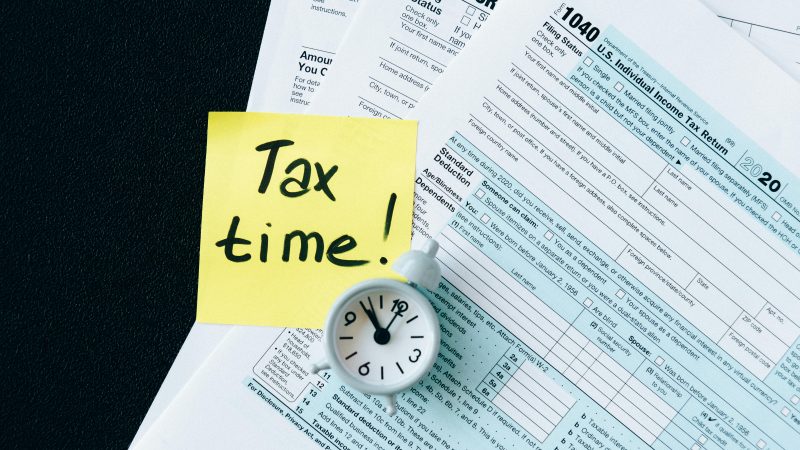
The tax filing deadline remains Wednesday, April 15, 2026. That date is not a rumor.


Leave a Reply