
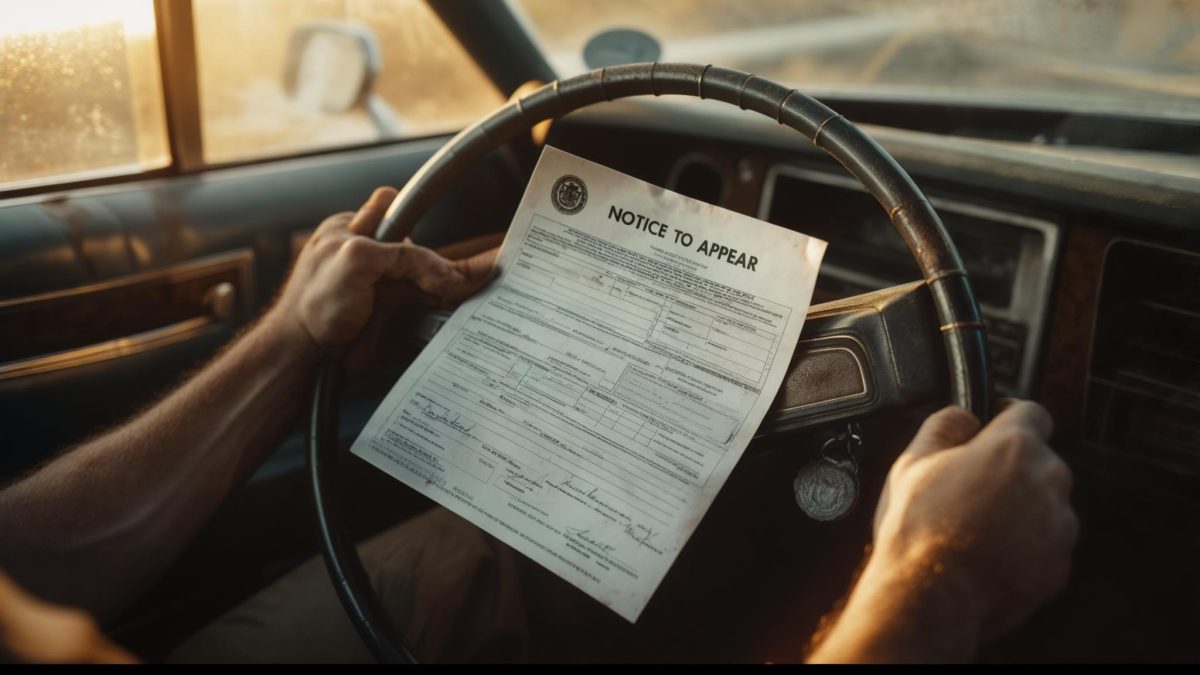
Roughly 33 million Americans work in the gig economy, and according to the IRS Gig Economy Tax Center, a significant portion of them under-report or misreport self-employment income — often without knowing it. The consequences can range from minor delays to five-figure tax bills. Eddie Matsuda found himself somewhere in the middle.
I first came across Eddie in March 2026 through a Facebook group called “Retirement Reality Check — Cleveland & Northeast Ohio.” He had posted a frustrated message about waiting nearly seven weeks for a federal tax refund, and several members had replied with their own horror stories. I sent him a direct message that same afternoon. He responded within the hour — suspicious, he admitted, but willing to talk.
When I sat down with Eddie Matsuda at a Panera Bread off Rockside Road in Independence, Ohio, on March 18, 2026, he arrived ten minutes early and ordered nothing. That wariness, he later told me, wasn’t personal. It was institutional.
The Setup: A High-Earning Driver With a Fragile Financial Floor
Eddie Matsuda has been driving for Uber since 2018, logging between 50 and 60 hours per week across the greater Cleveland metro area. In 2025, his gross earnings from Uber reached approximately $91,400 — strong numbers, particularly for a single platform. But gross income for gig workers rarely tells the full story.
After vehicle depreciation, fuel, insurance, and maintenance, Eddie estimated his net self-employment income at closer to $61,000. He also received a small amount — roughly $3,200 — from occasional deliveries through DoorDash, a platform he used sporadically during slow Uber weeks. He had made estimated quarterly tax payments throughout 2025, totaling $9,800, and expected a refund in the range of $3,400 when he filed in late January 2026.
That $3,400 wasn’t abstract. Eddie and his wife, Karen, are the primary caregivers for their 24-year-old son, Marcus, who has a developmental disability requiring full-time support. Their home in Garfield Heights — purchased in 2021 at what Eddie now calls “the absolute worst time” — carries a mortgage balance of approximately $287,000 on a property currently assessed at $241,000. The refund was earmarked, essentially the moment he clicked submit on his return.
“That money was already spent in my head,” Eddie told me, leaning forward over the table. “Three months of mortgage cushion. That’s what it meant to us.”
What “Approved” Actually Means — And What It Doesn’t
The IRS “Where’s My Refund” tool showed Eddie’s return as approved within nine days of his January 28 filing. Standard processing for an e-filed return is typically 21 days, according to IRS.gov’s refund tracking page. Eddie crossed that threshold with no deposit. Then 30 days passed. Then 38.
At day 42, the tool updated — but not with a deposit date. The status shifted to a message Eddie described as “we need more time to process your return.” He called the IRS helpline twice. The first call ended after 47 minutes on hold with no answer. The second reached an agent who told him only that his return had been “selected for additional review” and that he should expect correspondence by mail.
As Eddie explained, that phone call was the moment his distrust of institutions hardened into something close to panic. “They’re holding my money and they won’t tell me why. How is that legal? I paid in. I did everything right.” He paused. “Or so I thought.”
The CP2000 Notice: A Number He Wasn’t Expecting
The letter arrived on March 3, 2026 — 54 days after Eddie filed. It was a CP2000 notice, which the IRS uses when income reported on a return doesn’t match what third-party payers — employers, platforms, banks — have reported to the agency directly.
The discrepancy the IRS identified: Eddie had reported his DoorDash income using an older 1099-NEC he received in early January, which reflected $3,200. But DoorDash had issued a corrected 1099-K — a different form — showing $4,850, after accounting for a disputed bonus payment from December 2025 that Eddie had forgotten was taxable. The $1,650 gap, amplified by self-employment tax at the 15.3% rate, produced a proposed additional tax of $1,847.
Eddie told me he read the notice three times before calling his wife into the room. “Karen looked at it and said, ‘This is a mistake.’ I wanted to believe her. But something in my gut said it wasn’t.”
He was right. After pulling his DoorDash payment history manually through the app, Eddie confirmed the corrected 1099-K figure was accurate. The December bonus — $1,650 deposited on December 29, 2025 — had slipped past him when he assembled his tax documents in January.
The Outcome: A Smaller Check and a Harder Conversation
By the time I met with Eddie on March 18, he had already decided to accept the CP2000 proposed changes rather than dispute them. He mailed the signed agreement form that Friday. The IRS confirmed receipt and projected his adjusted refund — now approximately $1,553 — would be deposited within 6 to 8 weeks of processing the response.
That timeline, Eddie acknowledged, meant the money likely wouldn’t arrive until late April or early May 2026 — nearly three months after he originally filed.
The adjusted $1,553 would still go toward the mortgage — just not in the way he had planned. “We’ll make it work,” he told me. “We always make it work.” His tone was flat when he said it, not defeated exactly, but not relieved either.
On the question of retirement savings, Eddie was brief and precise. He has none. No 401(k), no IRA, no brokerage account. At 57, with a dependent son and a home worth less than what he owes on it, the path to retirement is something he described as “a door I try not to look at.”
What Gig Workers Should Know About 1099-K vs. 1099-NEC
Eddie’s situation isn’t unusual, and that’s the detail that stayed with me after our conversation. The IRS changed its 1099-K reporting threshold rules in recent years, and gig platforms now issue 1099-Ks in some cases where they previously issued 1099-NECs — or both, creating confusion about which form controls. According to the IRS’s 1099-K guidance page, both forms may report overlapping income, and it’s the taxpayer’s responsibility to reconcile them.
The practical implication: gig workers who use more than one platform, or who receive year-end adjustments or bonuses, may find that their January tax documents don’t reflect the final numbers. Waiting for corrected forms — which can arrive as late as March 15 for amended 1099s — can reduce the risk of exactly the kind of discrepancy Eddie encountered.
- 1099-NEC: Reports nonemployee compensation. Issued by platforms for direct payments to contractors.
- 1099-K: Reports payment card and third-party network transactions. Threshold rules have changed significantly since 2022.
- Corrected forms (marked “CORRECTED” in a box at the top) supersede original documents and should always be used if received before filing.
- Self-employment tax on net earnings runs at 15.3% — 12.4% for Social Security and 2.9% for Medicare — making income discrepancies more costly than equivalent W-2 gaps.
A Reporter’s Reflection
I left that Panera thinking about what Eddie had said about the door he tries not to look at. He’s 57, earning a solid income in real terms, but carrying a mortgage underwater, supporting a son who needs full-time care, and holding no retirement savings whatsoever. A $3,400 tax refund was supposed to be a pressure valve. It became, instead, a months-long exercise in institutional friction.
His story isn’t a cautionary tale about dishonesty — Eddie didn’t try to hide anything. It’s about how the complexity of gig-economy tax documents can quietly erode the financial floor that working people build, dollar by careful dollar. The IRS process worked as designed. That’s almost the most unsettling part.
When I followed up with Eddie by text on April 4, 2026, he told me the refund still hadn’t posted. He was checking the IRS tool every morning. “Old habit now,” he wrote. “Like checking the weather before a shift.”
Related: A FedEx Driver in Louisville Told Me He Makes $62K a Year — and Still Can’t Afford His Prescriptions or Retirement
Related: A Delivery Driver Walked Into a Medicare Event With the Wrong Questions — and Left With a Lifeline




Leave a Reply