
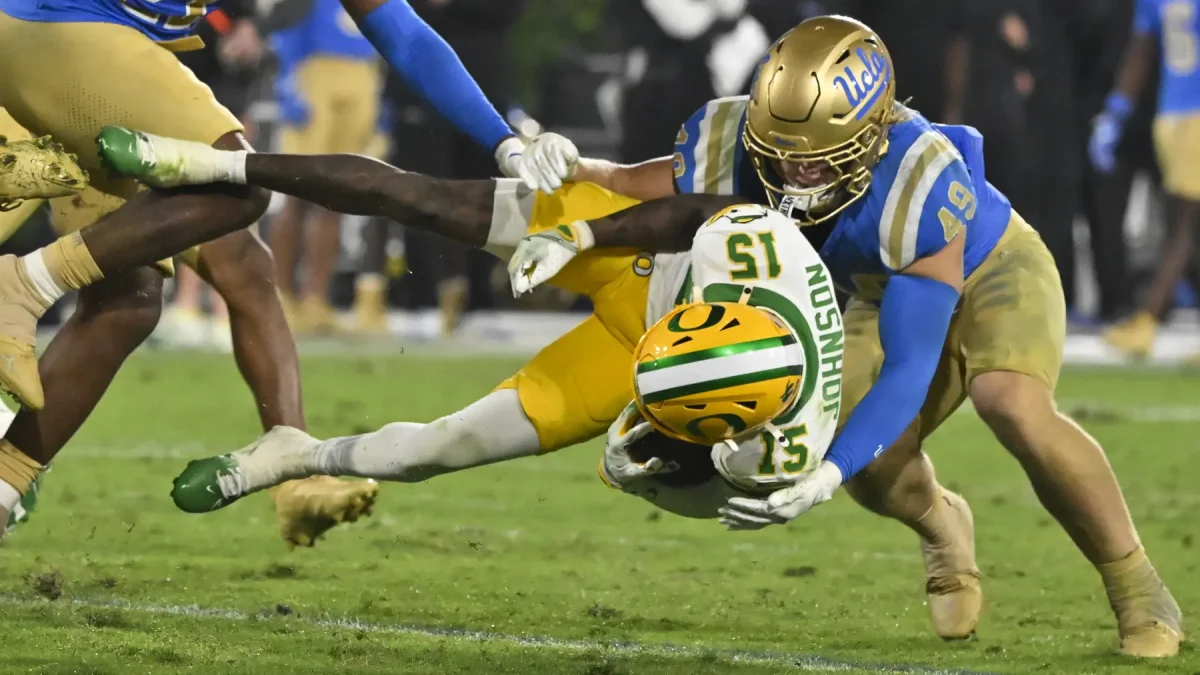
Twenty-four points. That is the margin by which top-seeded UCLA dismantled fourth-seeded Minnesota in the NCAA Women’s Sweet 16, and it tells only half the story. The Bruins were grinding through a shaky first half before something clicked, and what followed was a second-half performance that looked less like a tournament game and more like a controlled demolition.
UCLA defeated Minnesota 80-56 on Friday night, punching their ticket to the Elite Eight for the second consecutive year. For a program building genuine national title momentum, this was not just a win. It was a statement.
What Happened: UCLA’s Second-Half Surge Against Minnesota
The answer is straightforward: UCLA’s defense tightened, Kiki Rice found another gear, and Minnesota had no answer for Lauren Betts in the paint. The Bruins outscored the Gophers significantly in the second half, turning a close contest into a rout.
Kiki Rice finished with 21 points, leading all scorers. Lauren Betts added 16 points, working the interior with the kind of efficiency that makes opposing coaches lose sleep. Rice’s ability to create off the dribble and hit mid-range shots kept Minnesota’s defense scrambling all night.
| Player | Team | Points | Role |
|---|---|---|---|
| Kiki Rice | UCLA | 21 | Guard, lead scorer |
| Lauren Betts | UCLA | 16 | Center, interior presence |
| Grace Grocholski | Minnesota | 12 | Minnesota’s top scorer |
| Sophie Hart | Minnesota | 11 | Secondary scorer |
Minnesota’s Grace Grocholski and Sophie Hart combined for 23 points, but that was not enough to keep pace with a UCLA offense that found its rhythm after halftime. The Gophers simply could not match the Bruins’ depth or defensive intensity when the game mattered most.
How UCLA’s Defense Built the Foundation for Victory
Defense won this game before the offense took over. UCLA’s defensive unit played a key role in keeping the squad ahead at halftime, according to reporting from the Daily Bruin. That defensive discipline in the first half gave the Bruins a platform to work from, even when their offense was sputtering.
UCLA held Minnesota to 56 total points. For a fourth-seeded team that earned its way to the Sweet 16, that is a suppressed offensive output. The Bruins rotated well, contested perimeter shots, and made Grocholski and Hart work for ebasket they scored.
“UCLA’s defense played a key role in keeping the squad ahead at halftime.”; Daily Bruin
What separates elite tournament teams from good ones is the ability to defend when offense stalls. UCLA demonstrated exactly that quality on Friday night. The second-half offensive explosion was built on a defensive foundation that never cracked.
- UCLA held Minnesota to single-digit scoring runs throughout the second half
- Lauren Betts anchored the interior, limiting Minnesota’s paint scoring
- Perimeter defenders forced Minnesota into difficult contested jumpers
- UCLA’s transition defense prevented Minnesota from generating easy fast-break points
Why This Win Matters: UCLA’s Growing Elite Eight Identity
Reaching the Elite Eight in consecutive years is not an accident. It reflects program depth, coaching consistency, and a roster built for March. UCLA advancing past Minnesota marks the second straight year the Bruins have reached this stage, and that pattern carries real weight in recruiting and program perception.
The NCAA Women’s Tournament Elite Eight represents the final eight programs standing from a field of 68, according to ncaa.com. Surviving to this point requires winning three consecutive games against increasingly difficult opponents. UCLA has now done it back-to-back.
Kiki Rice is the engine of this team. At 21 points on Friday, she demonstrated the kind of clutch scoring that elevates programs from contenders to genuine title threats. Rice’s combination of playmaking and scoring makes her one of the most complete guards in the country. Lauren Betts, meanwhile, gives UCLA a frontcourt weapon that most opponents cannot match.
For context, Minnesota entered this game as a fourth seed, meaning the selection committee viewed them as a legitimate top-16 program nationally. UCLA made them look overmatched by the final buzzer. That speaks to the gap between a good program and a great one.
- Second consecutive Elite Eight appearance for UCLA women’s basketball
- Top seed status validated with a dominant tournament performance
- Kiki Rice established herself as one of the tournament’s premier players
- Lauren Betts’ 16-point performance underscored UCLA’s frontcourt advantage
- Minnesota’s Grace Grocholski and Sophie Hart combined for 23 points, still not enough
What UCLA’s Elite Eight Run Means for Women’s Basketball
UCLA’s consistent presence at the tournament’s final stages signals a broader shift in women’s college basketball. Programs outside the traditional powerhouses are building sustained excellence, and the Bruins represent that trend clearly.
This is not a one-year story. Back-to-back Elite Eight appearances require roster continuity, staff stability, and a recruiting pipeline that keeps delivering. UCLA has all three. Rice and Betts form one of the most dangerous one-two combinations in the country, and the supporting cast has proven capable of rising to tournament moments.
Minnesota, for its part, gave a credible tournament performance before running into a team operating at a higher level. Grocholski and Hart showed why the Gophers earned their seed, but UCLA’s second-half intensity was simply too much to overcome. That is the nature of a 24-point final margin: somewhere in the second half, the game stopped being competitive.
UCLA now advances to the Elite Eight, where the competition will be even stiffer. But a team that can absorb a shaky first half and respond with a dominant second half has the mental makeup to go deeper. I would not bet against them.
The 80-56 final score flattens a game that had genuine tension in the first half. UCLA’s ability to flip the script after halftime is the real story here, and it is the quality that makes this team dangerous heading into the Elite Eight.
Frequently Asked Questions


Leave a Reply