

Roughly one in five federal tax refunds issued in early 2026 took longer than 21 days to process, according to estimates from tax professionals tracking IRS refund timelines — a number that sounds abstract until you meet someone whose rent, prescriptions, and medical bills were all waiting on that single deposit.
I met Ruben Novak the way you meet a lot of people worth talking to: at a neighbor’s block party in the Germantown neighborhood of Louisville, Kentucky, last February. My neighbor Deb had mentioned him almost offhandedly — “there’s a guy two houses down who had a really rough go of it with the IRS this year” — and by the time I’d found him near the grill, Ruben had already launched into the story unprompted. A week later, he agreed to sit down with me properly at his kitchen table.
Ruben is 35, works full-time as a delivery driver for FedEx, and splits a two-bedroom rental with a roommate. He’s the kind of person who laughs easily — at himself, at the absurdity of bureaucracy — but there’s a tightness around his eyes when the conversation turns to money. He told me early in our interview that he avoids opening his bank app when things get bad. “If I don’t look at it,” he said, “it can’t ruin my whole day.”
The Injury That Started Everything
The financial pressure Ruben was under didn’t begin with the IRS. It began on September 11, 2025, when he hurt his lower back loading a heavy residential pallet during his afternoon route in the Highlands. He drove the rest of his shift — something he told me he now deeply regrets — and by evening he couldn’t stand up straight.
He filed a workers compensation claim the following week. It was denied in November 2025. The stated reason, Ruben told me, was that the insurance adjuster concluded the injury was “not solely related to a workplace incident,” citing a prior chiropractic note from 2022. By that point, he’d already accumulated $4,780 in medical bills across two urgent care visits, an MRI at Baptist Health Louisville, and a follow-up with a spine specialist.
To make things worse, FedEx shifted Ruben’s health plan during open enrollment in January 2026. His monthly prescription cost for a muscle relaxant and an anti-inflammatory — both prescribed after the back injury — jumped from $34 to $91. He was paying that out of pocket every month while the medical bills sat in a pile on his kitchen counter, most of them past the 30-day payment window.
Filing the Return and Watching the Clock
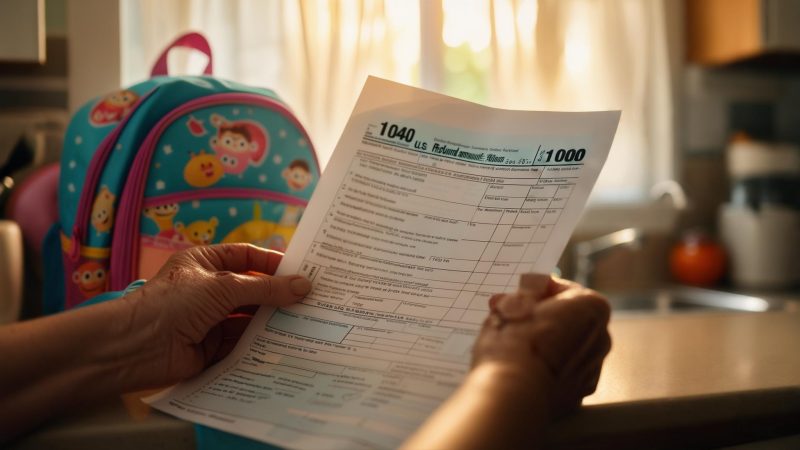
Ruben filed his 2025 federal tax return on January 28, 2026, using a popular commercial tax software. His W-2 from FedEx showed wages of approximately $51,200 for the year. After the standard deduction and his withholding, his software estimated a refund of $1,840. He chose direct deposit to his checking account and selected the fastest available processing option.
According to the IRS refund processing guidelines, most electronically filed returns with direct deposit are processed within 21 days. Ruben set a mental calendar. He expected the money by February 18, 2026, at the latest.
February 18 came and went. Then February 25. When Ruben finally forced himself to check the IRS “Where’s My Refund” tool — something he described as physically uncomfortable to do — it showed “Return Received” with no movement toward “Refund Approved.”
The Notice and the Forgotten 1099
The letter arrived on February 28. It was an IRS CP63 notice — a form the agency uses to inform filers that their return is being held while the IRS verifies information. Ruben told me he read it four times before calling his mother, who works in HR and sometimes helps him navigate paperwork.
The issue, Ruben eventually pieced together, was a Form 1099-NEC he’d never received. In July 2025, he had done a two-week contract delivery route for a local florist during a busy event season — cash-adjacent work that paid him $1,100 through a small logistics app. The florist had apparently issued a 1099-NEC in January 2026 and filed it with the IRS. Ruben’s tax software never prompted him about it because he never entered it.
On March 8, the IRS updated its system to reflect an adjusted refund of $1,614 — a reduction of $226 from his original estimate. The adjustment accounted for federal income tax owed on the unreported $1,100 in self-employment income, plus the self-employment tax component that applies to gig and contract work. According to the IRS self-employment tax guidelines, self-employed income is subject to a 15.3% SE tax on top of regular income tax, which can catch people off guard.
The 52-Day Wait and What It Actually Cost
Between January 28 and March 21, Ruben told me, he made three decisions he wouldn’t have made if the refund had arrived on schedule. He paid $180 in minimum payments on two credit cards instead of paying them off, incurring another cycle of interest. He deferred one prescription refill for eleven days — a choice he said his doctor later told him was not ideal for managing inflammation. And he accepted a $60 “pay advance” through a third-party app connected to his FedEx pay portal, which came with a $9.99 fee.
- Additional credit card interest during the delay: estimated $47
- Pay advance fee: $9.99
- Late fee on the Baptist Health bill: $35 (charged after 90-day mark)
- Lost refund amount due to unreported income: $226
That’s roughly $318 in costs directly attributable to the delay and the 1099 issue combined. Against a $1,614 refund, it’s not catastrophic — but it was money Ruben didn’t have and hadn’t planned for. “The whole reason I over-withhold is so I have something in February,” he told me. “That’s the strategy. And it still didn’t work the way I needed it to.”
Where Ruben Stands Now
When the $1,614 hit Ruben’s account on March 21, he said he sat in his car in the FedEx lot for a few minutes before his next route. “I didn’t feel as good as I thought I would,” he admitted. “I thought it would feel like a win. It felt more like getting back something that was already spent.”
He paid $900 toward the Baptist Health bill, bringing the balance to just under $3,900. He paid off one credit card in full — $340 — and used the remaining $374 to cover prescriptions, the pay advance repayment, and two weeks of groceries. The larger medical debt, and the credit score damage from two missed payments in late 2025, remain unresolved.
Ruben’s workers comp appeal is still pending as of early April 2026. He told me he’s working with a legal aid organization in Louisville that handles workers comp disputes at no upfront cost. The back pain, he said, is “a six out of ten on a normal day.” He still does his routes. He still avoids looking at his bank account most mornings.
What struck me most, sitting across from him in that kitchen with the stack of medical envelopes still visible on the counter, was how ordinary his situation was. A delayed refund, a forgotten 1099, an injury that fell through the cracks of a claims process — none of it was dramatic. It was just the specific weight that accumulates when nothing quite goes right and the systems you’re counting on run about seven weeks late.
Ruben walked me out and said he was thinking about adjusting his withholding for 2026 so he breaks closer to even. “I read somewhere you’re not supposed to use the refund as a savings account,” he said, half-laughing. “I know. But what else am I supposed to do?” I didn’t have an answer for him. That’s not my place. But I thought about it the whole drive home.
Related: A Kansas City Veteran Was $9,400 Underwater on His Car Loan and Convinced the System Had Forgotten Him — Here’s What Actually Shifted
Related: One Medical Emergency Added $34,000 to This Richmond Dad’s Credit Cards — Now He’s Rethinking Everything



Leave a Reply