

Sarah checked her bank account for the eleventh time that week; same balance, no deposit, no explanation. She had filed her federal return on February 3rd, claimed a $3,200 refund, and now, eight weeks later, the IRS tracker just said “Return Received.” That single status update was doing a lot of heavy lifting for a lot of anxiety.
This scenario plays out for millions of Americans every tax season. Roughly 1 in 5 taxpayers who file before March 1 still hasn’t received their refund by mid-April, according to IRS processing data. When that refund is $3,200, the wait stops feeling like a minor inconvenience and starts feeling like a financial emergency, one with no clear end date and almost no human to call.
So what’s actually happening? And more importantly, who’s right: the people who say the IRS is simply slow and you should wait it out, or those who argue you need to take action immediately? This debate matters, because the wrong move can actually make things worse.
The Setup: Two Very Different Camps
On one side, you have tax professionals and IRS guidance that consistently says: be patient. The agency processes hundreds of millions of returns each year, and most delays resolve themselves without any intervention. The IRS’s own published timeline suggests most e-filed returns with direct deposit are processed within 21 days; but that window is a guideline, not a guarantee.
On the other side, you have taxpayers, consumer advocates, and the Taxpayer Advocate Service who argue that passive waiting is a mistake, according to taxpayeradvocate.irs.gov. Delays often have specific, fixable causes, and the longer you wait without investigating, the longer your money sits frozen.
Both camps have legitimate points. Understanding which applies to your situation is the actual work.
| Delay Cause | Average Extra Wait | Action Required? |
|---|---|---|
| EITC or ACTC claimed | Until mid-February minimum | No; statutory hold |
| Identity verification flag | 4–9 weeks after response | Yes, respond to IRS letter |
| Errors or mismatched info | Varies widely | Yes; may need amended return |
| General processing backlog | 2–6 additional weeks | No, monitor status |
| Offset for unpaid debt | Indefinite if unresolved | Yes; contact relevant agency |
Filed Your Tax Return but Still Waiting on Your Refund?
If you’re past the 21-day window and your refund hasn’t landed, the first step is understanding which category your delay falls into. Not all delays are created equal, some are passive (the IRS is processing and you just need to wait), and some are active (the IRS needs something from you and the clock is ticking).
The most common passive delay for February filers is the Earned Income Tax Credit (EITC) or Additional Child Tax Credit (ACTC) hold. By law, the IRS cannot release refunds that include these credits before mid-February, regardless of when you filed. If your includes either of those credits, a February filing date doesn’t mean a February deposit; processing genuinely can’t begin until that statutory window opens.
,200 refund includes either of those credits, a February filing date doesn’t mean a February deposit; processing genuinely can’t begin until that statutory window opens.
Active delays are more urgent. If the IRS suspects identity theft, detects a mismatch between your W-2 and what your employer reported, or needs documentation to support a deduction you claimed, they’ll send a letter, and that letter starts a clock. According to H&R Block’s refund delay guidance, the IRS can hold your refund and request more information in several situations, and failing to respond quickly extends your wait significantly.
You Can Check the Status of Your Refund With “Where’s My Refund?”
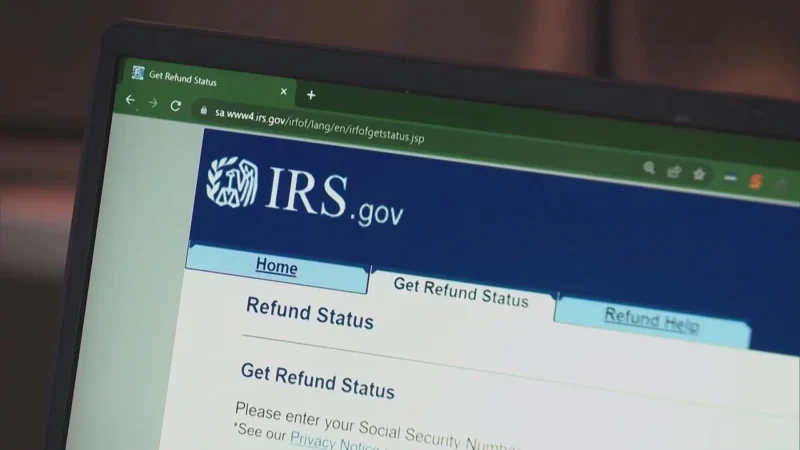
The IRS’s Where’s My Refund tool is the most direct way to get a status update, and I’d recommend checking it before doing anything else, according to irs.gov. You’ll need your Social Security number, filing status, and the exact refund amount, in this case, $3,200. The tool updates once per day, usually overnight.
There’s also the IRS2Go mobile app, which pulls from the same database. Neither tool will tell you why your refund is delayed; just where it is in the process. The three status stages are: Return Received, Refund Approved, and Refund Sent. If you’ve been stuck on “Return Received” for more than six weeks, that’s a signal worth acting on.
If the tool shows no information at all, it could mean your return hasn’t been processed yet, or, in rarer cases; that there’s a systemic error. According to USA.gov’s tax refund guidance, in most cases you’ll get your refund within 30 days of contacting the IRS directly, which suggests that direct contact does move the needle.
Tax Refund Delayed? Here’s What the Data Actually Shows
The IRS processes roughly 160 million individual returns each year. In a typical filing season, the agency issues more than 90% of refunds within 21 days for e-filed returns with direct deposit. Paper returns take significantly longer, often 6 to 8 weeks under normal conditions, and considerably more during high-volume periods.
But “normal conditions” is doing a lot of work in that sentence. Staffing shortages, legislative changes, and increased fraud screening have all contributed to extended processing times in recent years. The Taxpayer Advocate Service; an independent organization within the IRS, has repeatedly flagged refund delays as one of the most serious problems facing taxpayers.
“If you were expecting a tax refund and it hasn’t arrived, there are many reasons why it could be delayed or it hasn’t been delivered.”; Taxpayer Advocate Service, IRS.gov
The most actionable piece of data: if your refund is delayed beyond 45 days from the filing date, the IRS is required to pay you interest on the outstanding amount. That interest accrues daily and is calculated at the federal short-term rate plus 3 percentage points. On a delayed by 90 days, that’s not a windfall, but it’s real money, and most taxpayers don’t know to claim it.
,200 refund delayed by 90 days, that’s not a windfall, but it’s real money, and most taxpayers don’t know to claim it.
Seven causes account for the vast majority of delayed refunds:
- EITC or ACTC statutory hold (mid-February release date)
- Identity verification flag triggered by fraud detection algorithms
- Mismatch between your return and third-party data (W-2s, 1099s)
- Math errors or missing information on the return itself
- Refund offset applied to unpaid federal or state debt
- Paper return filed instead of e-file
- General processing backlog during peak season
The Verdict: Wait Strategically, Not Passively
Here’s my editorial position: the “just wait” camp is partially right, but dangerously incomplete. Yes, most delays resolve without intervention; but some don’t, and the ones that don’t tend to get worse the longer they sit unaddressed.
The smart approach is structured patience. Check the Where’s My Refund tool at the 21-day mark. If your status hasn’t moved past “Return Received” by day 45, call the IRS directly at 1-800-829-1040.
If you’ve received any letter from the IRS, even one that looks like a routine notice; respond to it before anything else. And if you claimed a credit like the EITC, adjust your expectations: mid-to-late February is the earliest realistic deposit date regardless of when you filed.
If you received a specific notice and were told to call 1-800-829-0115, do so promptly — that number is specifically for taxpayers whose refunds have been flagged for additional review, and calling it is the only way to move the process forward.
What This Debate Means Going Forward
The broader implication of refund delays isn’t just personal finance — it’s systemic. When the IRS holds refunds without clear communication, taxpayers lose trust in a system they’re legally required to participate in. The Taxpayer Advocate Service has pushed for faster processing timelines and better status communication for years, with mixed results.
For individual filers, the lesson is practical: e-file with direct deposit, avoid paper returns, double-check that your employer’s W-2 matches what you’re reporting, and set a calendar reminder to check your refund status at the 21-day mark, according to checkdayamerica.com. If you’re owed $3,200 and it hasn’t arrived, you have every right — and every tool — to find out exactly why.
The IRS isn’t adversarial by design, but it is bureaucratic by nature. Understanding how to navigate that bureaucracy is the difference between waiting indefinitely and getting your money back on a timeline you can actually plan around.
More Stories Like This
- He Checked His Bank Account 14 Times a Week Waiting for $3,200 — 6 Months After Filing, He Finally Got Answers
- 1 in 5 February Filers Still Don't Have Their $3,200 Refund by Mid-April — Here's Why Yours Is Stuck
- checkdayamerica.com.com/filed-february-3200-refund-frozen-by-irs/” style=”color:#0284c7;text-decoration:none;font-weight:500″>Your February Tax Refund Could Already Be Frozen by the IRS Right Now — How I Discovered My $3,200 Was on Hold and What to Do Immediately
Frequently Asked Questions



Leave a Reply