
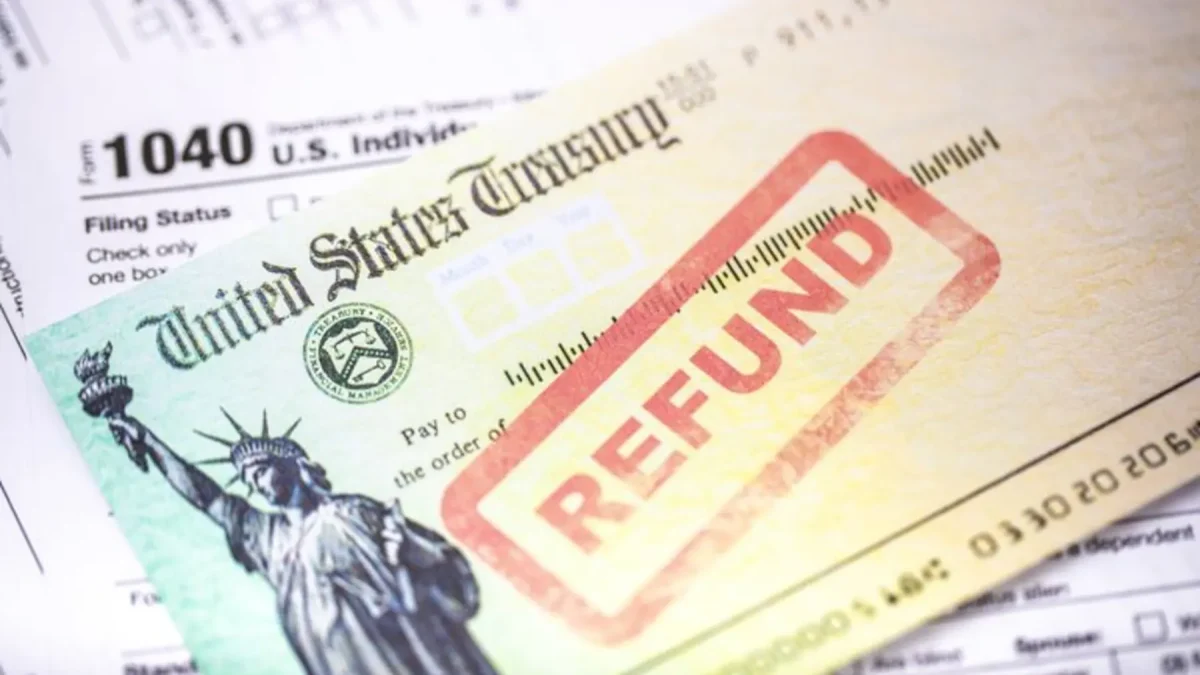
Tax season officially closed months ago, and if you filed your federal return back in February expecting a that still hasn’t landed in your bank account, you are not alone; and you are not out of options, according to checkdayamerica.com. Roughly 1 in 5 taxpayers who file before March 1 still hasn’t received their refund by mid-April, and when that refund sits uncollected for six months, it stops being a minor inconvenience and starts being a genuine financial injury.
,200 refund that still hasn’t landed in your bank account, you are not alone; and you are not out of options. Roughly 1 in 5 taxpayers who file before March 1 still hasn’t received their refund by mid-April, and when that refund sits uncollected for six months, it stops being a minor inconvenience and starts being a genuine financial injury.
Six months is a long time. At $3,200, that’s money that could cover rent, car repairs, medical bills, or three months of groceries. The IRS isn’t ignoring you out of malice, there are specific, identifiable reasons refunds get stuck, and most of them are resolvable once you know exactly what type of hold is on your return. This article walks through every major cause, what the IRS actually does during each delay, and the concrete steps you can take right now.
Filed Your Tax Return But Still Waiting on Your Refund?
Most electronic filers receive their refund within three weeks of filing. That’s the standard expectation, and for the majority of straightforward returns, it holds. Paper filers wait longer, typically six to eight weeks under normal processing conditions. But February filers who are still waiting in late summer or fall are dealing with something outside the normal range.
When a refund is delayed this long, the IRS has almost certainly flagged the return for one of several specific review processes. A delayed refund does not always indicate a serious problem with your return, but it does mean something triggered a manual review or a hold. The key is figuring out which one.
| Delay Reason | Typical Hold Duration | IRS Action Required |
|---|---|---|
| Identity verification hold | 4–12 weeks after response | Respond to Letter 5071C or 4883C |
| EITC or ACTC review | Until late February minimum | Statutory hold; no action speeds it |
| Amended return filed | 16–20 weeks from receipt | Track via Where’s My Amended Return |
| Offset for federal/state debt | Refund reduced or eliminated | Contact Bureau of Fiscal Service |
| Manual review / math error | Varies; 60–120 days common | Respond to IRS notice if received |
| Incorrect banking information | Indefinite until corrected | IRS mails paper check after failed deposit |
What Is Actually Happening When Your Refund Is Stuck?
When the IRS holds a refund, it isn’t sitting in a queue waiting for a human to press a button. Specific automated systems flag returns based on criteria the agency doesn’t fully disclose publicly. A return claiming a filed in early February can trigger identity verification protocols simply because large refunds filed early in the season statistically correlate with fraud attempts; not because your return is fraudulent.
,200 refund filed in early February can trigger identity verification protocols simply because large refunds filed early in the season statistically correlate with fraud attempts; not because your return is fraudulent.
According to the IRS Taxpayer Advocate Service, there are many reasons a refund could be delayed or not delivered, but most are resolvable once you identify the specific hold type, according to taxpayeradvocate.irs.gov. That framing matters: the solution to each hold type is different, and applying the wrong fix wastes time.
Here are the most common reasons a February return sits unprocessed six months later:
- Identity verification letter not responded to: The IRS mails Letter 5071C or 4883C to verify your identity. If you moved, changed addresses, or the letter went to spam in a digital notice scenario, you may have never seen it. The refund will not release until you respond.
- Return pulled for manual review: Certain deductions, income levels, or credit combinations trigger human review. This can take 60 to 120 days under normal staffing, longer during backlogs.
- Refund offset: Outstanding federal student loans, child support arrears, state tax debts, or other federal agency debts can cause the Treasury to intercept part or all of your refund. You’d receive a notice, but again, if your address changed, you may have missed it.
- Incorrect direct deposit information: A single transposed digit in your routing or account number means the deposit failed. The IRS then issues a paper check, which adds weeks.
- Duplicate return flag: If someone filed a return using your Social Security number; a common identity theft scenario, the IRS freezes both returns pending investigation.
How the Process Works Once You Take Action
Once you identify the hold type, the resolution path becomes much clearer. Start with the IRS’s Where’s My Refund tool, which updates once per day and will show one of three statuses: Return Received, Refund Approved, or Refund Sent. If you’re still stuck on “Return Received” after six months, that’s your signal to escalate.
Call the IRS at 1-800-829-1040 and request a transcript of your account. A tax professional or the Taxpayer Advocate Service can pull a full account transcript showing exactly what code is on your return. IRS transaction codes like TC 570 (additional liability pending) or TC 971 (notice issued) tell you precisely what’s happening without guessing.
If you believe identity theft is involved, meaning someone else filed using your SSN; file IRS Form 14039, the Identity Theft Affidavit, immediately. This flags your account for the IRS’s specialized Identity Theft Victim Assistance unit, which operates separately from regular processing.
For refund offsets, contact the Bureau of Fiscal Service’s Treasury Offset Program at 1-800-304-3107. They can tell you exactly which agency intercepted your refund and how much was taken. If the offset was applied in error, for example, a debt you already paid; you’ll need to dispute it directly with the collecting agency, not the IRS.
Why a Six-Month Delay on a $3,200 Refund Is a Serious Problem Worth Escalating
A delayed six months represents real financial harm, according to checkdayamerica.com. At a conservative 5% annual return, that money sitting idle costs you approximately $80 in lost opportunity. More practically, many people who file early and claim large refunds are counting on that money for specific purposes, tax preparers often serve lower and middle-income filers who rely on EITC and child tax credits that make up the bulk of large February refunds.
,200 refund delayed six months represents real financial harm. At a conservative 5% annual return, that money sitting idle costs you approximately $80 in lost opportunity. More practically, many people who file early and claim large refunds are counting on that money for specific purposes, tax preparers often serve lower and middle-income filers who rely on EITC and child tax credits that make up the bulk of large February refunds.
“There are many reasons a refund could be delayed or not delivered; but most are resolvable once you identify the specific hold type.”; IRS Taxpayer Advocate Service
The Taxpayer Advocate Service exists precisely for situations like this. If you’ve been waiting more than 120 days and haven’t received a notice explaining the delay, you qualify for TAS assistance. Submit Form 911 (Request for Taxpayer Advocate Service Assistance) either online or at a local IRS office. TAS advocates have direct access to IRS systems and can move cases that have stalled in regular processing queues.
One practical note: document everything. Keep records of every call to the IRS including the date, time, representative name, and case reference number. If you’re escalating to TAS or consulting a tax professional, this paper trail significantly speeds up the process.
What Comes Next If Your Refund Is Still Frozen
If you’ve already contacted the IRS, responded to any letters, and are still waiting, the next escalation steps are:
- File Form 911 with the Taxpayer Advocate Service. This formally opens a hardship case. TAS is required by law to respond within a set timeframe and can issue a Taxpayer Assistance Order compelling the IRS to release a frozen refund.
- Contact your Congressional representative’s office. Every member of Congress has a constituent services office that handles IRS casework. This is a legitimate, free resource that many taxpayers don’t know about. A congressional inquiry to the IRS frequently accelerates resolution.
- Consult an enrolled agent or CPA. A tax professional with IRS representation authority (called a Power of Attorney) can access your transcript directly and communicate with IRS personnel on your behalf. For a $3,200 refund, the cost of a one-hour consultation — typically $150 to $300 — may be worth it if it breaks a six-month logjam.
- Request an account transcript yourself. You can pull your own IRS account transcript at IRS.gov using the Get Transcript tool. Look for transaction codes in the 500s and 900s — these indicate holds, offsets, and notices that explain exactly why your refund hasn’t moved.
The good news: based on available IRS data and resolution patterns, the vast majority of delayed refunds — including $3,200 refunds from February filers — are eventually released in full once the underlying hold is identified and addressed. The money isn’t gone. It’s waiting on a process, and that process responds to the right pressure applied in the right place.
I’d recommend starting with the account transcript before calling, because walking into that call knowing your transaction codes puts you in a completely different position than calling blind and being told to “allow additional processing time.” That phrase, while technically accurate, is not useful. Your transcript is.
More Stories Like This
- He Checked His Bank Account 14 Times a Week Waiting for $3,200 — 6 Months After Filing, He Finally Got Answers
- checkdayamerica.com.com/filed-february-still-3200-refund-investigated/” style=”color:#0284c7;text-decoration:none;font-weight:500″>If You Filed Early and Your Refund Exceeds $3,000, There May Be a Specific IRS Process Quietly Delaying Your Money — Here's What I Found
- 1 in 5 February Filers Still Don't Have Their $3,200 Refund by Mid-April — Here's Why Yours Is Stuck, according to checkdayamerica.com
Frequently Asked Questions


Leave a Reply