
The meeting room smelled like burnt coffee and industrial carpet cleaner — the universal scent of community center gatherings. I had arrived at a veterans’ support group in south St. Louis on a Tuesday evening in late January 2026, following a tip from a community organizer who said someone there had a story about the IRS that I needed to hear. Rochelle Norwood was sitting in the back row, arms crossed, looking like a woman who had rehearsed her frustration so many times it had calcified into posture.
She was not a veteran herself. She had started attending the meetings after her husband, a former Army logistics specialist, began going for peer support. Over time, she found the group useful for a different reason: it was one of the few places, she told me afterward, where people talked openly about financial betrayal without shame.
The Refund That Never Arrived
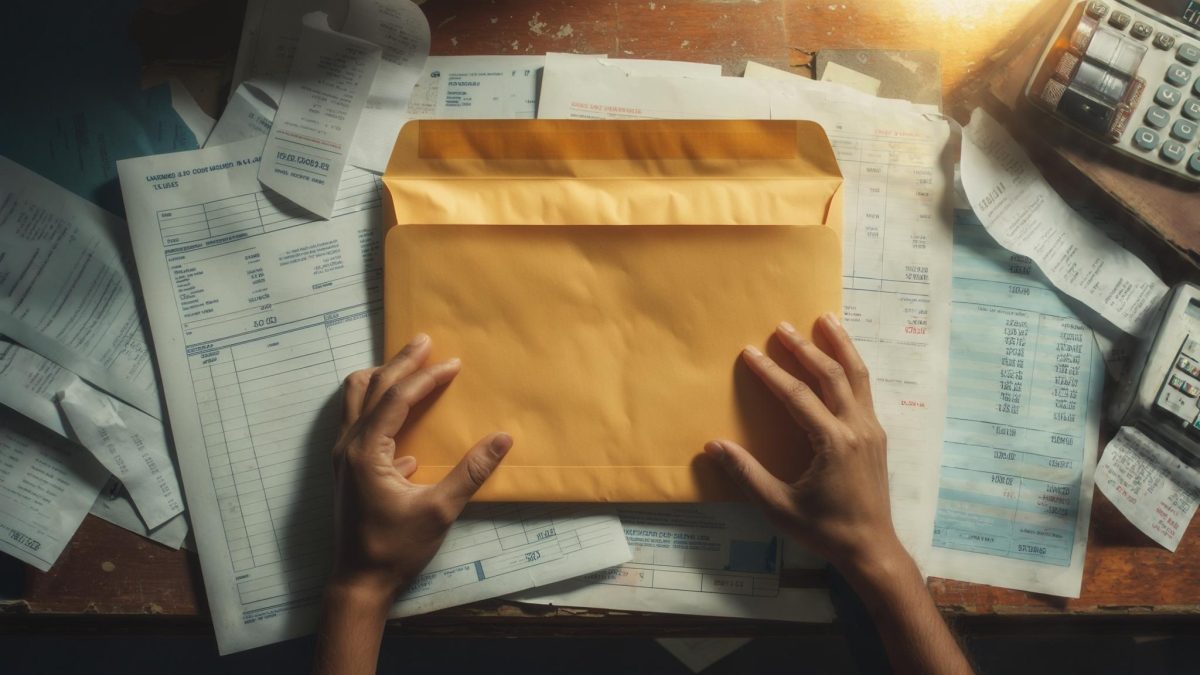
When I sat down with Rochelle Norwood the following week at a coffee shop near her office in Clayton, she pulled out a manila folder before I had even opened my notebook. Inside were two documents: an IRS Notice CP21B dated February 4, 2025, and a Treasury Offset Program notification she had received in the same envelope. Her expected refund for tax year 2024 had been $4,214. The amount deposited into her bank account was $0.
Rochelle is 44 years old, a marketing manager at a Series A startup in St. Louis. Her household income is high — she and her husband cleared roughly $218,000 combined in 2024 — but it is anything but predictable. Her compensation includes a base salary of $87,000, a quarterly performance bonus that swings between $6,000 and $22,000 depending on the startup’s revenue cycle, and occasional consulting income she picks up when former clients call. That irregularity means her withholding is almost never right.
“Every year I file and every year it’s a guessing game,” Rochelle told me. “Sometimes I owe a couple thousand. Sometimes I get back more than I expected. I had built the refund into our budget for my daughter’s college application fees and her first semester deposit. That was the plan.”
Her daughter, Simone, is 17 and applying to four-year universities. The timing of the offset, Rochelle said, felt almost personal.
How a Cosigned Loan Became a Financial Landmine
The story behind the offset begins in the spring of 2022. Rochelle’s former college roommate, a woman she had stayed close with for two decades, was launching a small catering business and needed a $18,500 Small Business Administration-backed loan. Her credit score at the time was too low to qualify alone. Rochelle agreed to cosign.
The catering business closed in August 2023, eight months in. Rochelle said she did not find out the loan had gone delinquent until January 2024, when her former roommate stopped returning calls. By that point, the debt had already been referred to the U.S. Department of Treasury. Because Rochelle was a cosigner — legally as responsible for the debt as the primary borrower — she was equally exposed to collection action, including the Treasury Offset Program.
“I didn’t default on anything. I made every payment on my own accounts. I have an 801 credit score,” Rochelle told me, her voice tightening. “But none of that matters. My name was on a piece of paper, and that’s all the government needed.”
Her frustration aligns with a broader pattern. According to reporting tracked by WIO News on financial obligations, tens of millions of Americans are carrying debt obligations they did not directly create — cosigned loans, family guarantees, joint accounts — that surfaces only when a collection event occurs. For Rochelle, that event was a zeroed-out direct deposit in February 2025.
The IRS Notice and What It Actually Said
The Treasury Offset Program, administered through the Bureau of the Fiscal Service, allows federal and state agencies to intercept tax refunds to cover qualifying debts. These include defaulted federal student loans, unpaid child support, and — as in Rochelle’s case — delinquent federal business loans. Taxpayers are supposed to receive an advance offset notice before their refund is seized, typically 65 days prior.
Rochelle said she never received the advance notice. The address the agency had on file was her address from 2021, before she and her husband moved to their current home in Webster Groves. She had updated her address with the IRS directly when she filed in 2023 and 2024, but the creditor agency — a separate federal body — had not received that update.
“The left hand doesn’t know what the right hand is doing,” she said. “I updated my address. I did everything right. But the notice went to an apartment I moved out of four years ago.”
The Dispute Process and Where Things Stand
Rochelle filed a hardship claim with the Bureau of the Fiscal Service in March 2025, arguing that the failure to deliver advance notice to her correct address constituted a procedural defect. She also contacted the IRS Taxpayer Advocate Service, which assigned her a case number in April 2025. As of our conversation in late January 2026, the hardship review was still open.
She has not recovered the $4,214. She does not expect to recover it quickly. “The Taxpayer Advocate told me these cases can take six to eighteen months,” Rochelle said. “Meanwhile, my daughter’s college deposit deadline was in May. We covered it from savings. But that was not the plan.”
One practical adjustment Rochelle made on her own: in May 2025, she revised her W-4 with her employer to reduce her overwithholding. Her reasoning was blunt. “If the government is going to take my refund anyway, I’d rather not give them an extra $4,000 to hold all year. I’d rather have that money now, where I can do something with it.” Her new withholding is calibrated to produce a refund of approximately $400 to $600 — small enough that even a partial offset would not devastate a semester’s financial planning.
The Anger Beneath the Paperwork
What struck me most about Rochelle Norwood was not the bureaucratic complexity of her situation — tax offsets, hardship claims, advocate case numbers. It was the quality of her anger. It was not hot or performative. It was cold and precise, like someone who had spent a year trying to figure out who exactly to be angry at and had not found a satisfying answer.
“The loan servicer blames Treasury. Treasury blames the IRS for not forwarding my address update. The IRS says they processed everything correctly according to what they had. Everyone did their job and somehow I lost $4,200,” she told me. “That’s not an accident. That’s a system.”
She has not spoken to her former roommate since October 2024. That relationship, she said, is the collateral damage she did not account for when she signed the loan documents in 2022. “I thought I was doing a kind thing for a friend. I did not think I was signing a document that could follow me around for years.”
As I drove back across the city that afternoon, I kept thinking about the specific cruelty of the timing — a refund seized in the same month a college deposit was due, a friendship ended over a business that lasted less than a year. Rochelle Norwood did not make a reckless financial decision. She made a generous one. The outcome, she would be the first to tell you, was the same either way.
Her dispute is still open. Her daughter enrolled at the University of Missouri-Columbia in the fall of 2025, first-semester deposit paid. Rochelle will file her 2025 return in a few weeks. She expects a small refund this time — and a smaller target.
(function(){var w=document.getElementById(‘pvv-scenario-s1775658274703oup4’);if(!w)return;var btns=w.querySelectorAll(‘button[data-choice]’);btns.forEach(function(b){b.addEventListener(‘click’,function(){if(w.dataset.revealed)return;w.dataset.revealed=’1′;btns.forEach(function(x){x.style.opacity=x===b?’1′:’0.45′;x.style.cursor=’default’;x.style.transform=’none’});var o=document.getElementById(‘s1775658274703oup4-out-‘+b.dataset.choice);if(o){o.style.display=’block’}});b.addEventListener(‘mouseenter’,function(){if(!w.dataset.revealed){b.style.borderColor=’#38bdf8′;b.style.transform=’translateX(4px)’}});b.addEventListener(‘mouseleave’,function(){if(!w.dataset.revealed){b.style.borderColor=’#334155′;b.style.transform=’none’}})})})();
.pvv-faq-section details summary::-webkit-details-marker{display:none}.pvv-faq-section details summary::marker{display:none;content:””}.pvv-faq-section details[open] summary .pvv-faq-arrow{transform:rotate(90deg)}




Leave a Reply