

The free tax preparation clinic at a community center in southwest Atlanta runs every Saturday from late January through mid-April, staffed by IRS-certified volunteers and lit by fluorescent lights that hum loud enough to hear between conversations. I arrived on a Saturday in early February 2026 to report on refund processing times and found Jerome Holloway at a folding table near the back, waiting patiently for his turn while scrolling through something on his phone with the careful attention of a man looking for news he wasn’t sure he wanted to find.
He introduced himself without much ceremony — Jerome Holloway, 64, school bus driver, married, one son finishing his junior year of high school. He said he’d been coming to this clinic for three years because a tax preparer had made a costly error on his return back in 2022, and he no longer fully trusted the process without a second set of eyes. Before I could ask a follow-up question, he looked up from his phone and said, quietly: “I need that refund to come through. I really do.”
The Setup: One Household, Three Financial Pressure Points
When I sat down with Jerome Holloway after his appointment was complete, he walked me through the numbers with the precision of someone who had been running them in his head for weeks. His household income — between his bus driver salary and his wife Renata’s part-time work as a medical billing coordinator — lands around $88,000 a year. On paper, that sounds stable. In practice, three overlapping crises had turned stable into precarious.
The first pressure point was COBRA. Jerome had left a school district position the previous spring after a contract dispute and spent six months on COBRA coverage before starting at his current employer. His monthly COBRA premium had been $1,847 — a number he repeated twice when he told me, as if he still couldn’t quite believe it. “That’s not a health insurance bill,” he said. “That’s a second rent.”
The second pressure point was rent. Jerome and Renata rent a three-bedroom house in East Point, just south of Atlanta. Their landlord renewed the lease in October 2025 — and raised the monthly rent from $1,480 to $1,924, a jump of exactly 30 percent. Jerome said they considered moving but factored in their son’s school district and decided to absorb the increase. “You don’t want to uproot a kid in his junior year,” he told me. “So you find a way.”
The third pressure point was his credit score, damaged by a period of missed payments during the 2022 tax-error fallout and a brief layoff the same year. He’s been rebuilding it — currently sitting around 631, he said — but the lower score has closed certain doors: a home equity line they considered was denied outright, and a personal loan came back with an interest rate he called “punishing.”
Filing Day and the 21-Day Promise That Didn’t Hold
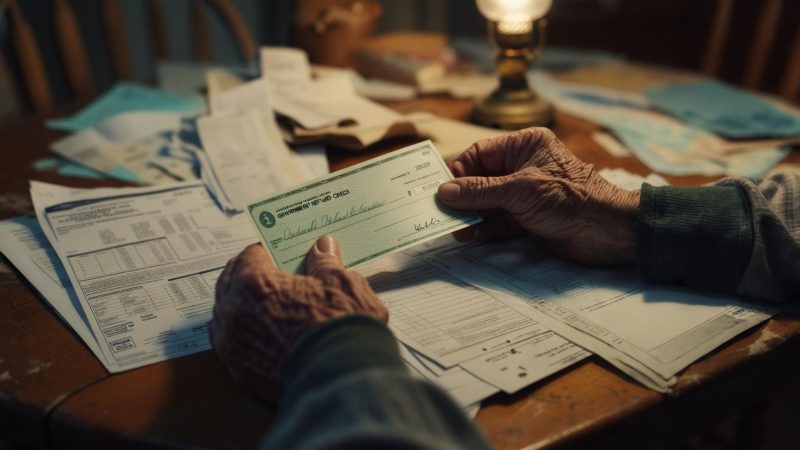
Jerome filed his 2025 federal return electronically on January 27, 2026, with the help of the same volunteer clinic. His expected refund was $3,200, generated primarily by overwithholding on his W-2 and a partial American Opportunity Tax Credit for his son’s upcoming college expenses. He set up direct deposit to their joint checking account. According to the IRS refunds page, most e-filed returns with direct deposit are processed within 21 days — which would have put Jerome’s refund arriving around February 17.
It did not arrive on February 17.
Jerome checked the IRS “Where’s My Refund” tool daily starting around February 10. For the first two weeks, it showed “Return Received.” Then, around February 21, it shifted to “Being Processed” — a status that sounds like progress but can, as many filers discover, persist for weeks with no further update. “I’m checking it every morning before I even get in the bus,” Jerome told me. “It just kept saying the same thing. Being processed. Being processed.”
Seven Weeks of Silence and What It Cost
The refund finally posted to Jerome and Renata’s checking account on March 29, 2026 — 61 days after filing. In the interim, the family had leaned on roughly $2,100 in savings to cover gaps created by the elevated rent and a February car repair bill of $740 on Jerome’s aging pickup truck. The $3,200 they’d been counting on never arrived in time to prevent any of that spending.
As Jerome explained, the delay wasn’t caused by a specific IRS notice or audit flag — no CP05 letter, no request for additional documentation. The Where’s My Refund tool simply moved from “Being Processed” to “Refund Sent” on March 27, with no explanation offered for the gap. He never received a formal explanation. According to the Taxpayer Advocate Service, processing delays can result from system backlogs, identity verification reviews, or errors in credit calculations — but taxpayers aren’t always notified which category applies to them.
Jerome said he called the IRS twice during the wait. The first call, in early March, resulted in a hold time of approximately 90 minutes before he was told an agent couldn’t provide additional information beyond what the online tool showed. The second call, two weeks later, reached a representative who confirmed the return was under review but could not provide a timeline. “They’re not rude,” he said. “They just don’t have anything to tell you. And that’s almost worse.”
What the Delay Actually Changed — and What It Didn’t
When the $3,200 arrived, Jerome said Renata cried briefly and then immediately started a list of where it would go. About $1,200 went toward restoring their savings buffer. Roughly $900 went to pay down a credit card balance they had run up during the wait — a balance accruing interest at 24.9 percent APR. The remaining $1,100 was folded into a college savings account for their son Marcus.
“It came,” Jerome said, and the way he said it carried both relief and exhaustion in equal measure. “But by the time it came, it was already gone somewhere else. That’s just how it works when you’re stretched.”
What Jerome said he wished he’d known: that the American Opportunity Credit on his return — which he claimed for the first time this year — is a category the IRS sometimes reviews more carefully, particularly for first-time claimants. He didn’t know that when he filed, and no one at the clinic flagged it as a potential delay trigger. “If somebody had just said, ‘Hey, this might take longer,’ I would have planned differently,” he told me. “I wouldn’t have been checking that app every morning like it owed me something.”
He’s already thinking about next year’s return. Marcus will be enrolled at Georgia State in the fall, and the education credits will be larger. Jerome said he plans to file in the first week of January if possible — before processing backlogs typically build — and to keep a separate cash reserve rather than counting refund timing as part of any financial plan. It’s a measured shift, born from a year that cost him more than $3,200 in peace of mind.
The Bigger Picture Jerome’s Story Reflects
Jerome Holloway’s experience isn’t unusual in its mechanics — IRS processing delays affect hundreds of thousands of filers each season. What makes his story worth reporting is what the delay revealed about how little margin actually exists in a household that, from the outside, looks fine. An $88,000 income. A stable job. A son getting ready for college. And yet a 61-day gap between expectation and deposit was enough to drain savings, generate credit card interest, and produce genuine anxiety every morning before the school bus pulled out of the lot.
As I left the clinic that Saturday, Jerome was already on his phone — not checking the refund status this time, but looking at Georgia State’s net price calculator for next year. He had the focused, slightly tired expression of someone doing math they’d rather not have to do. He noticed me watching and smiled in that way people do when they’ve been caught being worried. “College is expensive,” he said. “Gotta know the numbers.”
He knows them. That much is certain.
Related: A $3,200 IRS Refund Sat in ‘Processing’ for 70 Days While This El Paso Daycare Owner’s Bills Kept Coming
Related: She Has No Retirement Savings at 66 and Her Social Security Check Is $1,340 — ‘I Do the Math Every Single Night’



Leave a Reply